
Emergency Prep · Wildlife
Waterfowl Rescues
Emergency Triage for Adult Ducks, Geese, and Swans
A goose wing can break your wrist. 10 modules on wing-slaps and bill-strikes, catching large birds without a chase, fishing line and hooks, lead poisoning (green diarrhea, drooping wings), angel wing from park bread, winter ice rescues and when a duck is just resting, large padded dark crates, why an injured duck drowns in a bathtub, avian flu and pond bacteria, and why municipal shelters can't take waterfowl.
About this course
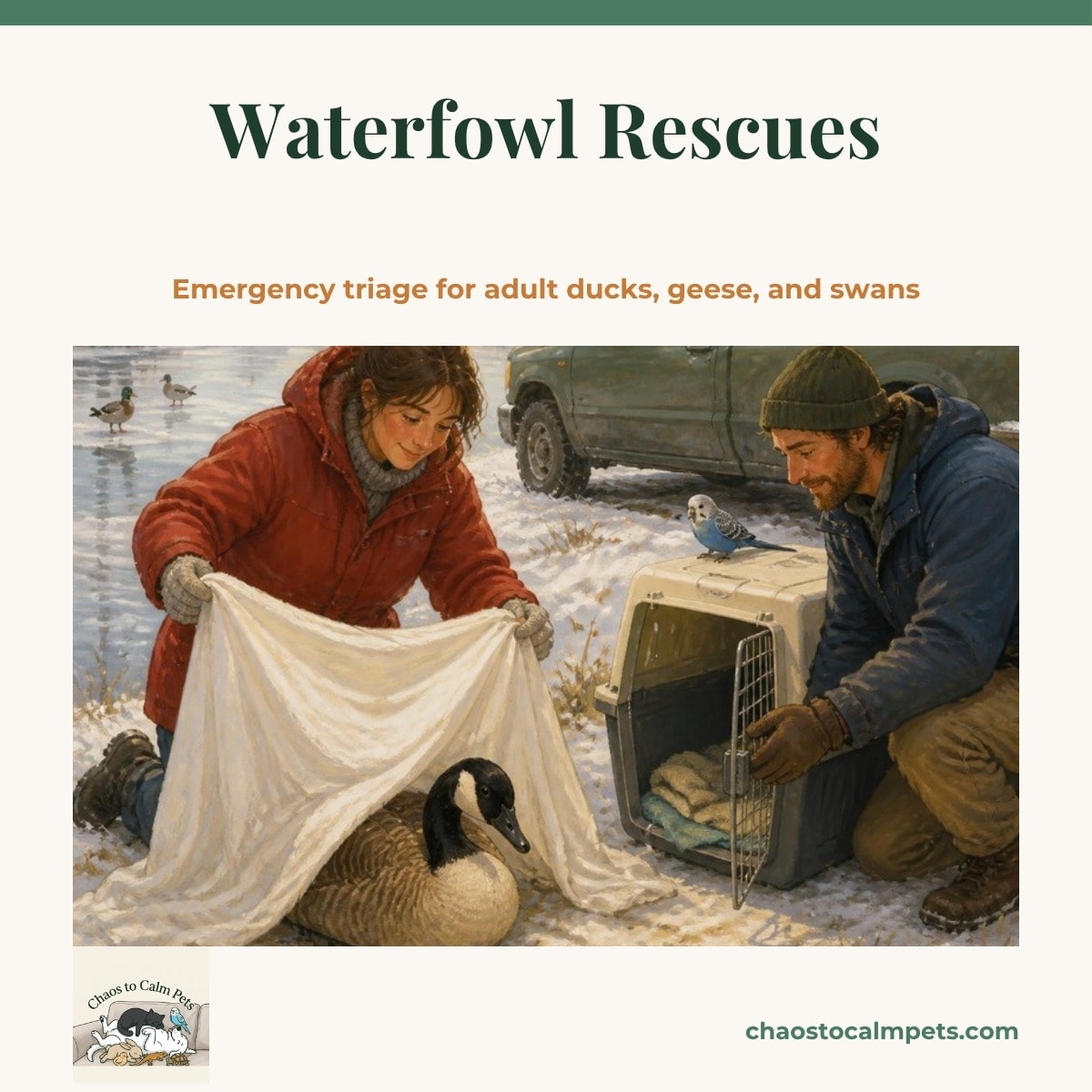
Waterfowl are the wildlife most people feel confident grabbing and the ones most likely to hurt them for it: a Canada goose's wing is a club and a swan's bill twists flesh. This course replaces the chase with technique. You'll learn the blanket drop, how to assess monofilament wrapped around legs and why the hook stays in until a vet removes it, the bright-green diarrhea and drooping wings of lead poisoning (fatal without chelation), what park bread does to a wing, how to tell a duck frozen into the ice from one simply sitting on it, how to build a big, dark, padded crate for a bird that weighs ten pounds, why a sick or oiled duck drowns in the bathtub you thought would comfort it, and how avian influenza and pond bacteria change your glove rules. It ends with the hand-off to a rehabber with flight pens and deep ponds, because animal control has neither.
What you'll learn
- The waterfowl arsenal: wing-slaps and bill-strikes, and how to approach
- The blanket-drop capture instead of the open-ground chase
- Fishing line, embedded hooks, and lead poisoning signs that need chelation
- Adult angel wing, and ice rescues: frozen vs. resting
- Large, dark, padded crates, and the dry-dock rule (no bathtubs)
- Avian influenza and waterborne bacteria, and why municipal shelters fail waterfowl
Who this is for
Park and pond neighbours, anglers, golf-course and campus grounds staff, winter walkers who find a duck on the ice, and rescue volunteers who want to handle a ten-pound goose without a broken wrist.
Course outline (10 modules)
Quiz & Certificate
Knowledge quiz
After completing all lessons, take a short quiz to test your understanding.
Go to quiz →Completion certificate
Pass the quiz and earn a shareable certificate of completion.
View certificate →Frequently asked questions
Ready to get started?
$9.99 · Lifetime access · 10 lessons