
Emergency Prep · Wildlife
Preparing for the Wild
Soft Releases, Foraging, and Severing the Bond
Raising an orphan is half the job; the other half is making it wild again. 10 modules on hard vs. soft release, building a hack box, live-prey training for predators, scatter foraging for prey species, teaching predator avoidance with silhouettes and sounds, weather acclimation, the ghost caretaker phase, opening the door on the animal's terms, keeping captive pathogens out of nature, and letting them be free.
About this course
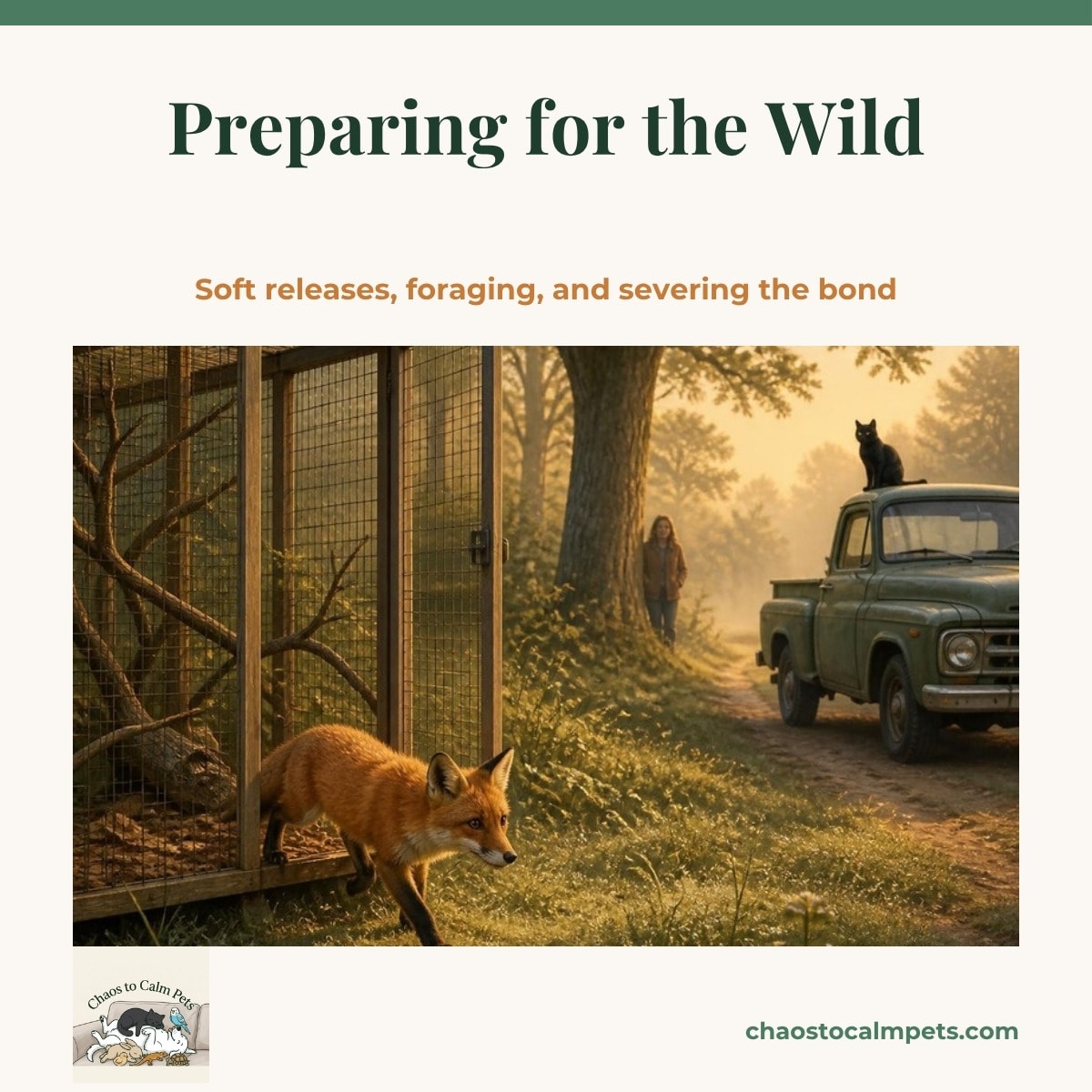
A hand-raised orphan that is dumped in the woods usually dies in 48 hours. It doesn't know where the water is, has never seen a hawk's shadow, has never dug for its own acorn, and comes running when it hears footsteps. This course is about the weeks that fix that. You'll learn why a soft release through an outdoor pre-release enclosure beats a hard release for every juvenile, how a hack box is built so owls and raccoons can't get in, how predators learn to hunt and prey species learn to forage, how a cardboard hawk silhouette and a recorded coyote yip teach caution without cruelty, how weeks of wind and rain build a waterproof coat, why the final phase is the ghost caretaker who feeds through a chute and never speaks, how the door is opened at dawn and left open for two weeks, and why a pre-release health clearance protects the whole forest. It ends where every wildlife course here ends: the animal bolts, and that is the win.
What you'll learn
- Hard release vs. soft release, and why naive juveniles need the bridge
- Hack box design: predator-proof outdoor pre-release enclosures with natural furnishings
- Live-prey training for carnivores and scatter-foraging for prey species
- Predator-avoidance conditioning with silhouettes and recorded calls, used sparingly
- Weather acclimation and coat integrity, and the ghost-caretaker phase that severs the human bond
- The open-door release protocol, pre-release health clearances and wild biosecurity, and the anti-captivity mandate
Who this is for
Rehab apprentices and volunteers moving into release work, licensed rehabbers refining their soft-release setup, people who finished the baby-wildlife courses and want to know what happens after the nursery, and anyone who has ever wondered how a bottle-fed orphan learns to be afraid of us again.
Course outline (10 modules)
Quiz & Certificate
Knowledge quiz
After completing all lessons, take a short quiz to test your understanding.
Go to quiz →Completion certificate
Pass the quiz and earn a shareable certificate of completion.
View certificate →Frequently asked questions
Ready to get started?
$9.99 · Lifetime access · 10 lessons