
Emergency Prep · Wildlife
Hummingbird Rescue Guide
Triage for Sugar Drops, Window Crashes, and Torpor
Two grams of bird, a heart at 1,200 beats a minute, and a clock that runs out in hours. 10 modules on torpor vs. trauma, why hummingbirds starve so fast, the 4-to-1 sugar recipe (and why honey kills), the dropper trick that doesn't drown the bird, warming a chilled bird safely, guiding a trapped bird down from a skylight, broken beaks and moldy tongues, cleaning feeders, keeping cats and mites away, and why animal control can't take a hummer.
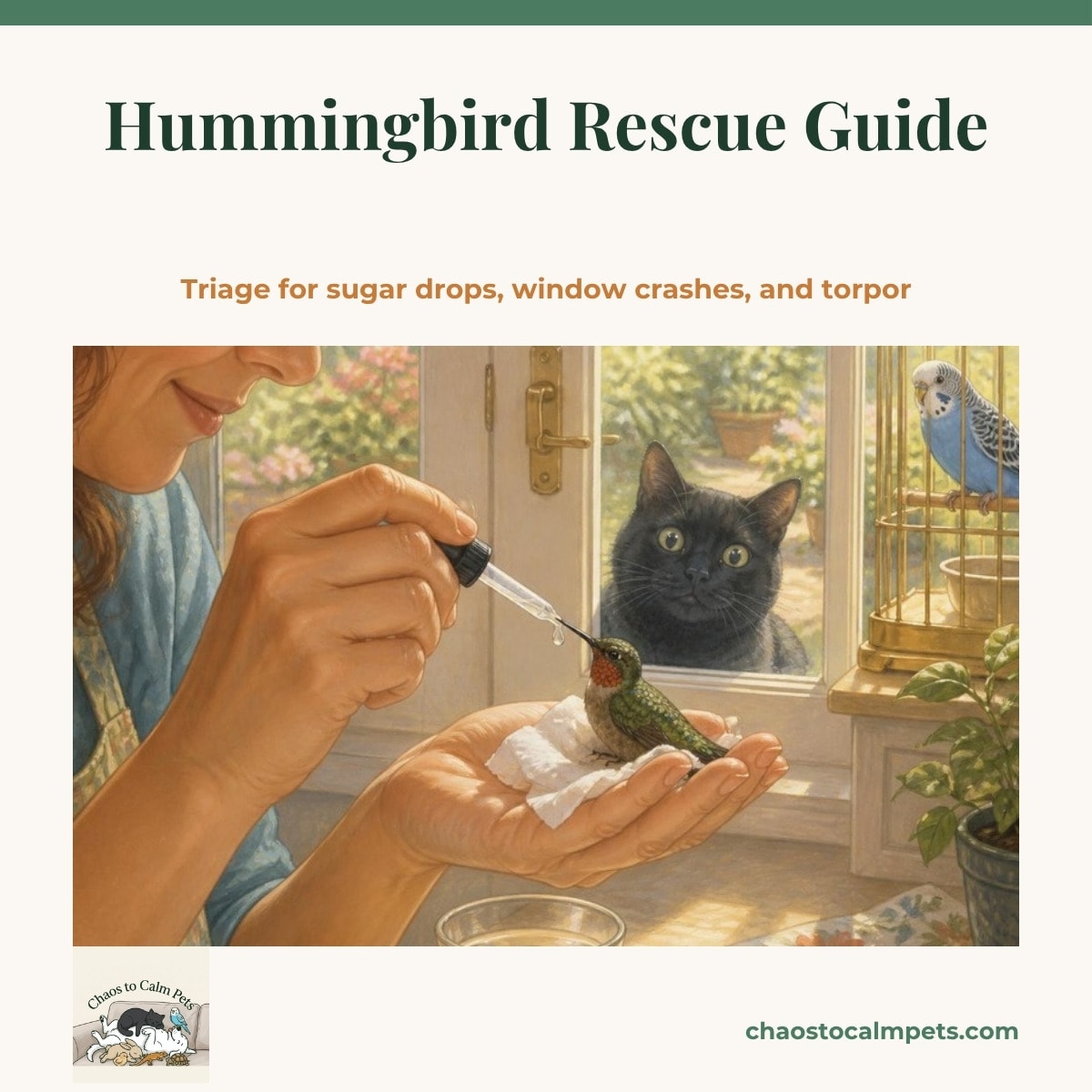
About this course
A motionless hummingbird on the porch at dawn is probably asleep; the same bird at noon is probably dying. Telling those apart is the first thing this course teaches, because a grounded hummingbird can starve in hours. You'll learn the emergency nectar licensed rehabbers use (four parts water to one part plain white sugar — never honey, never red dye), how to offer a drop so the bird's own tongue draws it in rather than drowning it, how to warm a chilled bird slowly instead of cooking it, how to darken a garage so a trapped bird finds the open door, what a fractured beak or a moldy tongue from a dirty feeder means, how to clean your feeders so you stop causing those infections, how to keep your cat and the bird's mites apart, and why the only right destination is a rehabilitator with an avian endorsement. Paola is clear throughout: the hands-on steps are what professionals do, and you attempt them only when there is no other way to keep the bird alive while you call.
What you'll learn
- Torpor vs. trauma: time of day, posture, and when to leave a sleeping bird alone
- The starvation clock and why every minute matters for a grounded hummingbird
- The 4:1 white-sugar recipe, why honey and dyes are dangerous, and the dropper trick
- Warming a chilled bird safely, and guiding a trapped bird down from a skylight
- Beak fractures, feeder-borne fungal infections, and the feeder-cleaning routine
- Keeping pets and mites away, and why animal control can't help a hummingbird
Who this is for
Anyone with a hummingbird feeder, people who found a bird in the garage, gardeners, teachers, and new rescue volunteers who want to know the one bird you do give something to, and exactly how.
Course outline (10 modules)
Quiz & Certificate
Knowledge quiz
After completing all lessons, take a short quiz to test your understanding.
Go to quiz →Completion certificate
Pass the quiz and earn a shareable certificate of completion.
View certificate →Frequently asked questions
Ready to get started?
$9.99 · Lifetime access · 10 lessons