
Emergency Prep · Wildlife
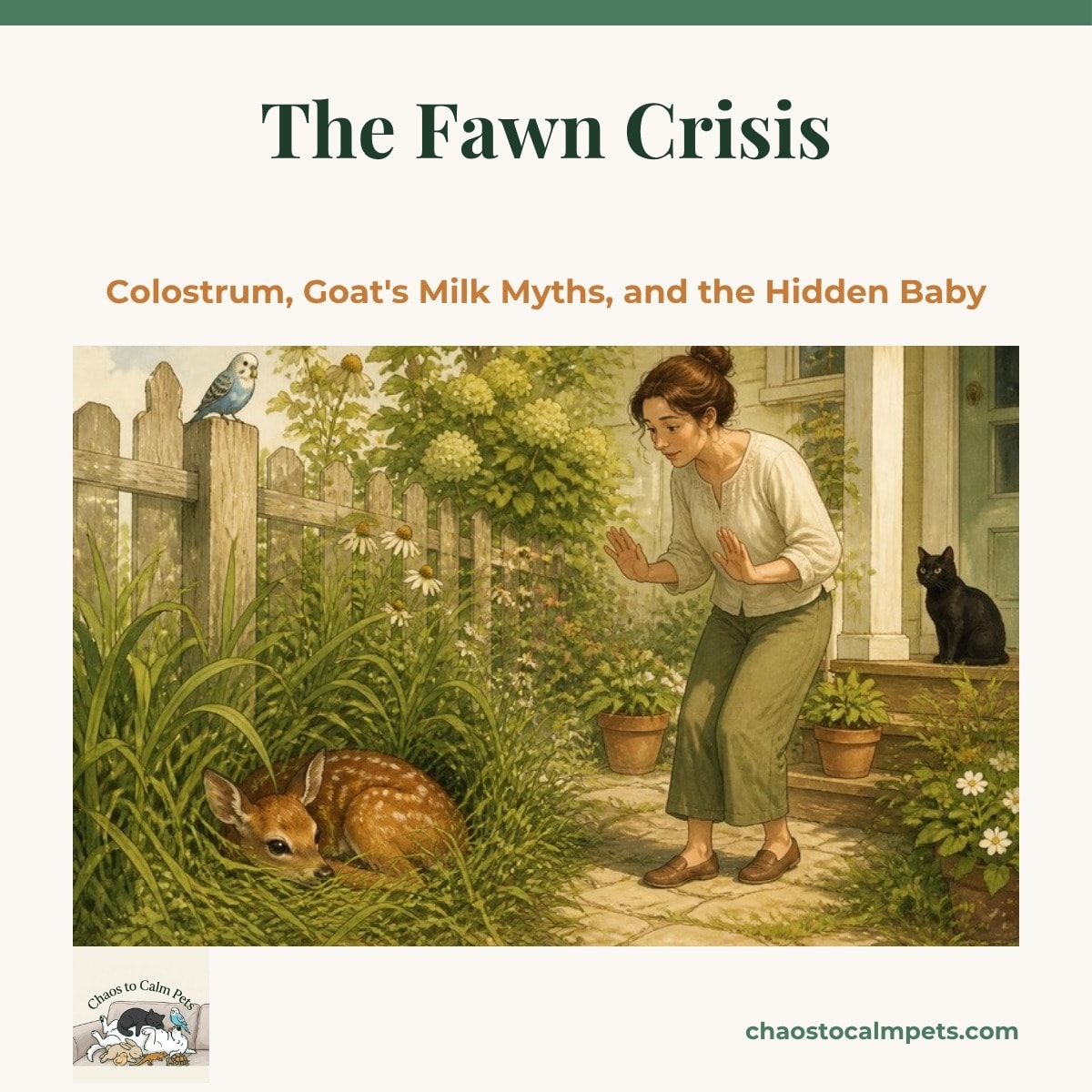
The Fawn Crisis
Colostrum, Goat's Milk Myths, and the Hidden Baby
The spotted fawn curled alone in your garden is not abandoned — its mother is 12 hours away on purpose. 10 modules on the hiding strategy, the real orphan signs, the 24-hour colostrum clock, why goat's milk kills, emergency electrolytes, the bathroom routine, how petting a fawn can kill it, car strikes, ticks and CWD, and why a bottle-raised buck becomes a weapon.
About this course
Every spring someone finds a fawn curled silently in the mulch, waits an hour, decides it's abandoned, and carries it home — and that is the moment things start going wrong. A doe leaves her fawn hidden for up to 12–14 hours a day because a scentless, motionless baby is safer alone than beside her. This course teaches the difference between that healthy hider and a true orphan (crying, wandering, flies), then the biology that makes amateur raising fail: the 24-hour colostrum window, the goat's-milk myth that ends in fatal diarrhea, the electrolyte bridge that buys a night, the washcloth routine that keeps a bladder from rupturing, and capture myopathy — the stress disease that lets a cuddled fawn die days later. It covers car strikes and backboards, ticks and CWD rules, and the bottle-raised buck that comes back in rut to hurt someone.
What you'll learn
- The hider strategy: 12–14 hours alone, no scent, curl-and-freeze — and the observation rule
- True orphan signs: harsh crying, aimless wandering, sunken eyes, sagging belly, fly-strike
- The colostrum clock: why the gut seals at 24–36 hours and un-colostrated newborns need professional care
- Why cow's and goat's milk starve and scour a fawn, and the cervid replacers rehabbers use instead
- Emergency hydration with warm pediatric electrolytes in small frequent meals, and post-feed stimulation
- Capture myopathy and zero handling, backboard transport after car strikes, ticks, Lyme and CWD transport rules, and imprinted bucks
Who this is for
Hikers, gardeners, rural homeowners and anyone who has ever stood over a motionless spotted fawn wondering; drivers who stop at deer strikes; and the people who need to hear, clearly, why the farm neighbour's bottle-raised buck is dangerous.
Course outline (10 modules)
Quiz & Certificate
Knowledge quiz
After completing all lessons, take a short quiz to test your understanding.
Go to quiz →Completion certificate
Pass the quiz and earn a shareable certificate of completion.
View certificate →Frequently asked questions
Ready to get started?
$9.99 · Lifetime access · 10 lessons