
Emergency Prep · Cold-Blooded Crew
The Ultimate Exotic Travel Guide
How to Move Your Reptile Safely Without Stress
To a reptile, a car ride is a predator attack with a climate crisis attached. 20 modules on the only-when-you-have-to rule, canvas snake bags inside rigid tubs, why hand warmers cook pets and shipping heat packs don't, foam and washcloth cushioning, pre-trip soaks instead of sloshing bowls, pre-conditioning the cabin to 75 to 78°F, the ready-to-go vet kit, hotel rules for cross-country moves, airline cabin bans and live-animal cargo, the pop-up tub on arrival, the seven-to-fourteen-day decompression window, taking apart and rebuilding a glass vivarium, moving plants and isopods alive, roadside breakdowns in summer and winter, the travel first-aid kit, state wildlife laws and CITES paperwork, the post-move four-point check, resetting timers and the first meal, and the grab-and-go bag.
About this course
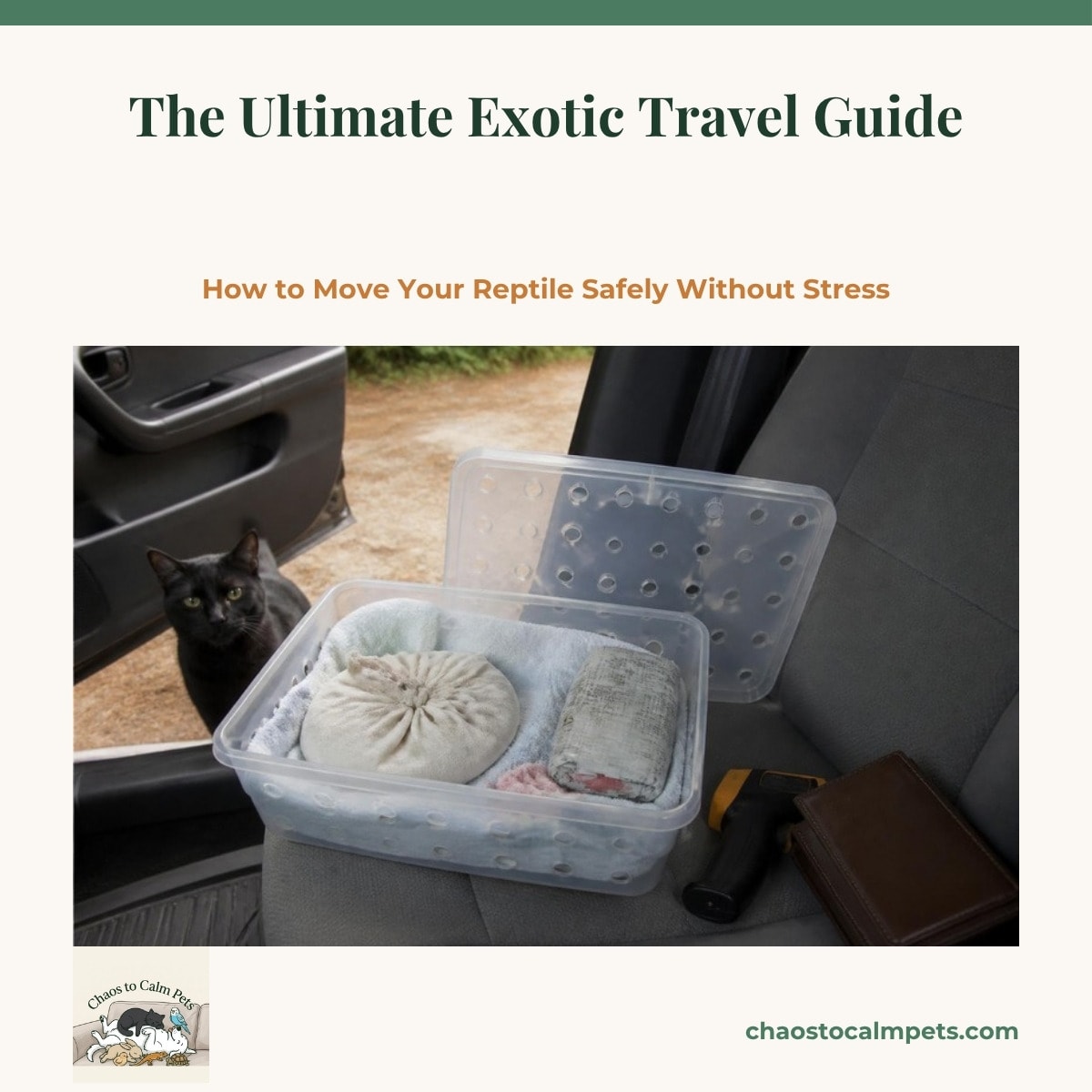
A reptile has no idea what a car is; it experiences rumbling, swaying, and temperature swings as an attack it can't escape. This course gets it from here to there alive and calm. You'll learn why travel is reserved for vet visits, relocations, and evacuations, why a tied canvas bag or pillowcase inside a rigid ventilated tub beats any cardboard box, why human hand warmers spike hot enough to cook an animal and how 24-to-40-hour reptile shipping packs behind a newspaper buffer work instead, how foam, blankets, and washcloths keep a skeleton from bouncing, why a water bowl in a tub causes chilling and respiratory distress and a pre-trip soak and damp paper towel don't, how to pre-condition a cabin to 75 to 78°F and why a parked car is a death trap, what lives in the ready-to-go vet kit, how to run a cross-country move with hotel stays, nightly heat-pack checks, and short driving shifts, why airlines ban reptiles from cabins and how live-animal cargo and CITES paperwork work, why a sterile pop-up tub with heat and a hide gets set up before any furniture comes off the truck, why the animal is left alone for seven to fourteen days and fed small only afterward, how to drain, strip, wrap, and strap a glass vivarium and rebuild it, how to move plants in damp towels and isopods in deli cups, what to do when the car dies in July or January, what goes in the travel first-aid kit, how to research state wildlife rules and carry a travel binder, how to run the post-move four-point check and spot thermal shock, how to reset timers and thermostats and offer the first small meal, and why a packed go-bag is checked twice a year.
What you'll learn
- The only-when-you-have-to rule, escape-proof transport vessels, and safe mobile heat
- Cushioning, spill-proof hydration, car climate control, and the ready-to-go vet kit
- Long hauls, hotel rules, airline bans, live-animal cargo, and CITES paperwork
- The pop-up arrival tub and the seven-to-fourteen-day decompression window
- Disassembling and rebuilding a vivarium, moving plants and microfauna, and roadside breakdowns
- The travel first-aid kit, interstate laws, the post-move check, resetting routines, and the go-bag
Who this is for
Anyone moving house with a reptile or amphibian, keepers facing a long vet drive, families planning a cross-country relocation, and anyone who lives where hurricanes or wildfires might mean grabbing the animals and going.
Course outline (20 modules)
Quiz & Certificate
Knowledge quiz
After completing all lessons, take a short quiz to test your understanding.
Go to quiz →Completion certificate
Pass the quiz and earn a shareable certificate of completion.
View certificate →Frequently asked questions
Ready to get started?
$9.99 · Lifetime access · 20 lessons