
Health & Care · Aquatic
The Pufferfish Handbook
Beak Overgrowth, Toxins, and the Puff Reaction
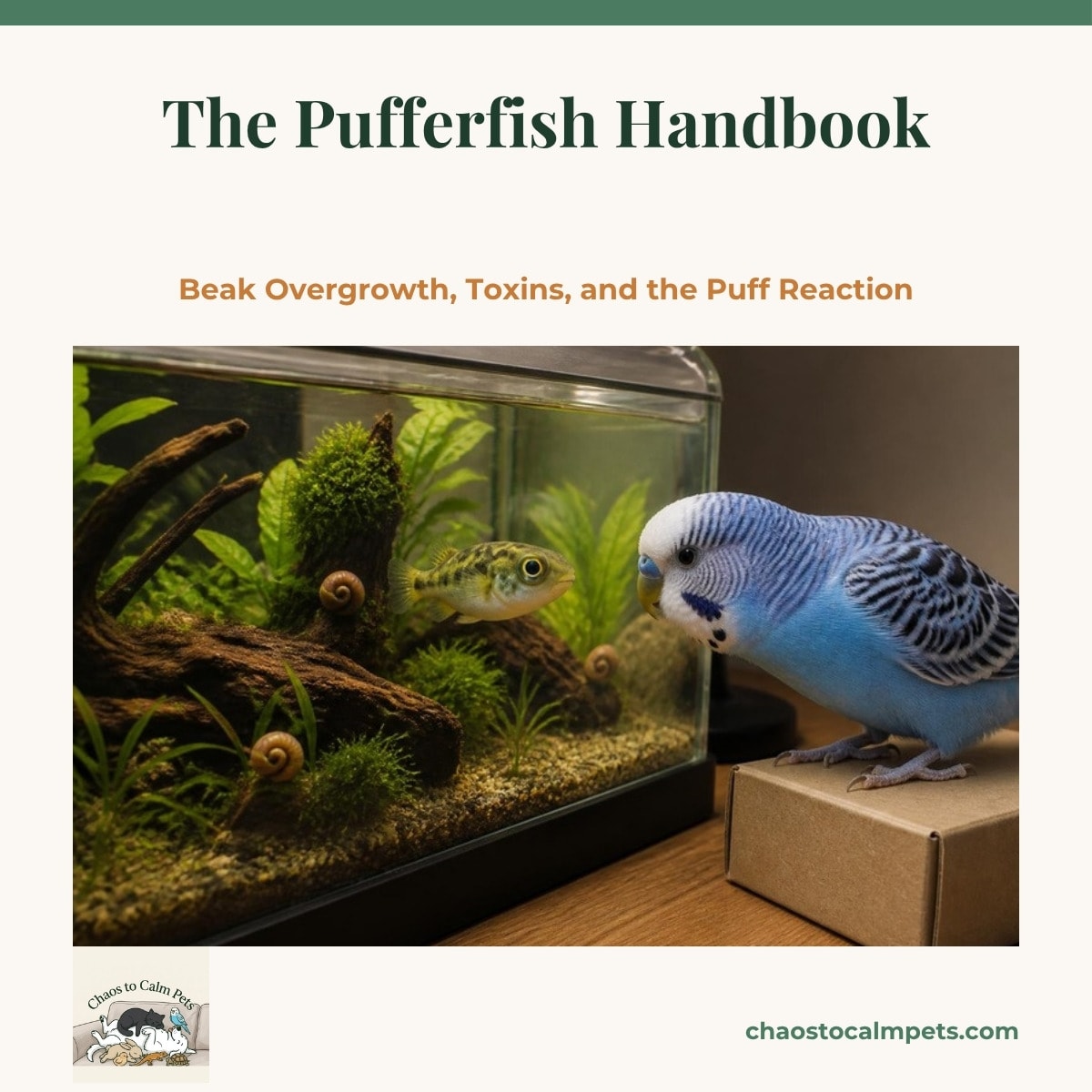
A puffer is a fish with a face, a beak and opinions, and it needs care no community fish does. 10 lessons on puffer intelligence and their hovering, helicopter-style swimming, the one-inch pea puffer, the brackish needs of Figure 8 and green spotted puffers, the giant Mbu and Fahaka, the ever-growing elodont beak, beak trims done by a fish vet, tetrodotoxin and keeper safety, the puff reaction and why you never lift a puffer into air, hollow-belly parasites in wild-caught fish, and why most puffers live alone.
About this course
Puffers are some of the most interactive fish you can keep. They swivel each eye on its own, hover and spin like small helicopters, and learn to recognize the person who feeds them. They also come with care needs that catch a lot of keepers off guard. This course starts with how puffers think and move, then meets the main species: the one-inch pea puffer in a planted nano tank, the Figure 8 and green spotted puffers that need brackish water (and, for green spotted adults, close to marine salt levels), and the giant Mbu and Fahaka that need 200 to 500 gallons or more. Lesson 5 explains the beak that never stops growing and why hard-shelled snails and crustaceans belong in the diet, and Lesson 6 walks through how a fish vet sedates and trims an overgrown beak. You'll learn what tetrodotoxin is and the simple safety rules around it, why lifting a puffer into open air can kill it, how to spot the hollow belly of internal parasites and set up quarantine deworming, and why medium and large puffers belong alone in species-only tanks.
What you'll learn
- How puffers use turret eyes, intelligence and helicopter-style fin movement in the tank
- Pea puffer nano tanks, and brackish salinity for Figure 8 and green spotted puffers
- What the giant Mbu and Fahaka need, from tank size to commercial-grade filtration
- Why the elodont beak keeps growing, and how a fish vet trims an overgrown one
- Tetrodotoxin basics, keeper safety, and why you never lift a puffer into air
- Spotting hollow-belly parasites, quarantine deworming, and keeping puffers in species-only tanks
Who this is for
New keepers who just fell for a pea puffer at the fish store, owners of a Figure 8 or green spotted puffer that was sold as a freshwater fish, and anyone planning a tank big enough for a Fahaka or Mbu.
Course outline (10 modules)
Quiz & Certificate
Knowledge quiz
After completing all lessons, take a short quiz to test your understanding.
Go to quiz →Completion certificate
Pass the quiz and earn a shareable certificate of completion.
View certificate →Frequently asked questions
Ready to get started?
$9.99 · Lifetime access · 10 lessons