
New to Your Home · Birds
The Duckling and Gosling Handbook
Managing Niacin, Swims, and Predator Proofing
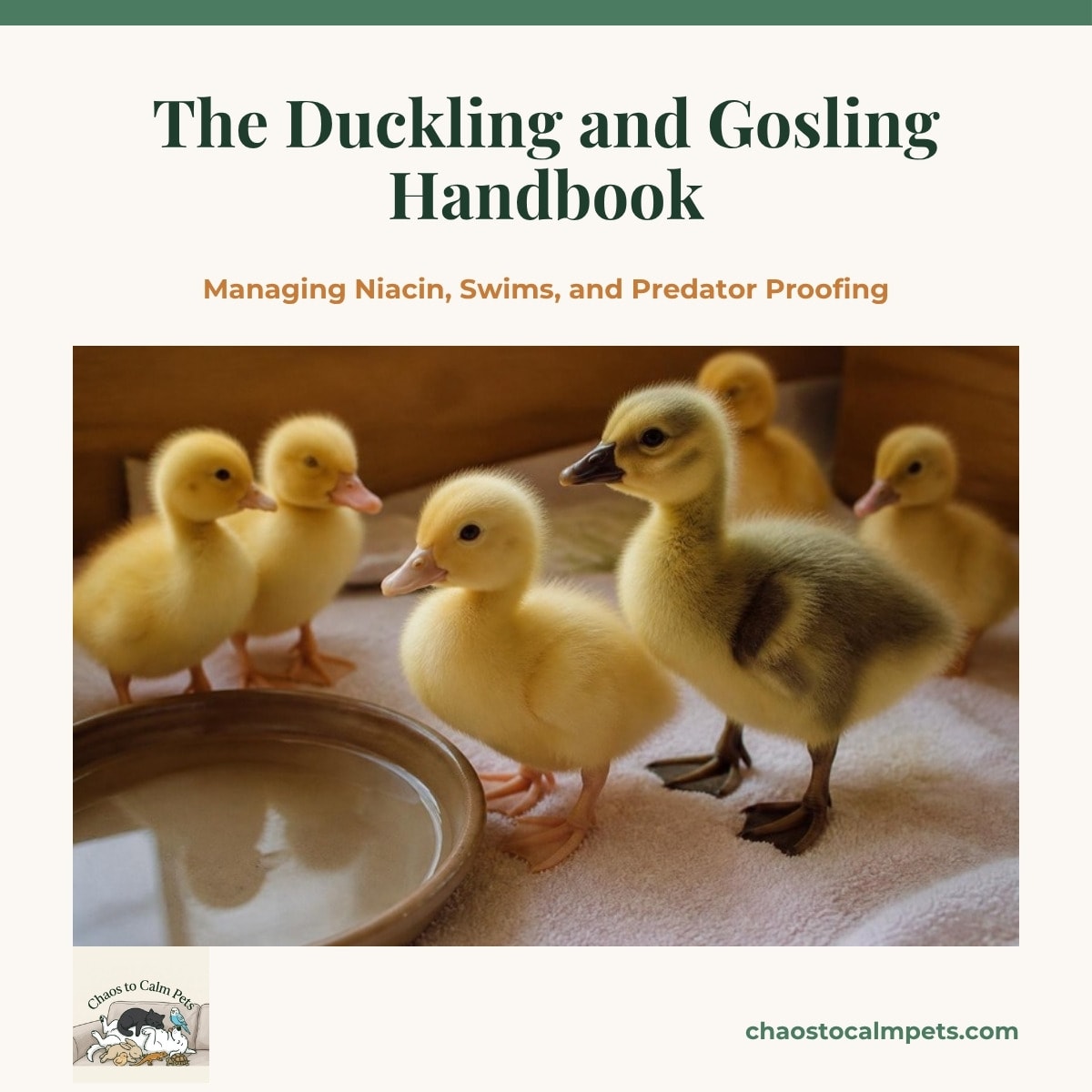
Ducklings are not chicks that like water; they need different feed, a different brooder and a reason not to drown. 10 lessons on niacin and brewer's yeast for growing legs, keeping a splashing brooder dry, first swims at week 2 with a drying station, why incubator ducklings chill in water, the preen gland switching on at week 3 to 4, unmedicated starter and the Amprolium problem, angel wing and protein, the 12 to 36 hour imprinting window, moving to outdoor ponds, and hardware-cloth pens raccoons can't open.
About this course
Most duckling problems come from treating them like chicks. This course starts with the one that cripples: niacin. Waterfowl legs grow faster than chick starter can support, so Lesson 1 has you mix brewer's yeast into the feed, 1 tablespoon per cup, through the first 8 to 10 weeks, and never baking yeast. Lesson 2 is the mess, with waterers on a mesh platform over a basin and hemp bedding instead of shavings that pack into a bog. Lessons 3 through 5 are about water: supervised swims from week 2 in a basin no deeper than the breastbone, why an incubator duckling with no mother's oil soaks through and chills, how to dry one fast, and the week the preen gland switches on and water starts beading off. Lesson 6 explains why medicated chick starter can poison a duck that drinks as much as yours does, and Lesson 7 covers angel wing, caused by too much protein and fixable only in the first days. Then imprinting, which happens between 12 and 36 hours after hatch and is why you raise at least two or three together. The last two lessons move them outside: the swim-and-stay-dry test, pond ramps, and a pen built from hardware cloth with a buried apron and latches a raccoon can't work.
What you'll learn
- Niacin for growing legs: brewer's yeast in the feed, and the deformities it prevents
- Keeping a splashing brooder dry with raised waterers and coarse bedding
- Supervised first swims at week 2, chilling in oil-free down, and the preen gland switching on
- Unmedicated 18 to 20 percent starter, the Amprolium risk, and the move to grower feed
- Angel wing from too much protein, and the 12 to 36 hour imprinting window
- The swim-and-stay-dry test for pond readiness, and hardware-cloth pens with buried aprons
Who this is for
Backyard keepers adding ducks to a chicken flock and using the same feed; families who brought home ducklings for the kids and found the brooder soaked by dinner; and anyone who noticed a duckling's wing feathers sticking out sideways this week.
Course outline (10 modules)
Quiz & Certificate
Knowledge quiz
After completing all lessons, take a short quiz to test your understanding.
Go to quiz →Completion certificate
Pass the quiz and earn a shareable certificate of completion.
View certificate →Frequently asked questions
Ready to get started?
$9.99 · Lifetime access · 10 lessons