
New to Your Home · Birds
The Baby Bird Weaning Handbook
Transitioning to Pellets, Veggies, and Foraging
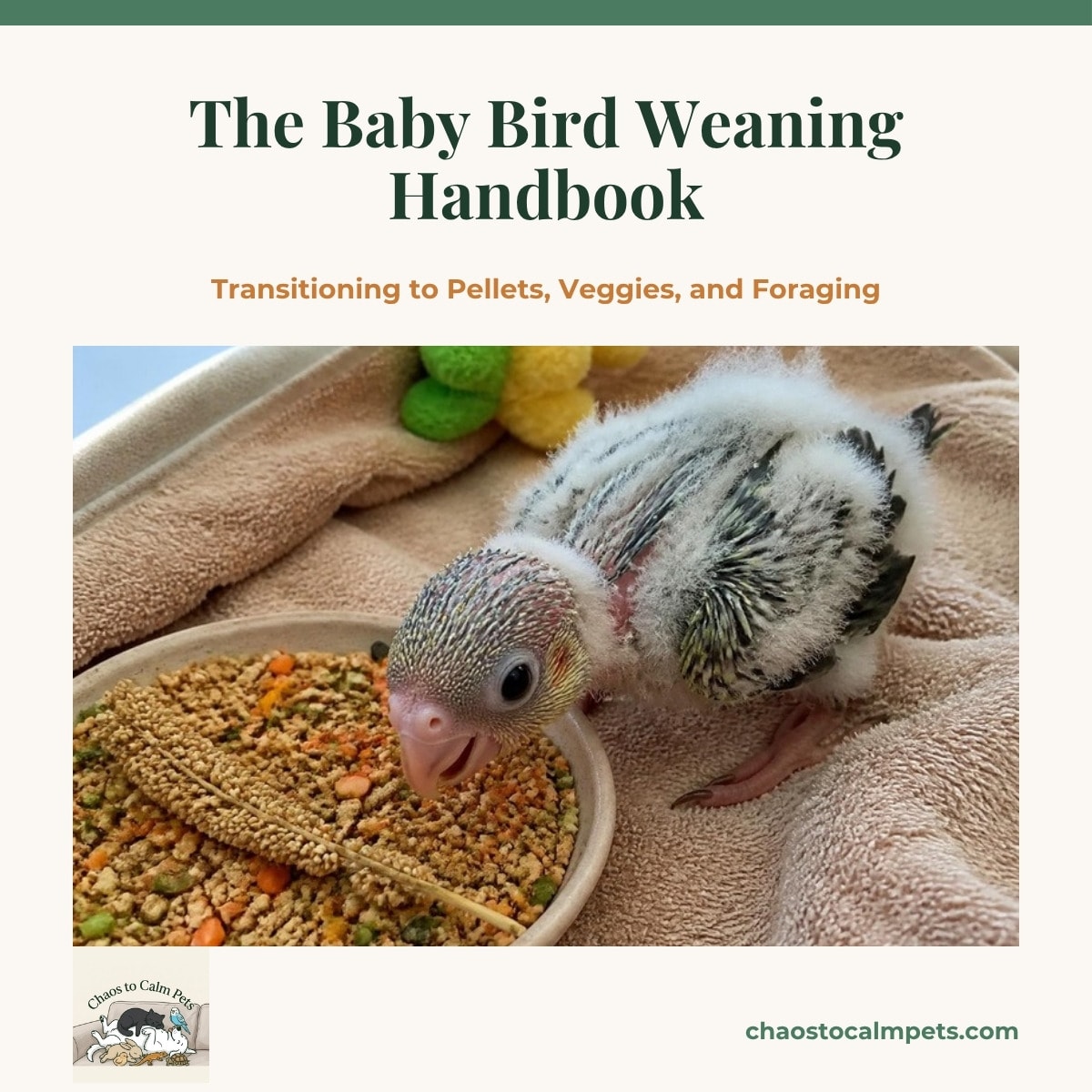
A baby bird that plays with its food is not the same as a baby bird that eats it, and weaning is learning the difference. 10 lessons on the three-phase weaning timeline, sprouting seeds and legumes safely, warm weaning mash at 100 to 102 degrees, getting pellets accepted by powdering and soaking them, sweet gateway vegetables and the toxic foods to ban, eating in front of your bird, floor-level foraging bowls, telling seed hulling from shredding, dropping the mid-day syringe on evidence, and building the adult pellet-and-produce diet.
About this course
Weaning is the part of hand-raising where patience pays and calendars don't. This course starts with the timeline, from the first curious chewing around weeks 3 to 5 through full independence somewhere between weeks 8 and 14, and the three phases in between. You'll learn to sprout seeds, mung beans, lentils and quinoa, rinse them twice a day and throw out anything that smells sour, and to build a warm mash at 100 to 102 degrees that a formula-fed baby recognizes as food. Lesson 4 is the pellet problem, solved by powdering and soaking them, then sprinkling crumbles over wet sprouts so they get eaten by accident. Lesson 5 covers sweet gateway produce, leafy greens and the kitchen foods that are never allowed near a bird. Then you'll sit down and eat in front of your baby, put heavy shallow bowls on the floor where it actually walks, and learn why a pile of empty hulls proves nothing until you feel a full crop at bedtime. The last two lessons drop the mid-day syringe on evidence, with weights tracked for 48 to 72 hours after, and set up the adult diet of pellets, fresh food and seeds kept for training.
What you'll learn
- The three-phase weaning timeline and why the bird, not the calendar, sets the pace
- Sprouting seeds and legumes safely, and mixing a warm 100 to 102 degree weaning mash
- Pellet acceptance in three stages, sweet gateway produce, greens, and the toxic foods to ban
- Eating in front of your bird and placing heavy shallow bowls on the floor
- Hulling versus shredding, and the evening crop check that proves a bird ate
- Dropping the mid-day syringe on stable weights, then building the adult pellet-and-produce diet
Who this is for
First-time hand-feeders whose baby has started tossing food instead of eating it; owners who bought an unweaned baby and were told it would be simple; and anyone wondering whether the empty seed hulls in the bowl mean their bird is ready to lose a feeding.
Course outline (10 modules)
Quiz & Certificate
Knowledge quiz
After completing all lessons, take a short quiz to test your understanding.
Go to quiz →Completion certificate
Pass the quiz and earn a shareable certificate of completion.
View certificate →Frequently asked questions
Ready to get started?
$9.99 · Lifetime access · 10 lessons