
New to Your Home · Birds
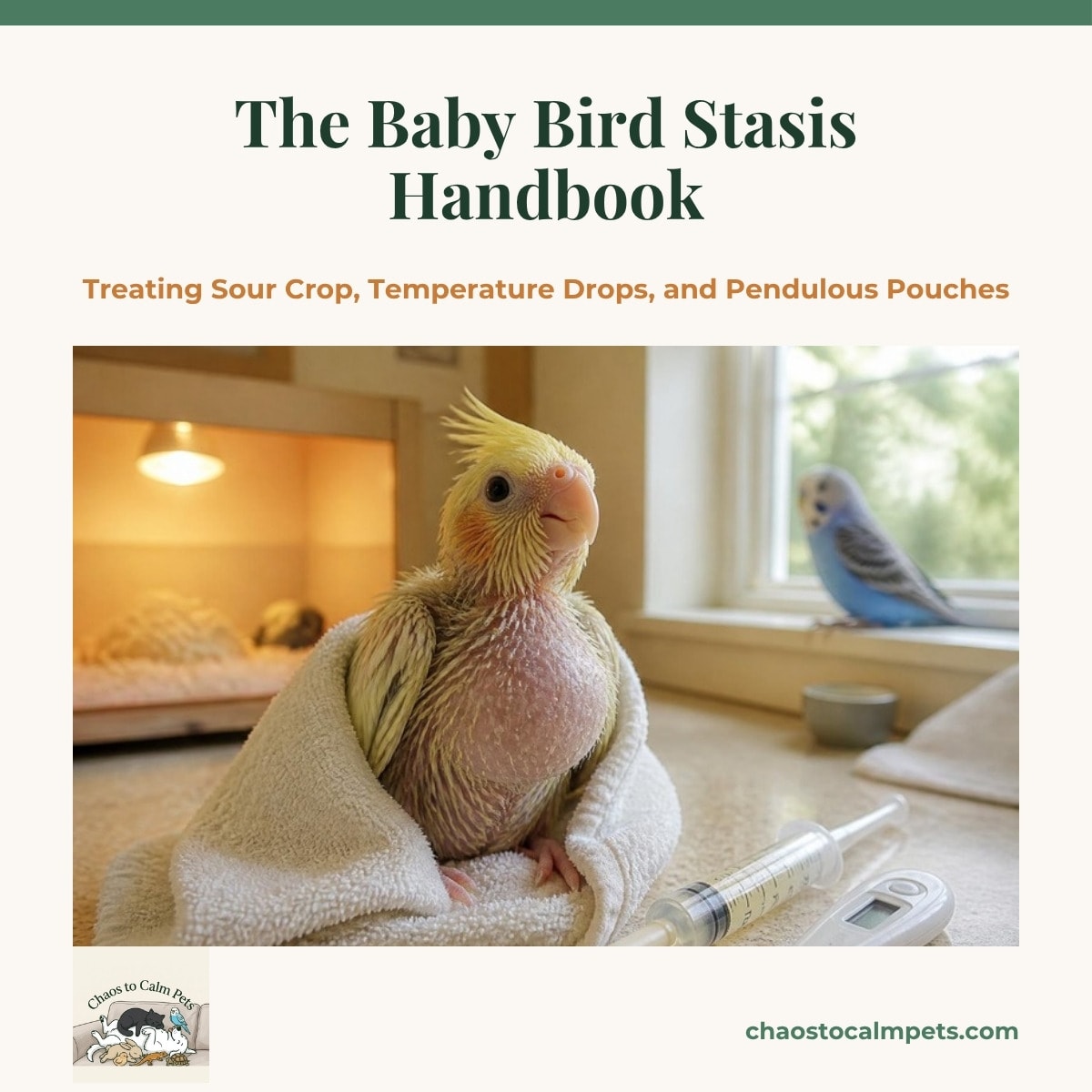
The Baby Bird Stasis Handbook
Treating Sour Crop, Temperature Drops, and Pendulous Pouches
A crop that has not emptied in four hours is the earliest warning a chick gives. 10 lessons on telling slow motility from sour crop, the brooder temperature drop behind most stalls, reading the crop's smell to tell yeast from bacteria, gentle exterior massage to break up a dough-ball, crop flushing as done under your vet's guidance, holding the chick head-down so a flush does not reach the lungs, giving prescribed antifungals and antibiotics correctly, the thin papaya recovery slurry, fitting a crop bra for a stretched, sagging crop, and the nursery changes that stop it recurring.
About this course
Sour crop is the most common way a hand-fed chick dies, and almost every case starts as a crop that simply did not empty on time. This course teaches you to catch it at that stage. You'll learn the difference between slow motility, which is a delay, and sour crop, which is fermentation with gas, acid and a putrid smell, and why the first thing to check is the brooder thermometer, because a few degrees of chill can stop the crop muscles cold. Lesson 3 teaches you to smell the crop: bread-dough sweetness points to yeast, rotten-egg foulness to bacteria, and that detail helps your avian vet choose the right medication. Lessons 4 through 7 are the hands-on care, meant to be done with your vet's guidance: gentle circular massage to break up a packed dough-ball, flushing the crop with warm sterile saline, holding the chick at a 45-degree downward angle so the wash drains out the beak instead of into the lungs, and giving the prescribed antifungal or antibiotic exactly as prescribed. Then recovery: a thin, warm papaya slurry fed in tiny doses, a crop bra for a crop that has stretched and sags, and finally the thermostat backups, strict meal volumes and probiotics that keep this from happening twice.
What you'll learn
- Telling slow motility from sour crop, and why the brooder thermometer is the first check
- Reading crop odor: bread-dough yeast versus rotten-egg bacteria, and what to tell your vet
- Gentle exterior crop massage to break up a dough-ball, with warm electrolyte to loosen it
- Crop flushing with warm saline and the head-down angle, done with your vet's guidance
- Giving prescribed antifungals and antibiotics on time, and finishing the full course
- The thin papaya recovery slurry, crop bras for a sagging crop, and nursery reforms
Who this is for
Hand-feeders whose chick still has a full crop at the next feeding; breeders who have lost a chick to sour crop and want a protocol; and anyone whose avian vet has shown them how to massage or flush a crop and wants the steps written down.
Course outline (10 modules)
Quiz & Certificate
Knowledge quiz
After completing all lessons, take a short quiz to test your understanding.
Go to quiz →Completion certificate
Pass the quiz and earn a shareable certificate of completion.
View certificate →Frequently asked questions
Ready to get started?
$9.99 · Lifetime access · 10 lessons