
New to Your Home · Birds
The Baby Bird Nursery Guide
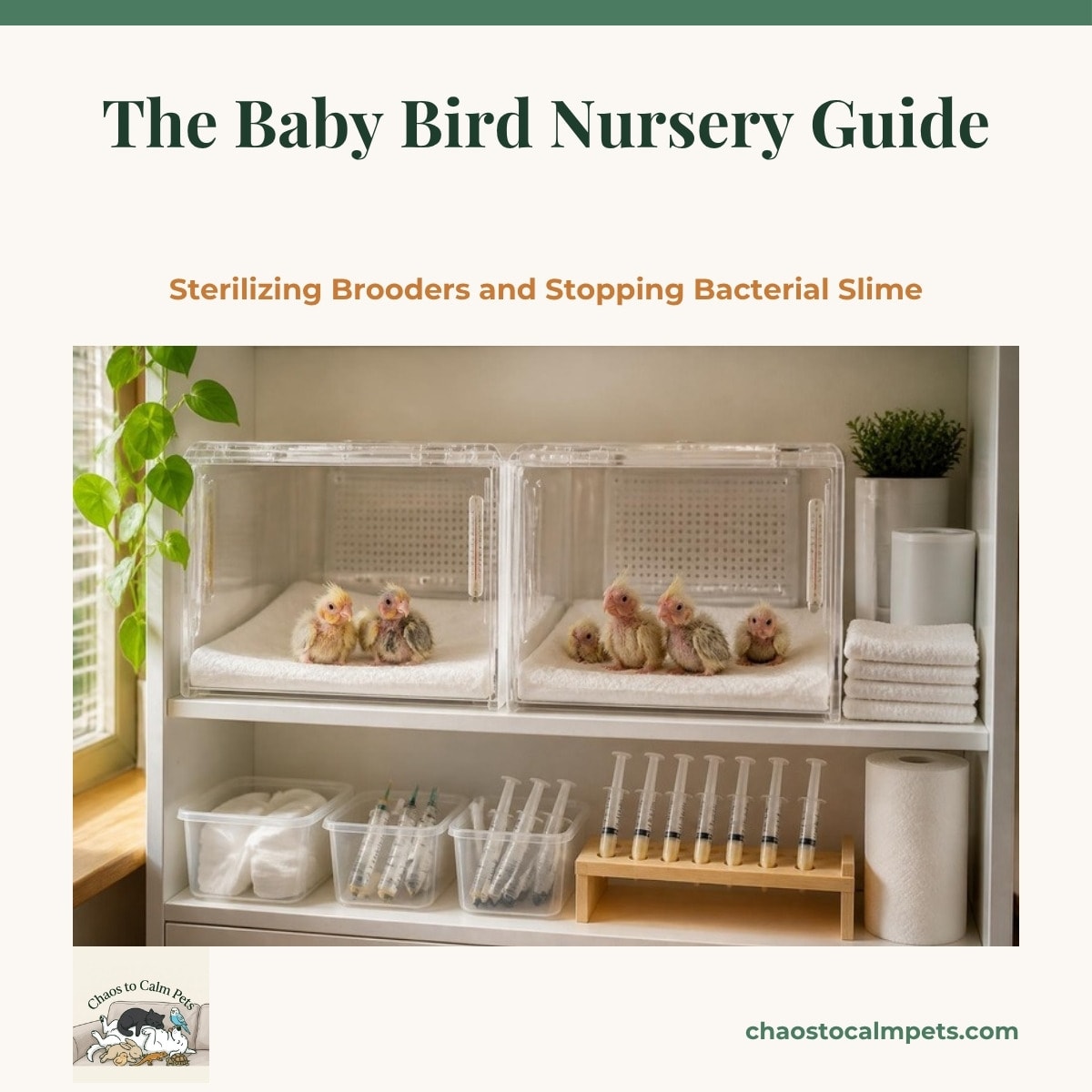
Sterilizing Brooders and Stopping Bacterial Slime
A warm brooder doubles its bacteria about every 20 minutes, and a chick has no immune system yet. 10 lessons on why the nursery has to be run like a clean room, choosing chlorhexidine over bleach, scrubbing to the elbows and gloving up, one color-coded tool set per brooder, washing and soaking syringes and cups and throwing out worn ones, clearing waste before it turns into ammonia, HEPA filtration for the room, keeping the nursery away from the adult aviary, reading slime and sour smells as early warnings, and the end-of-season reset.
About this course
A hand-feeding nursery is a hospital ward whether you treat it like one or not, and this course shows you what that means day to day. You'll start with the math: bacteria in a 95-degree brooder double roughly every 20 minutes, and a chick hatches with no antibodies on its mucous membranes, so blood poisoning can take a whole clutch in a day. Then the tools of the trade: veterinary chlorhexidine as the go-to disinfectant, quat cleaners that need careful rinsing, and why household bleach fumes don't belong near a brooder. You'll scrub to the elbows for 30 seconds, glove up, and change gloves between clutches, give every brooder its own color-coded thermometer, scale and brushes, and learn the rinse, scrub, soak and air-dry routine for syringes and mixing cups, throwing out any syringe with a scored barrel. You'll pull soiled liners at every feeding before uric acid turns into ammonia that pools at floor level, run a True HEPA purifier for 4 to 6 air changes an hour, and keep the nursery in a separate room from the adult birds with its own clothing and shoes. The last lessons teach you to read slime and sour or rotten smells as early warnings, and to strip and decontaminate the whole room at the end of the season.
What you'll learn
- Why bacteria explode in a warm brooder, and why a chick without antibodies can die fast
- Choosing chlorhexidine, handling quat cleaners safely, and why household bleach stays out of the nursery
- The 30-second scrub to the elbows, gloves changed between clutches, and one tool set per brooder
- Rinsing, scrubbing, soaking and air-drying syringes and cups, and discarding worn syringes
- Pulling liners at every feeding before ammonia forms, and HEPA filtration for the whole room
- A separate nursery room, reading slime and sour smells, and the end-of-season reset
Who this is for
Hand-feeders who have lost a clutch to an infection they never saw coming, breeders raising more than one clutch at a time who want to stop an illness in one tub from spreading, and anyone setting up a nursery in a house that also holds adult parrots.
Course outline (10 modules)
Quiz & Certificate
Knowledge quiz
After completing all lessons, take a short quiz to test your understanding.
Go to quiz →Completion certificate
Pass the quiz and earn a shareable certificate of completion.
View certificate →Frequently asked questions
Ready to get started?
$9.99 · Lifetime access · 10 lessons