
New to Your Home · Birds
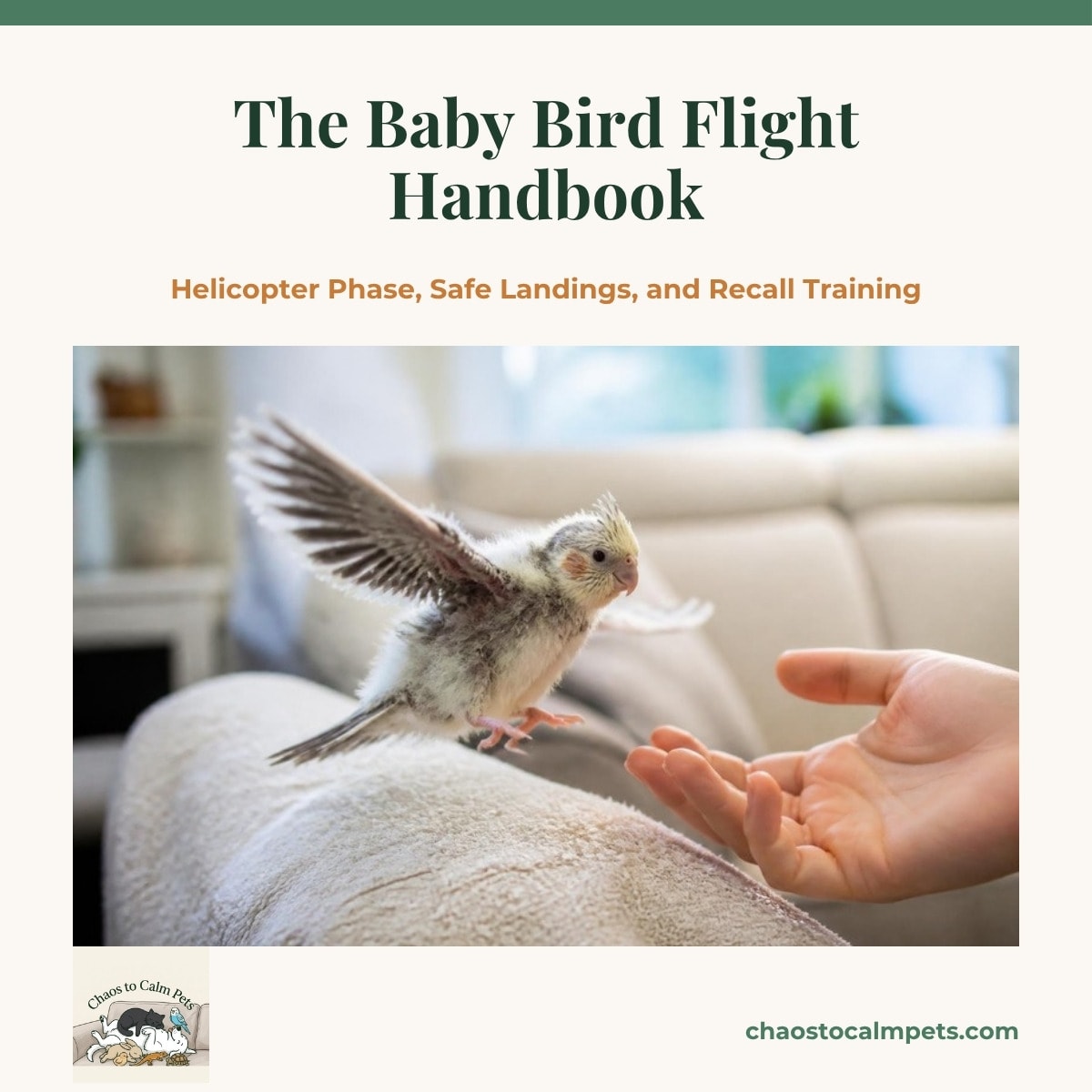
The Baby Bird Flight Handbook
Helicopter Phase, Safe Landings, and Recall Training
The week your baby bird learns to fly is loud, clumsy and over fast, and most of the injuries are preventable. 10 lessons on the helicopter phase that builds chest muscle, letting the first launch happen on the bird's own terms, padding the flight room, locking out windows, mirrors and ceiling fans, how flight develops the air sacs, the stages of landing coordination, the normal fledging weight drop, short daily stamina sessions, recall training from 6 inches to across the room, and spotting sprains and broken blood feathers.
About this course
Before a baby bird flies, it stands on a perch and beats its wings until the whole cage rattles. That's the helicopter phase, and Lesson 1 explains what it's building. From there you'll learn why the first launch is instinct, not something you teach, and how to set up a wide perch over a padded floor so the leap is safe. Lessons 3 and 4 are the room: mats and blankets where the bird will crash, and curtains, decals, covered mirrors and a ceiling fan that stays off every single time. Lesson 5 is a short look at why flight matters for a bird's air sacs and heart, which is also why I don't keep fledglings in small cages. Then you'll watch landings improve from crashing into your chest to gripping a swaying perch, understand the 5 to 15 percent weight drop that scares new keepers, and build stamina in two or three short sessions a day. Lesson 9 teaches recall from 6 inches away to across the room, and Lesson 10 covers sprains and broken blood feathers, what you can do at home and what goes to the avian vet.
What you'll learn
- What the helicopter phase builds and why the first launch is instinct, not instruction
- Padding the flight room and locking out windows, mirrors and ceiling fans before every session
- How flight develops a young bird's air sacs and heart, and the stages of landing coordination
- Why a fledgling drops 5 to 15 percent of its weight, and when that is normal
- Short daily stamina sessions and the panting and drooping signs that mean stop
- Recall training from 6 inches to across the room, and handling sprains and broken blood feathers
Who this is for
Hand-feeders with a clutch about to fledge; new owners of a young parrot who want it to fly in the house without hitting a window; and anyone who weighed their fledgling this morning and panicked at the number.
Course outline (10 modules)
Quiz & Certificate
Knowledge quiz
After completing all lessons, take a short quiz to test your understanding.
Go to quiz →Completion certificate
Pass the quiz and earn a shareable certificate of completion.
View certificate →Frequently asked questions
Ready to get started?
$9.99 · Lifetime access · 10 lessons