
New to Your Home · Birds
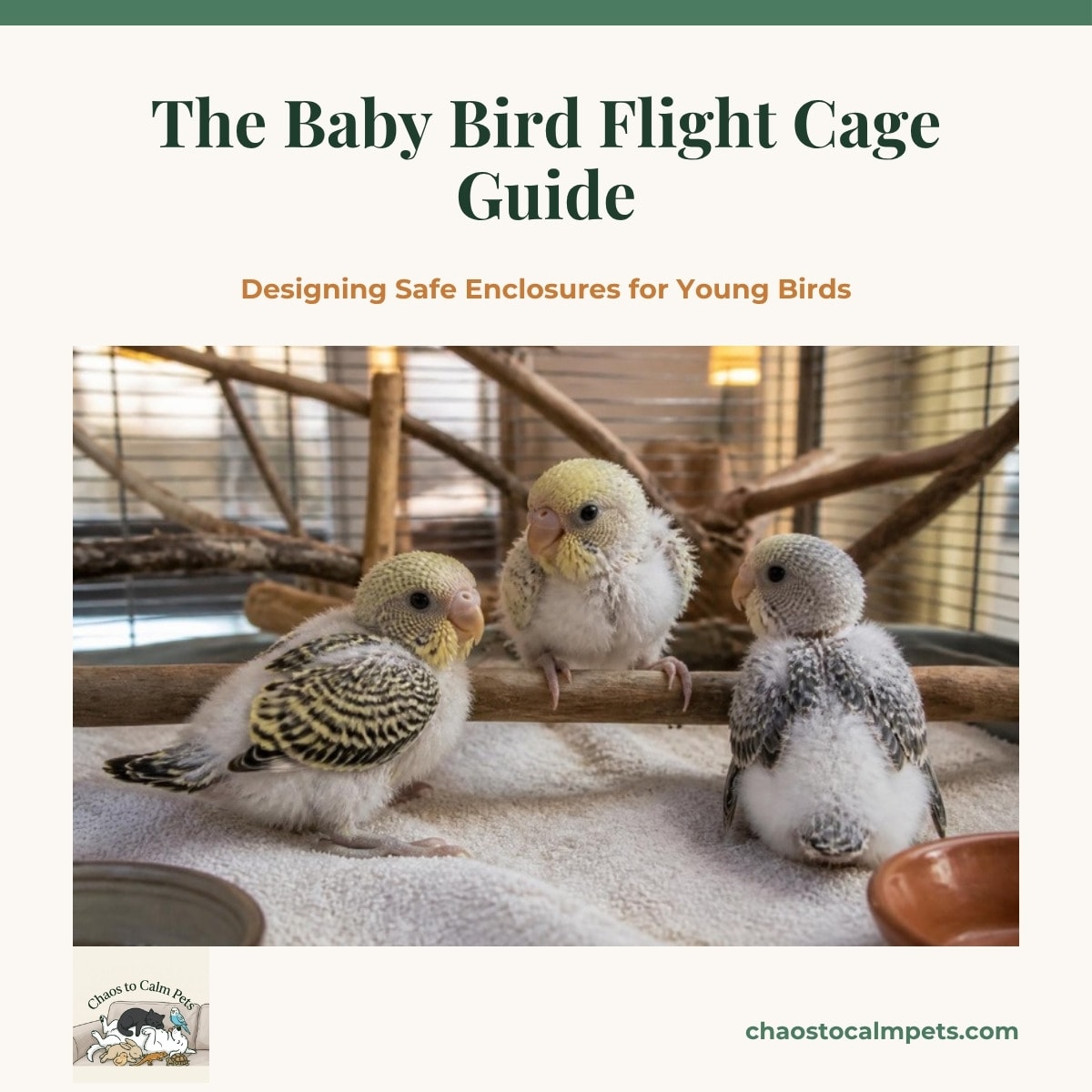
The Baby Bird Flight Cage Guide
Designing Safe Enclosures for Young Birds
The first cage a baby bird moves into decides how many bruises it collects while learning to fly. 10 lessons on reading plumage and restlessness to time the brooder exit, horizontal cage length and species bar spacing, pulling the wire grate and padding the floor, perches set 3 to 6 inches up, foam guards for a soft keel bone, floor-level food bowls, drowning-proof water dishes with river stones, balsa and paper starter toys, night-lights and three-sided covers for night frights, and raising perches in small steps until the bird is ready for a play gym.
About this course
A baby bird leaving the brooder is clumsy, top-heavy and sure it can fly. This course is about building the cage that forgives that. You'll start by checking the feathers and the behavior that tell you a fledgling is ready to move, and matching the room temperature so the move itself isn't a shock. Then you'll choose a cage that is long rather than tall, with bar spacing matched to the species and horizontal wires the bird can climb. The middle lessons are all about falls: taking out the wire grate and padding the floor, keeping every perch 3 to 6 inches up on natural branches, and padding corners and feeder doors so a soft keel bone never takes a hard hit. You'll put food bowls on the floor where a clumsy bird can reach them, keep water shallow with stones to stand on, and pick first toys that shred without hurting anyone. The last two lessons cover night frights, with a night-light and a three-sided cover, and the slow process of raising perches a few inches at a time until your bird is ready for a play gym outside the cage.
What you'll learn
- Feather and behavior signs that a fledgling is ready to leave the brooder
- Horizontal cage length, species bar spacing, and climbing wires that give clumsy feet traction
- Removing the wire grate, padding the floor, and keeping first perches 3 to 6 inches up
- Protecting a soft keel bone with foam guards, fleece bumpers and a calm cage location
- Floor-level food platforms, shallow water with river stones, and safe starter toys
- Night-light and cover routines for night frights, then raising perches a few inches at a time
Who this is for
Hand-feeders moving their first clutch out of the brooder; new owners who brought home an unweaned or just-weaned baby and an empty adult cage; and anyone whose fledgling keeps crash-landing on the cage floor and needs a safer setup today.
Course outline (10 modules)
Quiz & Certificate
Knowledge quiz
After completing all lessons, take a short quiz to test your understanding.
Go to quiz →Completion certificate
Pass the quiz and earn a shareable certificate of completion.
View certificate →Frequently asked questions
Ready to get started?
$9.99 · Lifetime access · 10 lessons