
New to Your Home · Birds
The Baby Bird Aspiration Guide
Clearing Airways, Oxygen Therapy, and Pneumonia Prevention
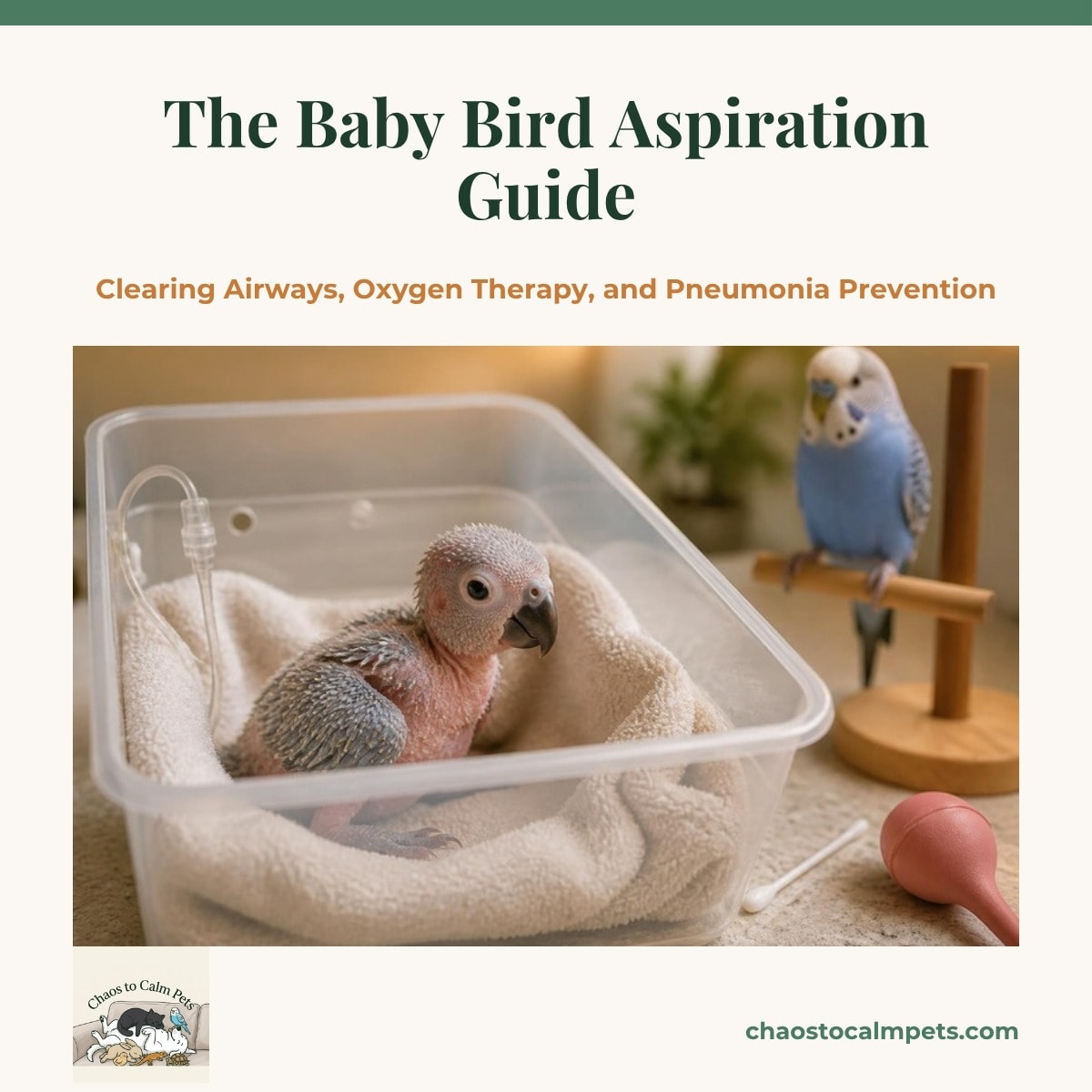
You have a few seconds when a chick inhales formula, and this course is what to do with them. 10 lessons on how formula gets past the glottis, the bubbling, gasping signs of aspiration, the head-down inversion that uses gravity to clear the airway, wicking and suctioning the throat before righting the chick, an oxygen recovery chamber, why a vet call for antibiotics follows every event, the feeding changes that stop it happening again, crop tubing for a chick that aspirates repeatedly, the tail-bob and hoarseness to watch for in later weeks, and the hard welfare call when the lungs cannot recover.
About this course
Aspiration is the emergency every hand-feeder dreads, because it happens in a second and the chick cannot cough it out. This course is written so you have already rehearsed the response before you need it. It opens with the anatomy, the open glottis on the floor of the mouth, and the three feeding mistakes that push formula into it. Then the signs: wet clicking breaths, froth at the nostrils, open-beak gasping, skin going blue. The next three lessons are the hands-on response, meant to be done with your avian vet's guidance and in a true emergency: inverting the chick head-down within seconds and arcing it gently so gravity drains the airway, wicking and suctioning the pooled fluid from the throat before you right the chick, and setting up a warm, dark oxygen chamber for the hours after. Lesson 6 is the phone call, because formula in the lungs breeds pneumonia within a day and your vet decides on antibiotics. The back half is prevention: an honest audit of your plunging speed and angle, tiny increments on the upward head-bob, and crop tubing for the rare chick that aspirates no matter how carefully it is fed. The course ends with the tail-bob and hoarseness that signal lingering air sac infection weeks later, and the welfare decision when a chick cannot recover.
What you'll learn
- How formula gets past the glottis, and the clicking, bubbling, gasping signs of aspiration
- The head-down inversion within seconds, with the neck supported, to drain the airway
- Wicking and suctioning pooled fluid from the throat before righting the chick
- A warm, dark oxygen recovery chamber, and the vet call for antibiotics after every event
- Auditing your plunge speed and angle, and feeding in tiny increments on the head-bob
- Crop tubing for chronic aspirators, long-term tail-bob monitoring, and the ethical limit
Who this is for
Hand-feeders who have heard a chick click mid-feed and froze; breeders who want an emergency plan written down before the next clutch; and anyone whose chick survived an aspiration and needs to know what to watch for over the coming weeks.
Course outline (10 modules)
Quiz & Certificate
Knowledge quiz
After completing all lessons, take a short quiz to test your understanding.
Go to quiz →Completion certificate
Pass the quiz and earn a shareable certificate of completion.
View certificate →Frequently asked questions
Ready to get started?
$9.99 · Lifetime access · 10 lessons