
Household & Multi-Pet · Aquatic
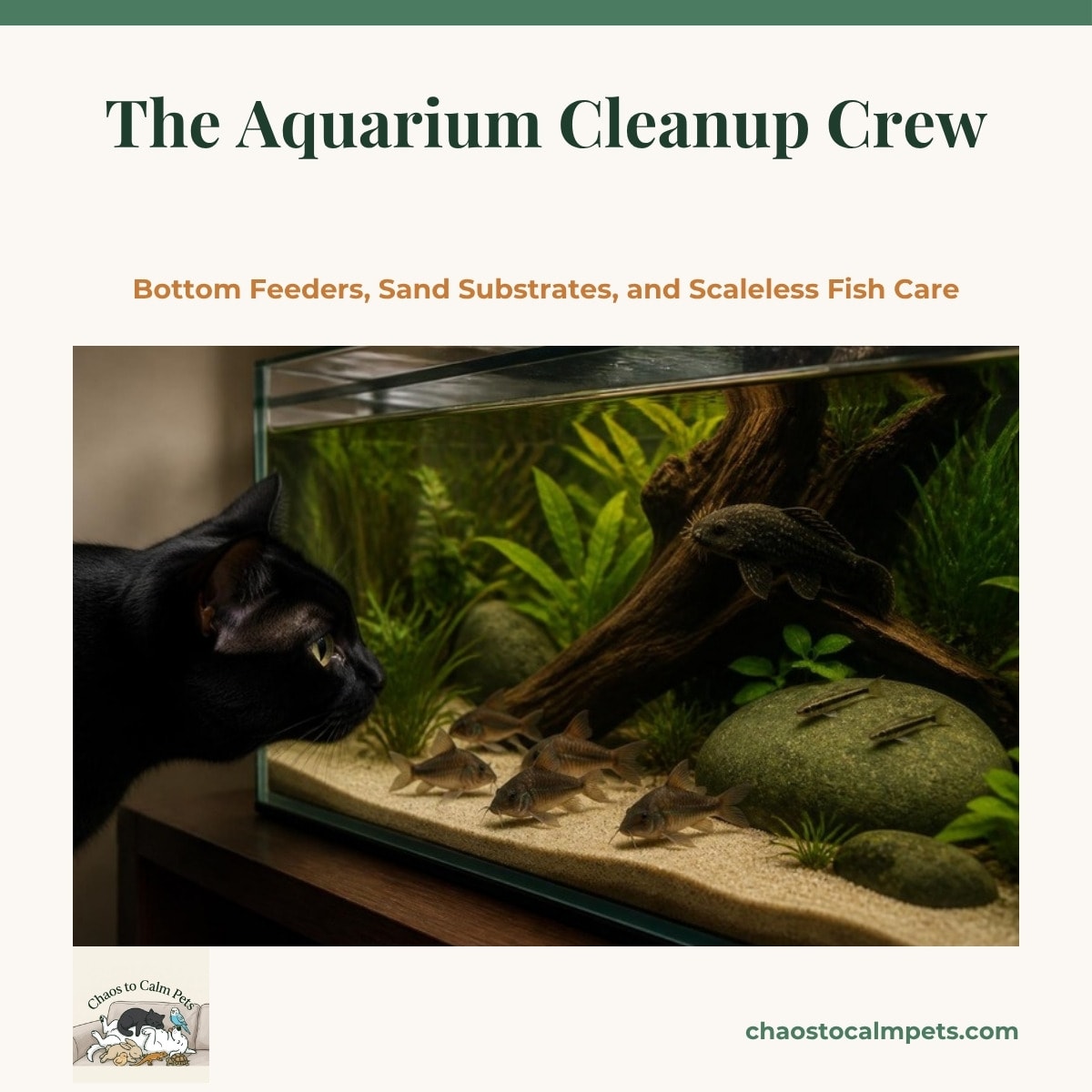
The Aquarium Cleanup Crew
Bottom Feeders, Sand Substrates, and Scaleless Fish Care
Bottom feeders are often bought as tank cleaners, but each one has care needs of its own. 10 lessons on corydoras groups and air-gulping, why corys need smooth sand, the common pleco trap, bristlenose and rubberlip plecos, what wood-rasping plecos get from driftwood, synodontis catfish, otocinclus and the clean-tank starvation risk, target feeding the bottom, plecos that rasp slime coats, and medicine care for scaleless and armored fish.
About this course
The fish people buy to clean the tank are animals with their own needs, and this course treats them that way. It starts with corydoras: why a single cory hides, why a group of six or more of one species relaxes, and how they gulp air at the surface. Lesson 2 explains why fine, smooth sand and clean water protect their barbels. Lesson 3 is the common pleco trap, a 2-inch fish that grows to 18 to 24 inches and needs 125 gallons or more, and why it must never be released. Lesson 4 covers the smaller bristlenose and rubberlip plecos, and Lesson 5 explains what wood-rasping plecos get from real driftwood. Then you'll meet synodontis catfish, including the upside-down catfish, and the otocinclus, which can starve in a new, too-clean tank. Lesson 8 shows how to get food to the bottom past faster fish, Lesson 9 covers plecos that rasp the slime coat off slow fish at night, and Lesson 10 explains why copper, salt and medicine doses need extra care with scaleless and armored fish.
What you'll learn
- Why corydoras need a group of six or more, and how they gulp air
- How fine, smooth sand and clean water protect a cory's sensitive barbels
- The common pleco trap, and the smaller bristlenose and rubberlip plecos that fit home tanks
- Why wood-rasping plecos need real driftwood, and the upside-down synodontis catfish
- Keeping otocinclus fed in a mature tank, and target feeding the bottom
- The pleco slime-coat hazard, and medicine care for scaleless and armored fish
Who this is for
Keepers who bought a pleco or a single cory as a cleaner and want to do right by it; planted-tank owners adding otocinclus to a tank; and community keepers whose bottom-dwellers never seem to get enough to eat.
Course outline (10 modules)
Quiz & Certificate
Knowledge quiz
After completing all lessons, take a short quiz to test your understanding.
Go to quiz →Completion certificate
Pass the quiz and earn a shareable certificate of completion.
View certificate →Frequently asked questions
Ready to get started?
$9.99 · Lifetime access · 10 lessons