
Training & Behavior · Cold-Blooded Crew
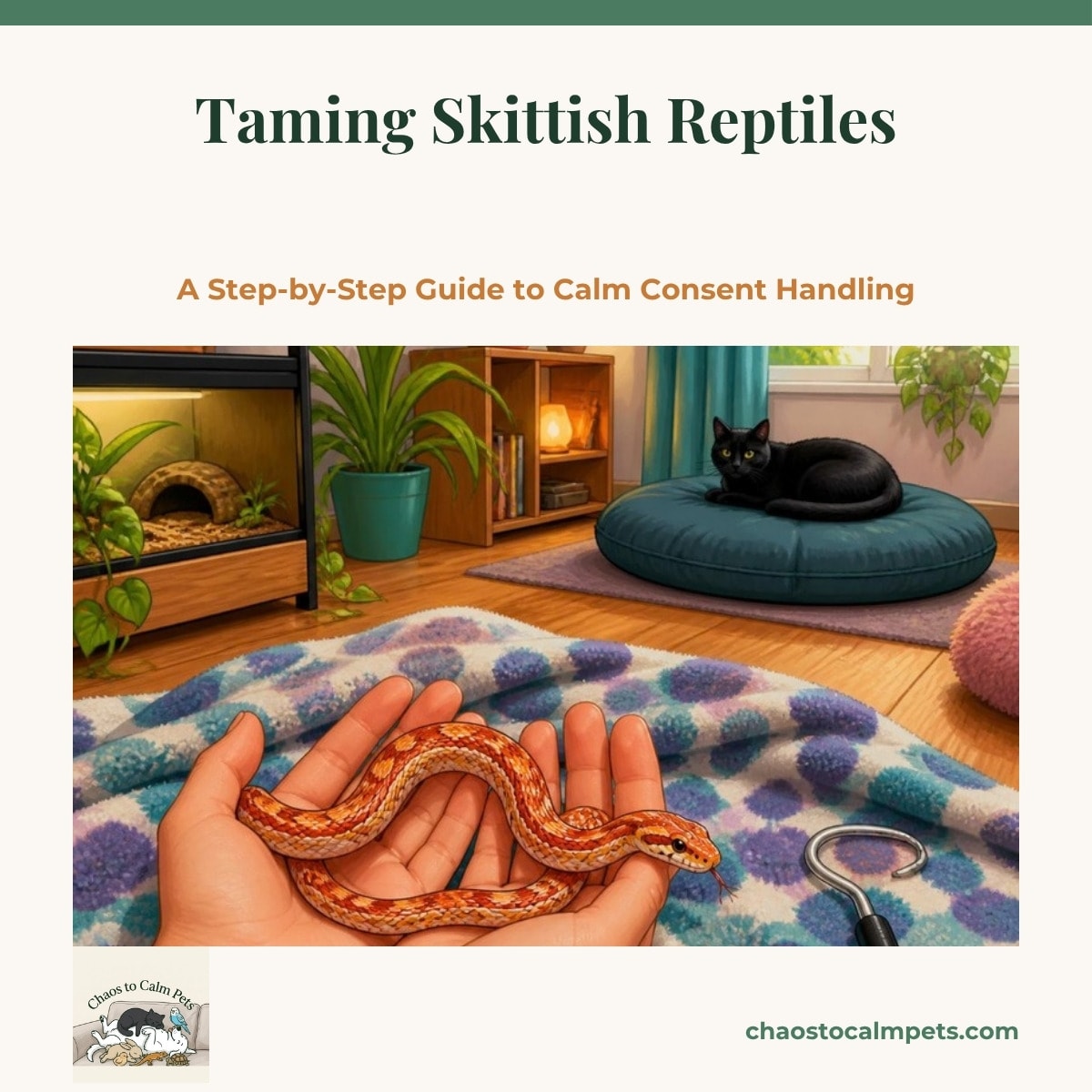
Taming Skittish Reptiles
A Step-by-Step Guide to Calm Consent Handling
The leather-glove method makes a scared reptile a terrified one. 20 modules on the fear engine, strikers versus bolters versus hiders, the tank as a safe zone, side approaches, five minutes of motionless hands, soft tools before fingers, the hook-tap cue, the thirty-second rule, the opt-in hand, floor sessions and pillow forts, the supportive hold, rewarding the tongue flick, head-shy snakes, displaying lizards, separating medicine from handling, knowing when to stop, burnout, transport-box practice, and getting the rest of the family to follow the rules.
About this course
Every defensive reptile is running one program: survive the predator. The leather glove and the firm grip tell it the predator is real. This course replaces that with a step ladder the animal climbs at its own speed. You'll learn how to diagnose whether yours strikes, bolts, or hides and whether the tank itself is making it worse, why the inside of the enclosure is never a place for a grab, why an overhead hand means hawk and a side hand doesn't, how five to ten minutes of a motionless hand teaches a brain that hands are furniture, how a rubber-coated hook introduces touch before fingers do and becomes a predictable cue that this isn't feeding time, why the first sessions last thirty seconds to two minutes with no goal except ending safely, how to build an opt-in posture and honor every opt-out, why the floor beats mid-air and a pillow fort beats everything, how to hold with every leg and the base of the tail supported and with steady pressure instead of loose hands, how to reward the exact moment of a relaxed body or a tongue flick, how to work a head-shy snake from behind and below, how to stand your ground outside a displaying lizard's strike zone and reward the mouth closing, why medicine happens in another room, how to end before the trembling starts, what burnout looks like and how long rest takes, how to make the transport box a familiar retreat, and why everyone in the house has to start from the beginning.
What you'll learn
- The fear engine, why force fails, and diagnosing strikers, bolters, and hiders
- The enclosure as safe zone, neutral territory, side approaches, and motionless hands
- Soft tools before fingers, the hook-tap cue, and the thirty-second rule
- The opt-in hand, floor sessions, pillow forts, the supportive hold, and rewarding calm
- Head-shy snakes, displaying lizards, and keeping medicine out of training
- Knowing when to stop, burnout and rest, transport-box practice, and household rules
Who this is for
Anyone with a snake or lizard that hisses, strikes, bolts, or hides every time the lid opens, and new keepers who want to do the first weeks right.
Course outline (20 modules)
Quiz & Certificate
Knowledge quiz
After completing all lessons, take a short quiz to test your understanding.
Go to quiz →Completion certificate
Pass the quiz and earn a shareable certificate of completion.
View certificate →Frequently asked questions
Ready to get started?
$9.99 · Lifetime access · 20 lessons