
Training & Behavior · Aquatic
South American Cichlids
Oscars, Dwarf Rams, and Discus Care
From an Oscar that begs at the glass to a German blue ram that tops out at 2.5 inches, South American cichlids range widely in size and care. 10 lessons on Oscars as wet pets, hole-in-the-head disease, German blue rams, apistogrammas, the discus challenge, angelfish as they grow into pairs, geophagus eartheaters, the hardy convict cichlid, matching diets to each kind of cichlid, and managing aggression at spawning time.
About this course
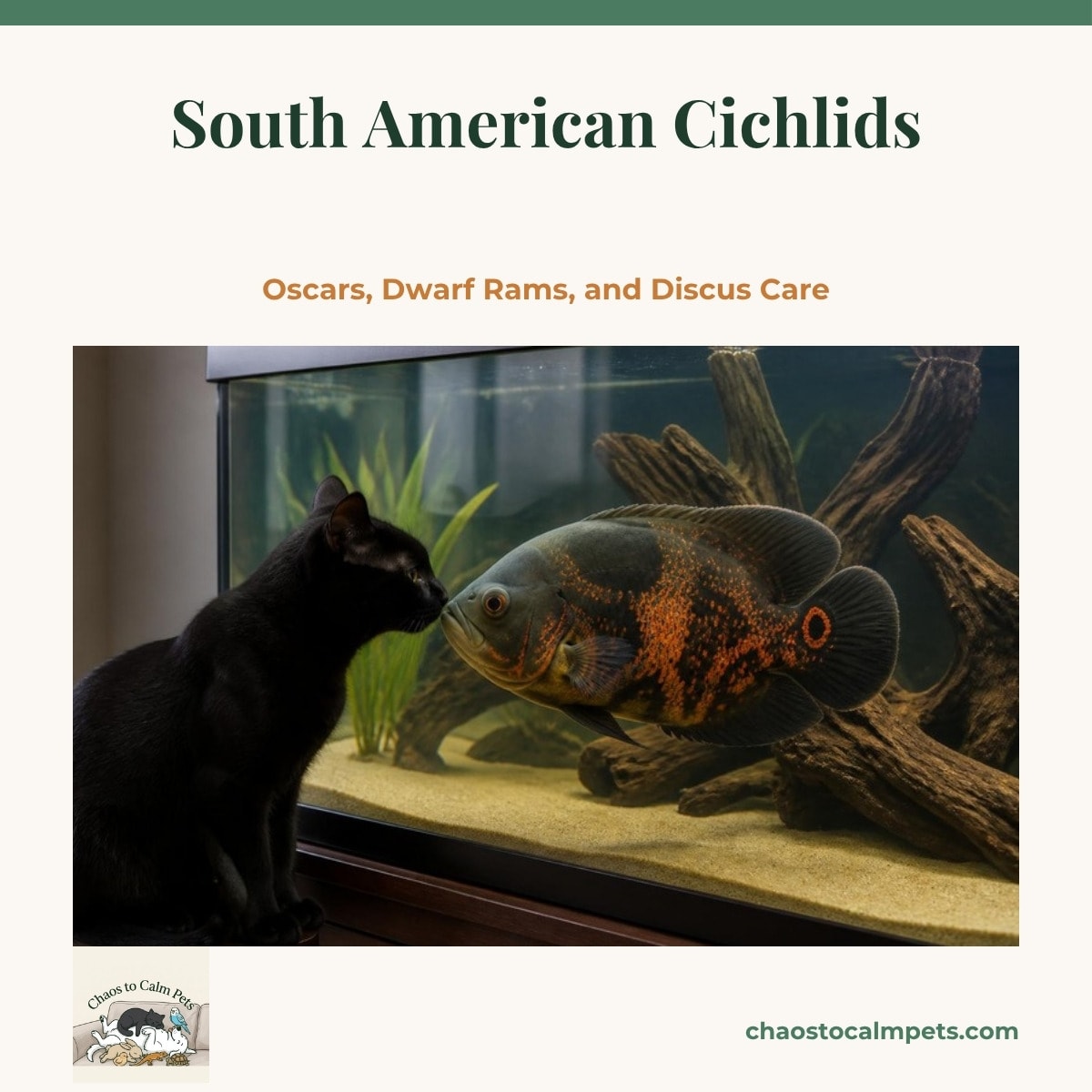
South American cichlids include some of the smartest, most personable fish you can keep, and some of the most demanding. This course opens with the Oscar, a fish that recognizes you and begs at the glass but grows from 2 inches to 12 to 14 and needs at least 75 gallons, with every rock secured. Lesson 2 covers hole-in-the-head disease, what is suspected to cause it, and when to bring in a fish vet. Then the course scales down to German blue rams, which need warm, soft, acidic water, and apistogrammas, whose females breed in leaf litter and small caves. Lesson 5 is the discus: water around 86 degrees, frequent large water changes and a group of five or more. Lesson 6 explains why cute juvenile angelfish pair off into territorial adults, and Lesson 7 why geophagus need deep, fine sand. Lesson 8 brings in one Central American guest, the convict cichlid, along with what to do with extra fry, which is never to release them. The last two lessons cover feeding each kind of cichlid the right foods and managing aggression when a pair gets ready to spawn.
What you'll learn
- Oscar intelligence, growth to 12 to 14 inches, and securing the decor they move
- What is suspected to cause hole-in-the-head disease, and first steps toward recovery
- German blue rams and apistogrammas: warm, soft water, leaf litter and caves
- Discus heat and water changes, and how juvenile angelfish become territorial pairs
- Geophagus sand sifting, and the hardy convict cichlid and responsible rehoming
- Matching diets to each kind of cichlid, and managing aggression at spawning time
Who this is for
First-time Oscar owners whose fish is outgrowing its tank; planted-tank keepers eyeing German blue rams, apistogrammas or discus; and anyone whose peaceful young angelfish have turned into a pair that chases everything else in the tank.
Course outline (10 modules)
Quiz & Certificate
Knowledge quiz
After completing all lessons, take a short quiz to test your understanding.
Go to quiz →Completion certificate
Pass the quiz and earn a shareable certificate of completion.
View certificate →Frequently asked questions
Ready to get started?
$9.99 · Lifetime access · 10 lessons