
New to Your Home · Birds
Sibling Rivalry in the Brooder
Managing Competition, Plucking, and Aggression
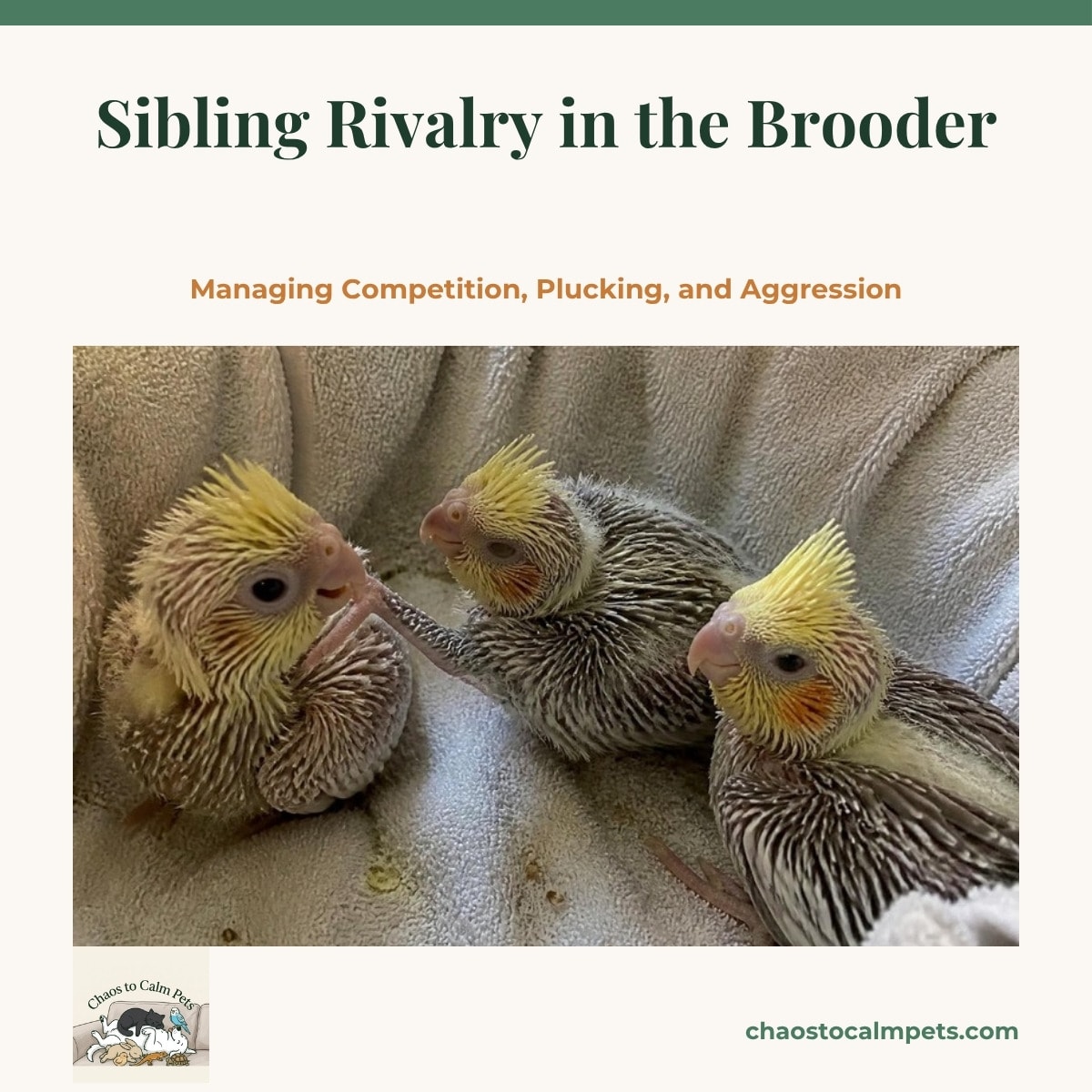
Raising a clutch together is better for the birds, right up until the biggest one starts sitting on the smallest. 10 lessons on how sibling behavior changes from huddling to shoving to sparring, why hatch order creates a bully and a runt, when and how to separate and feed the runt first, feather barbering and its causes, telling bored nipping from real aggression, distraction toys that save feathers, using sibling imitation to speed weaning, when to split the clutch, singleton versus clutch-raised birds, and graduation checks before new homes.
About this course
Clutch-mates teach each other things you can't, and they also trample, out-shout and pluck each other. This course helps you keep the good part. Lesson 1 walks through how sibling behavior changes from a warm pile in week one to shoving for the syringe to play-sparring before fledging. Lesson 2 explains why eggs laid on alternate days produce a big first chick and a small last one, and Lesson 3 is the runt protocol: when a 48-hour plateau or trampling means separation, feeding the runt first every round, and bringing it back for supervised daytime huddling once it catches up. Lessons 4 and 5 are about beaks on feathers: barbering from boredom or protein gaps, and the difference between toe-tugging play and the puffed, screaming, bloody kind of aggression that means isolating one bird now. Lesson 6 stocks the brooder with leather strips, receipt paper and balsa so beaks have something else to chew. Then the upside of rivalry: one chick eating from a communal bowl pulls the whole clutch into solid food. The last three lessons cover when to split the group, how clutch-raised birds compare with singletons, and the checks every juvenile passes before it goes to a new home, ideally with its bonded sibling.
What you'll learn
- How sibling behavior shifts from huddling to shoving to sparring across the brooder weeks
- Why hatch order makes a bully and a runt, and the separation and feed-first protocol
- Feather barbering, its chewing and nutrition causes, and separating when blood is drawn
- Telling bored nipping from true aggression, and stocking distraction toys that save feathers
- Using one chick's appetite to pull the whole clutch onto solid food
- When to split the clutch, singleton versus clutch-raised temperaments, and graduation checks
Who this is for
Hand-feeders with their first multi-chick clutch watching the smallest fall behind; breeders who found bald patches on a brooder-mate this morning; and anyone trying to decide whether two sparring juveniles are playing or need separate cages.
Course outline (10 modules)
Quiz & Certificate
Knowledge quiz
After completing all lessons, take a short quiz to test your understanding.
Go to quiz →Completion certificate
Pass the quiz and earn a shareable certificate of completion.
View certificate →Frequently asked questions
Ready to get started?
$9.99 · Lifetime access · 10 lessons