
Training & Behavior · Birds
Senegal and Meyer's Parrot Care
Quiet Confidence, Diet, and Safety
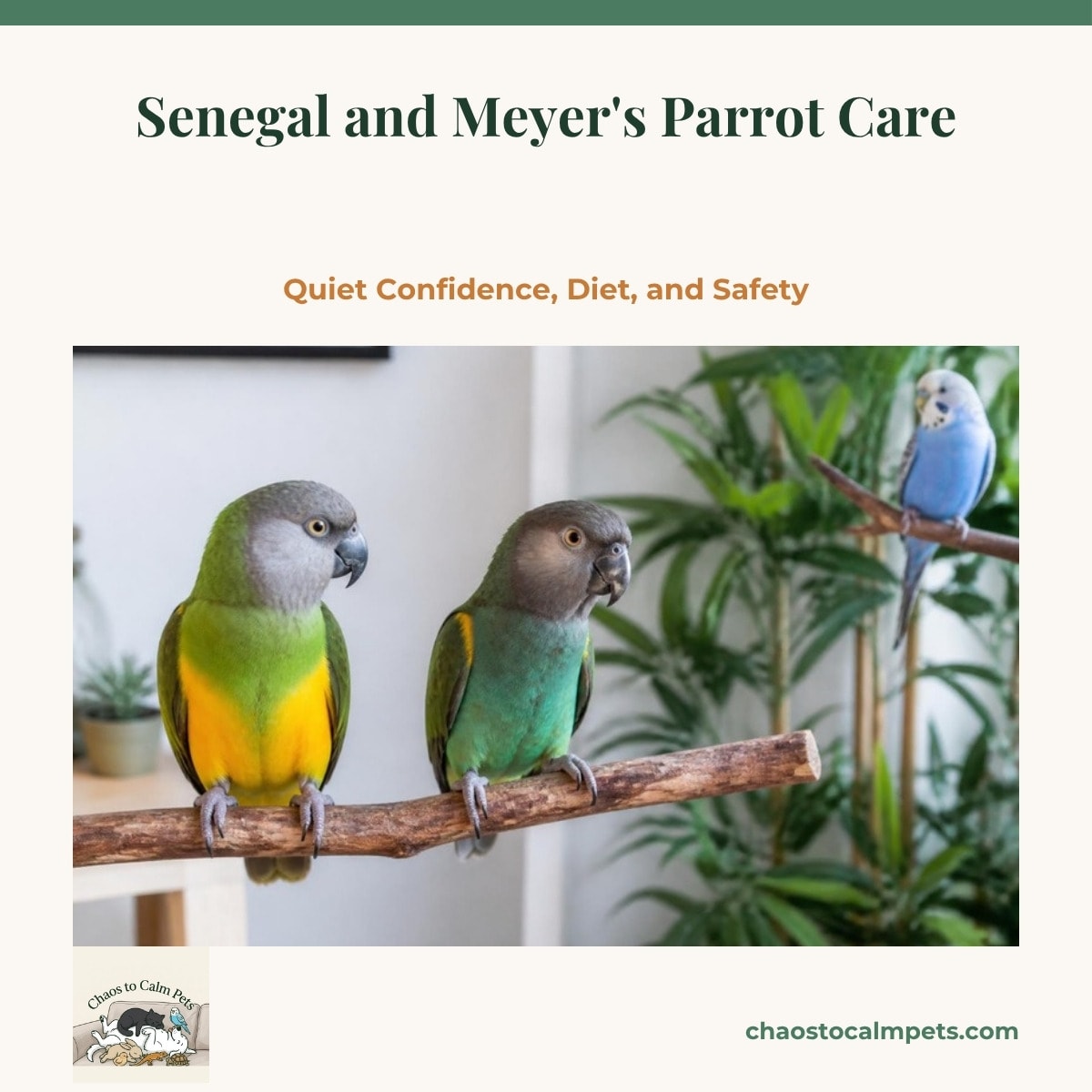
The small African parrot that would rather watch than scream, and what it needs from you. 10 lessons on the Poicephalus family and its grounded nature, the quiet parrot myth and the alarm shriek, socializing the whole family so the bird does not pick one mate, fear biting versus true aggression, a pellet-based diet with cuttlebone, the phobic phase between 6 and 18 months, branch-heavy enclosures, target training for independent play, hormonal nest-seeking and cage defense, and the beak, dropping and liver checks that catch illness early.
About this course
Senegals and Meyer's are the parrots for people who want company without a soundtrack, and Lesson 1 explains the grounded, self-assured nature that makes them fit a quiet home. Lesson 2 is honest about the quiet parrot myth: they click, chatter and whisper words, and they can let out a sharp shriek when startled. Lesson 3 is the most important social lesson, because these birds pick one person as a mate and attack the rest unless the whole family shares feeding, treats and handling on neutral perches. Lesson 4 teaches you to tell a frozen, hissing fear posture from a forward, flared aggression charge, and to honor both. Lesson 5 builds a diet that protects a fat-prone liver, mostly pellets with chop, sprouted seed and a cuttlebone. Lesson 6 explains the phobic phase between 6 and 18 months, when a bold youngster suddenly fears the broom, and why forcing the issue hardwires the fear. Lesson 7 replaces bare dowels with a canopy of apple, willow and manzanita branches. Lesson 8 uses a target stick to teach independent play, Lesson 9 manages hormonal nest-seeking and cage defense with long dark nights and T-stands, and Lesson 10 covers the beak, dropping and liver checks that catch trouble early.
What you'll learn
- The grounded Poicephalus nature, and the honest truth about the quiet parrot myth and alarm shrieks
- Sharing feeding and handling across the family so the bird does not pick one mate
- Telling a frozen fear posture from an aggression charge, and a liver-friendly pellet diet
- Handling the 6-to-18-month phobic phase with distance and treats instead of forced exposure
- Building a branch-heavy canopy enclosure, and target training a bird to play on its own
- Managing hormonal nest-seeking and cage defense, and reading beak, dropping and liver warning signs
Who this is for
Apartment dwellers choosing a small parrot that will not scream; families whose Senegal adores one person and lunges at everyone else; and owners of a young bird that was bold last month and is now terrified of a coffee mug.
Course outline (10 modules)
Quiz & Certificate
Knowledge quiz
After completing all lessons, take a short quiz to test your understanding.
Go to quiz →Completion certificate
Pass the quiz and earn a shareable certificate of completion.
View certificate →Frequently asked questions
Ready to get started?
$9.99 · Lifetime access · 10 lessons