
New to Your Home · Birds
Scissor Beak Care Guide
Early Physical Therapy and Beak Maintenance
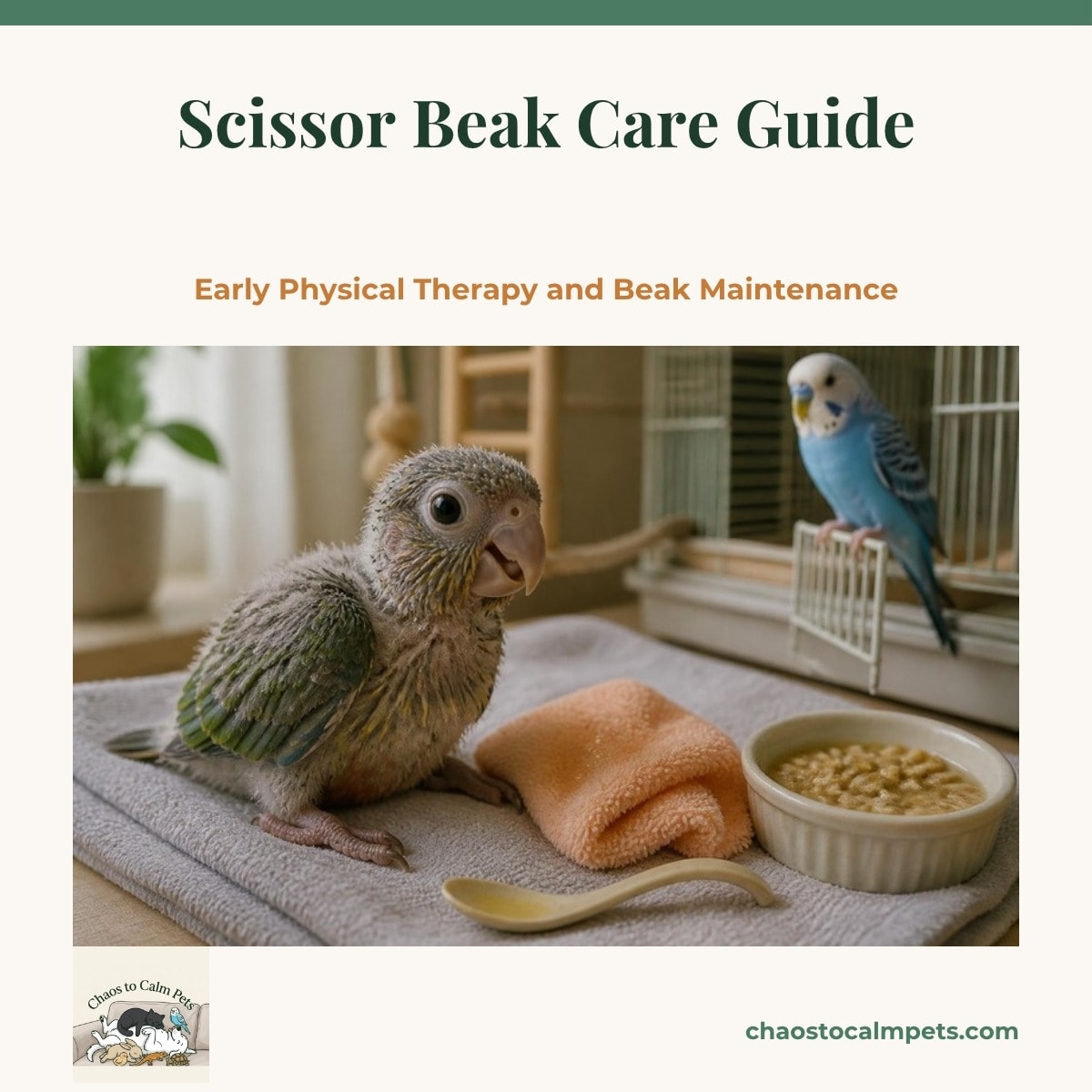
A crooked beak on a chick is soft enough to guide, for a few weeks. 10 lessons on what scissor beak is and why neonatal keratin bends, overbites and underbites, the hand-feeding habit that pushes a beak off center, genetic versus environmental causes, gentle daily counter-pressure done with your vet's guidance, the acrylic ramps an avian vet can fit, feeding a chick whose beak will not seal on a syringe, routine trimming for a permanent deviation, the protein and minerals that build strong keratin, and judging quality of life by whether the bird can hull a seed.
About this course
A chick's beak is soft bone and pliable keratin for its first few weeks, which is both why it bends out of line and why it can be guided back. This course starts with the shapes: scissor beak, where the upper beak slides sideways past the lower, and the vertical mismatches of overbite and underbite. Then the causes. One of them is you, if the syringe presses on the same side of the beak at every feed, so there is a lesson on centered, symmetrical delivery. Another lesson sorts environmental causes, which respond well, from genetic ones, which tend to recur and resist correction. Lesson 5 is the hands-on part: warming the beak and applying gentle counter-pressure toward center for 30 to 60 seconds a few times a day, done with your avian vet's guidance and never with force. Lesson 6 explains the acrylic ramp a vet can fit so that every bite nudges the beak straight. From there the course covers feeding a chick whose beak cannot seal on a syringe, routine trimming for a deviation that will never fully correct, the protein and minerals that make keratin tough enough to hold its shape, and finally the only test that matters: can this bird pick up a pellet, hull a seed and keep its weight on its own.
What you'll learn
- What scissor beak is, why neonatal keratin bends, and the overbite and underbite variants
- The one-sided syringe habit that warps a soft beak, and centered feeding ergonomics
- Sorting environmental causes from genetic ones, and auditing breeding and incubation records
- Daily warm counter-pressure therapy with your vet's guidance, and vet-fitted acrylic ramps
- Feeding a beak that will not seal: silicone tubing, curved spoons and careful face cleanup
- Routine trimming every 3 to 6 weeks, keratin nutrition, and judging quality of life
Who this is for
Hand-feeders who just noticed a chick's upper beak drifting to one side; breeders trying to work out whether a beak problem came from the incubator, the syringe or the bloodline; and anyone caring for an adult bird whose scissor beak needs lifelong trims and softened food.
Course outline (10 modules)
Quiz & Certificate
Knowledge quiz
After completing all lessons, take a short quiz to test your understanding.
Go to quiz →Completion certificate
Pass the quiz and earn a shareable certificate of completion.
View certificate →Frequently asked questions
Ready to get started?
$9.99 · Lifetime access · 10 lessons