
Training & Behavior · Cold-Blooded Crew
The Scent and Foraging Safari
Mental Enrichment and Puzzle Feeders for Intelligent Reptiles
A food bowl is the most boring object in a reptile's life. 20 modules on wild energy budgets and captive boredom, the Jacobson's organ and scentscapes, retiring the bowl, scent trails across the enclosure, sliding-drawer and spinner puzzles, excavation pits, hanging bug cups and climbing for dinner, frustration-free live-prey cups, grazing bundles and meadow mats for tortoises, scented whole-prey hides and obstacle courses for snakes, tactile novelties, sinking puzzles for turtles, seasonal rotations, cup-shuffle memory tests for monitors and tegus, sanitizing toys, foraging as trust-building, frustration audits, enrichment for recovering patients, and sharing fairly in group tanks.
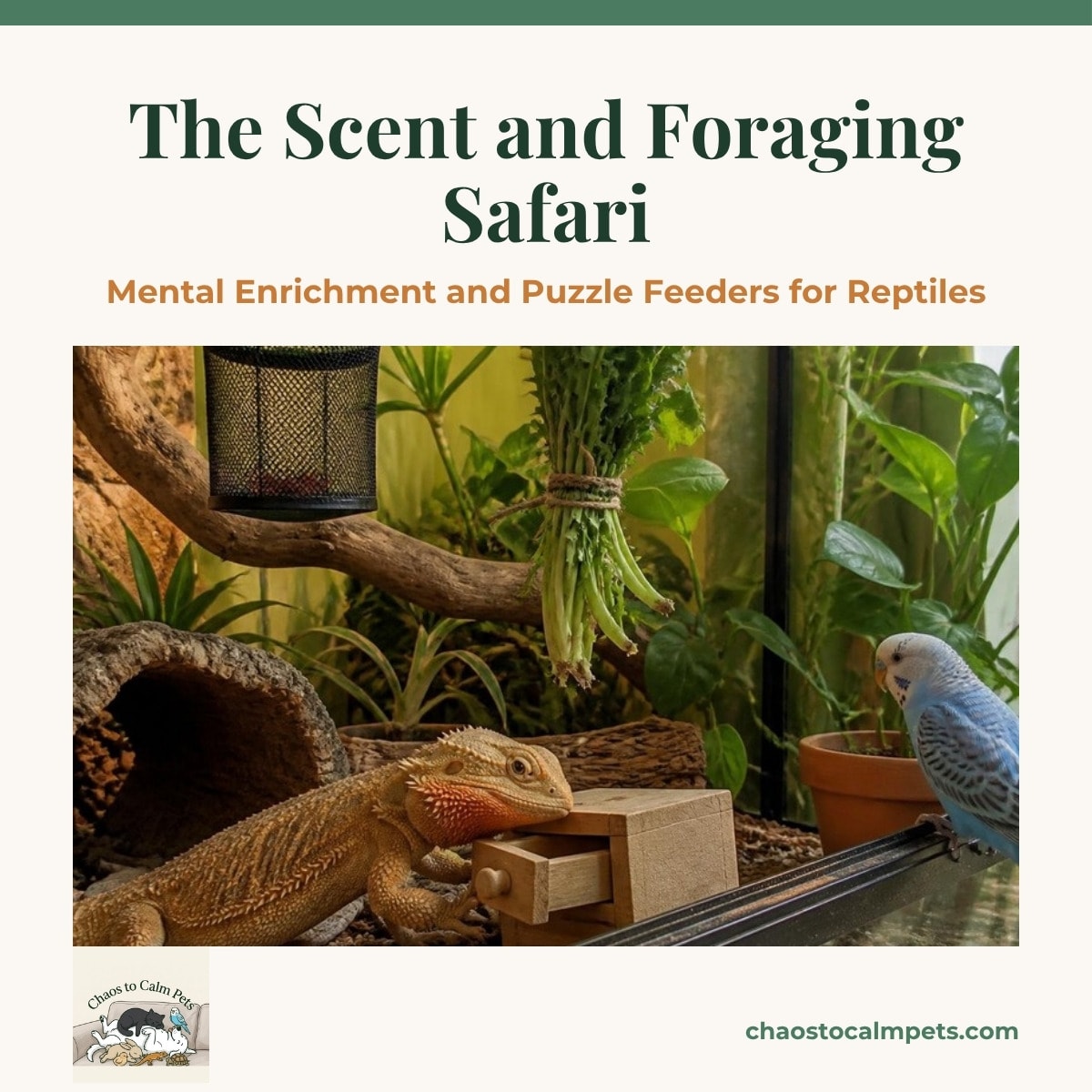
About this course
In the wild a reptile spends most of its waking energy tracking scent, digging, climbing, and solving the problem of where the food went. In captivity it waits by a bowl, and the glass-surfing and lethargy are what boredom looks like with scales. This course gives the work back. You'll learn how tongue-flicking and the Jacobson's organ build a scent map of the world and how to design a scentscape, why the bowl goes and scatter-feeding comes in, how to drag a scent trail across branches and leaf litter to a hidden reward, how to build sliding-drawer and spinner puzzles and raise the difficulty one notch at a time, how to dig an excavation pit and bury dinner, how hanging bug cups make an arboreal climb for a meal, how a clear wall-mounted cup gives an insectivore the motion of live prey without a loose cricket, how twine bundles and grazing mats slow a tortoise down to wild speed, how to hide whole prey in cork tunnels and build an obstacle course for a snake, how cardboard, stones, and moss pads keep a brain curious, how sinking puzzles work for turtles, why spring and winter should smell different, how to run cup-shuffle memory games and multi-step latches with monitors and tegus, how to sanitize the toys, how foraging games turn hands into the start of fun, how to spot frustration and dial difficulty back, how enrichment helps a post-surgery patient with the vet's blessing, and how to spread resources so no one in a group tank guards the food.
What you'll learn
- Wild energy budgets, captive boredom, the Jacobson's organ, and scentscapes
- Retiring the bowl: scatter-feeding, scent trails, puzzle feeders, and excavation pits
- Arboreal foraging, frustration-free live-prey cups, grazing gardens, and prey hides
- Tactile novelties, aquatic puzzles, seasonal rotations, and cognition tests
- Toy hygiene, foraging as trust-building, and frustration and weight audits
- Enrichment for recovering patients and resource dispersion in group tanks
Who this is for
Keepers of bearded dragons, tegus, monitors, tortoises, turtles, snakes, and skinks who have a healthy animal that still seems bored, and anyone whose reptile paces the glass.
Course outline (20 modules)
Quiz & Certificate
Knowledge quiz
After completing all lessons, take a short quiz to test your understanding.
Go to quiz →Completion certificate
Pass the quiz and earn a shareable certificate of completion.
View certificate →Frequently asked questions
Ready to get started?
$9.99 · Lifetime access · 20 lessons