
New to Your Home · Birds
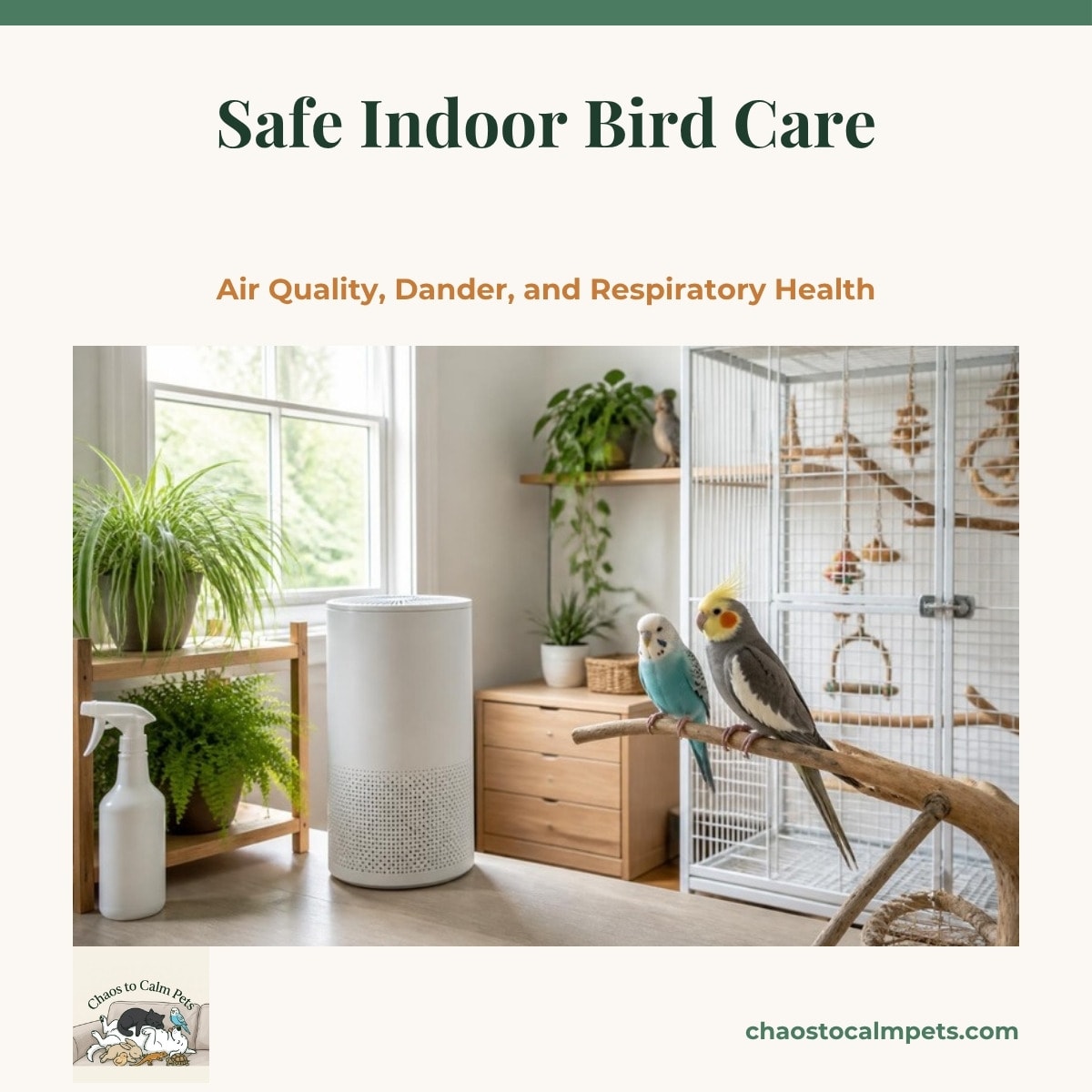
Safe Indoor Bird Care
Air Quality, Dander, and Respiratory Health
A bird breathes the air in your house more efficiently than you do, and that is exactly the problem. 10 lessons on the one-way avian respiratory system and its nine air sacs, the non-stick cookware ban, candles, essential oils and aerosols, HEPA purifiers for powder-down dust, cleaning without bleach fumes, keeping mold out of the bird room, telling a dander sneeze from an infection, safe paints and hardware against heavy metals, houseplants that are safe and ones that are not, and a 30 to 45 day quarantine for every new bird.
About this course
Birds die from things we cannot smell. This course is the home safety walk-through I do with every new bird owner. Lesson 1 explains why: a bird's one-way breathing with nine air sacs pulls every airborne particle across its lungs on both the inhale and the exhale. Lesson 2 is the non-stick ban, because an overheated pan, oven liner or space heater releases an odorless gas that kills a bird in minutes while you notice nothing. Lesson 3 covers candles, plug-ins, incense, sprays and essential oils, including the ones like tea tree and eucalyptus that are poisons for birds. Then you'll manage the white dust from cockatoos, cockatiels and greys with a true HEPA purifier, clean the cage with avian-safe disinfectant or diluted vinegar instead of bleach, and keep humidity at 45 to 55 percent with wet food removed daily so mold never gets a start. Lesson 7 teaches you to tell a harmless after-preening sneeze from discharge, swelling and tail bobbing that need a vet. The last lessons check your paint, baseboards and hardware for zinc and lead, sort the houseplants into safe and toxic, and set up a 30 to 45 day quarantine for any new bird before it meets your flock.
What you'll learn
- How a bird's one-way breathing and nine air sacs make airborne toxins so dangerous
- The non-stick cookware ban, and why candles, plug-ins, incense and essential oils have to go
- HEPA and carbon purifiers for powder-down dust, and cleaning without bleach or ammonia fumes
- Keeping mold out with 45 to 55 percent humidity and daily removal of wet food
- A normal dander sneeze versus discharge, swelling and tail bobbing that need an avian vet
- Safe paint and zinc-free hardware, safe and toxic houseplants, and a 30 to 45 day quarantine
Who this is for
New bird owners who want to walk through the house before the bird comes home; keepers of a cockatiel, cockatoo or grey whose dust is coating every surface; and anyone bringing a second bird into a home that already has one.
Course outline (10 modules)
Quiz & Certificate
Knowledge quiz
After completing all lessons, take a short quiz to test your understanding.
Go to quiz →Completion certificate
Pass the quiz and earn a shareable certificate of completion.
View certificate →Frequently asked questions
Ready to get started?
$9.99 · Lifetime access · 10 lessons