
Health & Care · Cold-Blooded Crew
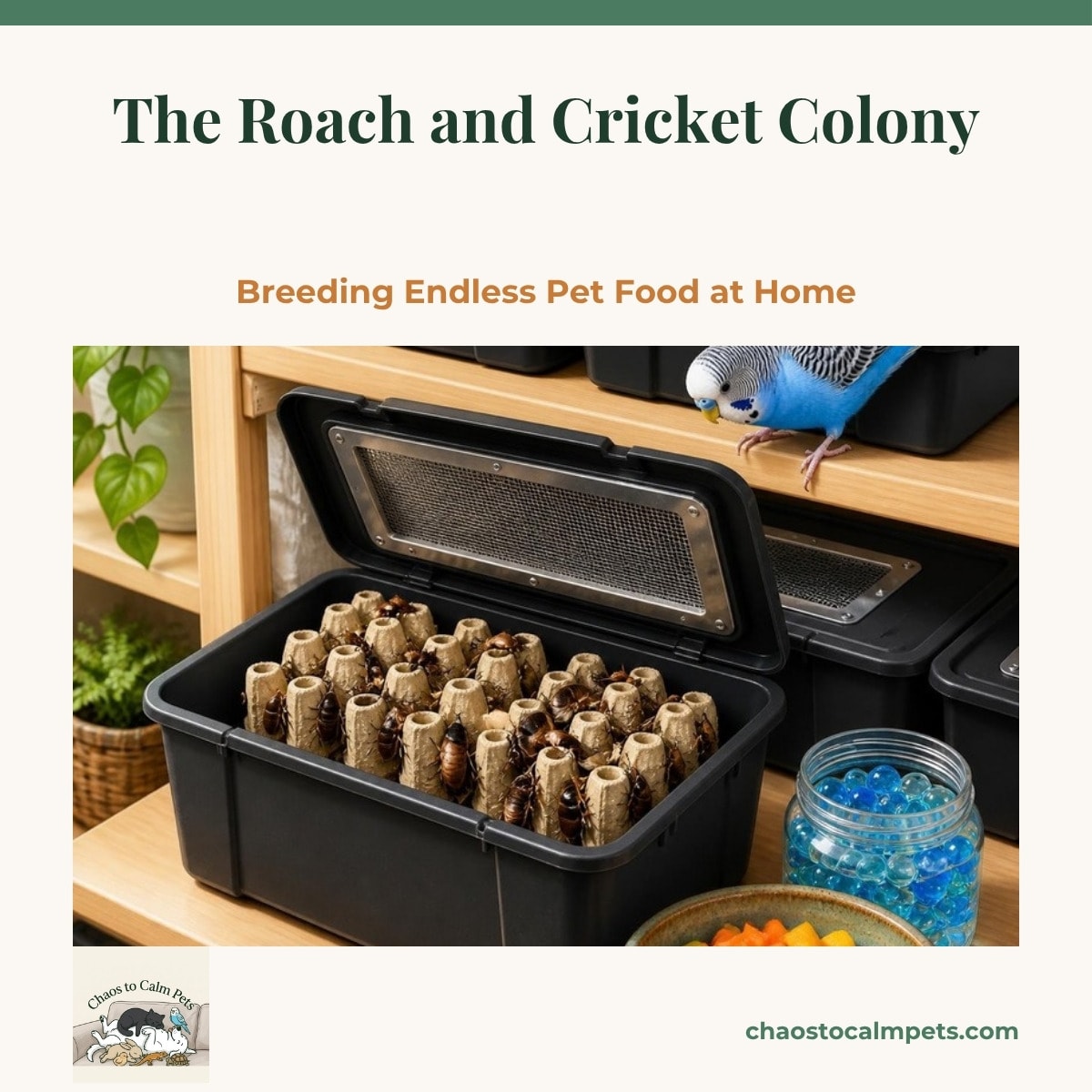
The Roach and Cricket Colony
Breeding Endless Pet Food at Home
Never pay pet-store prices for a cricket again. 20 modules on why home breeding beats retail bugs, dubia versus banded crickets versus soldier fly larvae and mealworms, opaque bins with stainless mesh and a Fluon barrier, 80 to 95°F on an external heat mat, coir laying boxes swapped every 5 to 7 days, homemade dry chow and daily veggies, the foods that poison a colony, water crystals instead of drowning bowls, vertical egg flats, male-to-female ratios and live birth, pinhead nurseries, mesh sifters, the 24-hour gut-load, mites and phorid flies without sprays, odor control, chore day, the four-point colony check, N95 masks and roach allergies, overheating and flood rescue, and the bug diary.
About this course
Every lizard, frog, and insect-eating bird in your house runs on bugs, and the pet store charges accordingly, when it isn't sold out or selling you parasites. This course makes you the supplier. You'll learn why dubia roaches are the quiet, non-climbing, non-infesting king of feeders and when banded crickets, soldier fly larvae, or mealworms fit better, how to build a bin from an opaque tub with stainless mesh in the lid and a Fluon or petroleum-jelly barrier on the rim, why 80 to 95°F from an external heat mat on a thermostat makes everything breed faster, how a damp coir laying box works and why it leaves the cricket bin every five to seven days, how to blend a dry chow of oats, grains, alfalfa, spirulina, and bee pollen and which foods poison a colony, why an open water bowl drowns insects and what gel crystals and wet paper towels do instead, how vertical egg flats turn one bin into a high-rise, how to sex a dubia and keep one male to every three to five females, how pinhead crickets hatch and what they eat, how stacked mesh screens sort adults from babies in seconds, why feeders get a 24-hour vitamin gut-load before they're dinner, how to prevent grain mites and phorid flies without a single spray, why clean dry bins don't smell, what chore day looks like, how the weekly four-point colony check catches a crash, why you wear an N95 and gloves around roach dust, how to rescue an overheated, flooded, or starving bin, and why a bug diary means you never run out.
What you'll learn
- Why home breeding beats retail, and choosing dubia, crickets, soldier fly larvae, or mealworms
- Escape-proof bins, stainless mesh, slippery barriers, and 80 to 95°F on an external heat mat
- Laying boxes, dry chow and daily veggies, toxic foods, and drowning-safe hydration
- Vertical egg flats, sexing and ratios, live birth, pinhead nurseries, and mesh sifters
- The 24-hour gut-load, chemical-free mite and fly control, odor, and chore day
- The four-point colony check, N95 masks and allergies, emergency triage, and the bug diary
Who this is for
Keepers of bearded dragons, leopard geckos, chameleons, dart frogs, and insect-eating birds who are tired of the pet-store run, and anyone who has brought home a cup of crickets that died by Tuesday.
Course outline (20 modules)
Quiz & Certificate
Knowledge quiz
After completing all lessons, take a short quiz to test your understanding.
Go to quiz →Completion certificate
Pass the quiz and earn a shareable certificate of completion.
View certificate →Frequently asked questions
Ready to get started?
$9.99 · Lifetime access · 20 lessons