
Emergency Prep · Cold-Blooded Crew
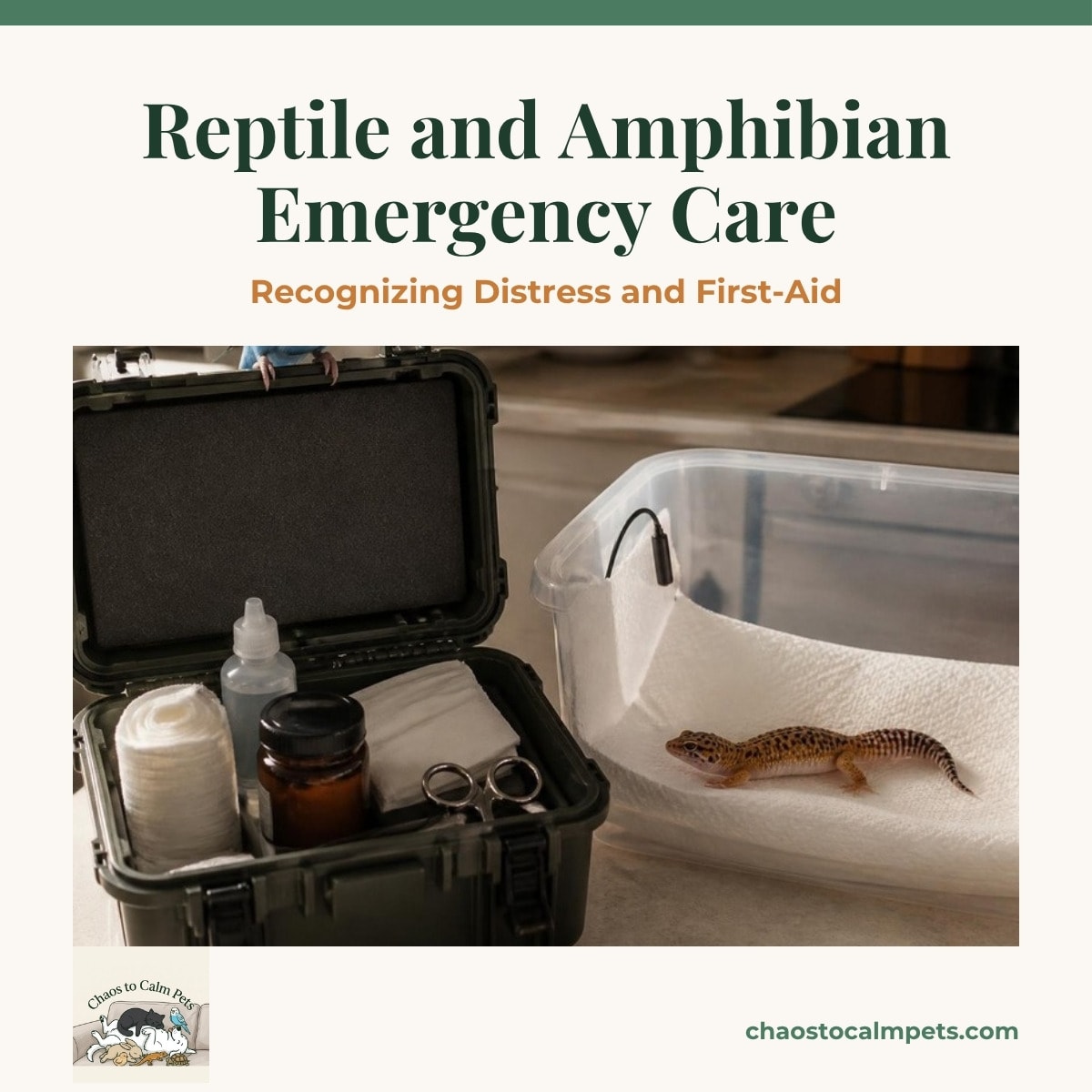
Reptile and Amphibian Emergency Care
Recognizing Distress and First-Aid
Cold-blooded pets hide illness until it's an emergency; this course trains you to see it sooner. 20 modules on the five-point daily scan, bubbling nares and open-mouth breathing, stuck shed without peeling, shell rot and shell trauma, impaction and regurgitation, star-gazing, dehydration and drowning, egg binding, amphibian skin and red leg, heat-mat burns and manuka honey, the first-aid kit, the hospital bin, warming a shocked animal, finding an ARAV vet, transport, fecal samples, giving the meds the vet sends home, and post-surgery recovery.
About this course
A reptile that looks fine can be days from dying, because looking fine is how prey animals survive. This course turns you into the person who notices first. You'll learn the five-point daily scan of eyes, nostrils, posture, breathing, and waste and why a weekly weight log is the best diagnostic tool you own, what nares bubbling, face-wiping, and clicking mean before open-mouth breathing arrives, how to soften stuck shed in a humid sauna instead of peeling it, what shell rot smells like and how to stabilize a cracked shell for the trip, why impaction and regurgitation both start with husbandry and both end with an X-ray, what star-gazing and tremors mean and why they go straight to the hospital, how to spot dehydration in sunken eyes and tented skin and why a water bowl needs a ramp, what egg binding looks like and why a lay box buys time but doesn't replace the vet, why amphibian skin absorbs everything and how red leg starts, how to give first aid to a heat-mat burn with saline and manuka honey and what the vet does after, exactly what goes in the first-aid kit, how to build a paper-towel hospital bin with regulated heat and one hide, how to warm a shocked animal slowly, how to find and vet an ARAV clinic before you need it, how to transport in the dark with stable heat, how to package a fecal sample, how to give the oral meds and fluids your vet sends you home with the way the vet showed you, and how to run a post-surgery ward at home.
What you'll learn
- Why cold-blooded pets mask illness, and the five-point daily scan with a weight log
- Respiratory distress, stuck shed, shell rot, impaction, regurgitation, and star-gazing
- Dehydration, drowning prevention, egg binding, amphibian skin, and heat burns
- The first-aid kit, the hospital bin, and controlled warming after thermal shock
- Finding and vetting an exotic clinic, transport, and fecal samples
- Giving vet-prescribed meds and fluids at home, and post-surgical recovery
Who this is for
Every reptile, amphibian, and invertebrate keeper, especially anyone who has ever stared at a motionless gecko wondering whether it's asleep or dying.
Course outline (20 modules)
Quiz & Certificate
Knowledge quiz
After completing all lessons, take a short quiz to test your understanding.
Go to quiz →Completion certificate
Pass the quiz and earn a shareable certificate of completion.
View certificate →Frequently asked questions
Ready to get started?
$9.99 · Lifetime access · 20 lessons