
Health & Care · Cold-Blooded Crew
Quarantining Reptiles
Setting Up New Arrivals and Preventing Mites
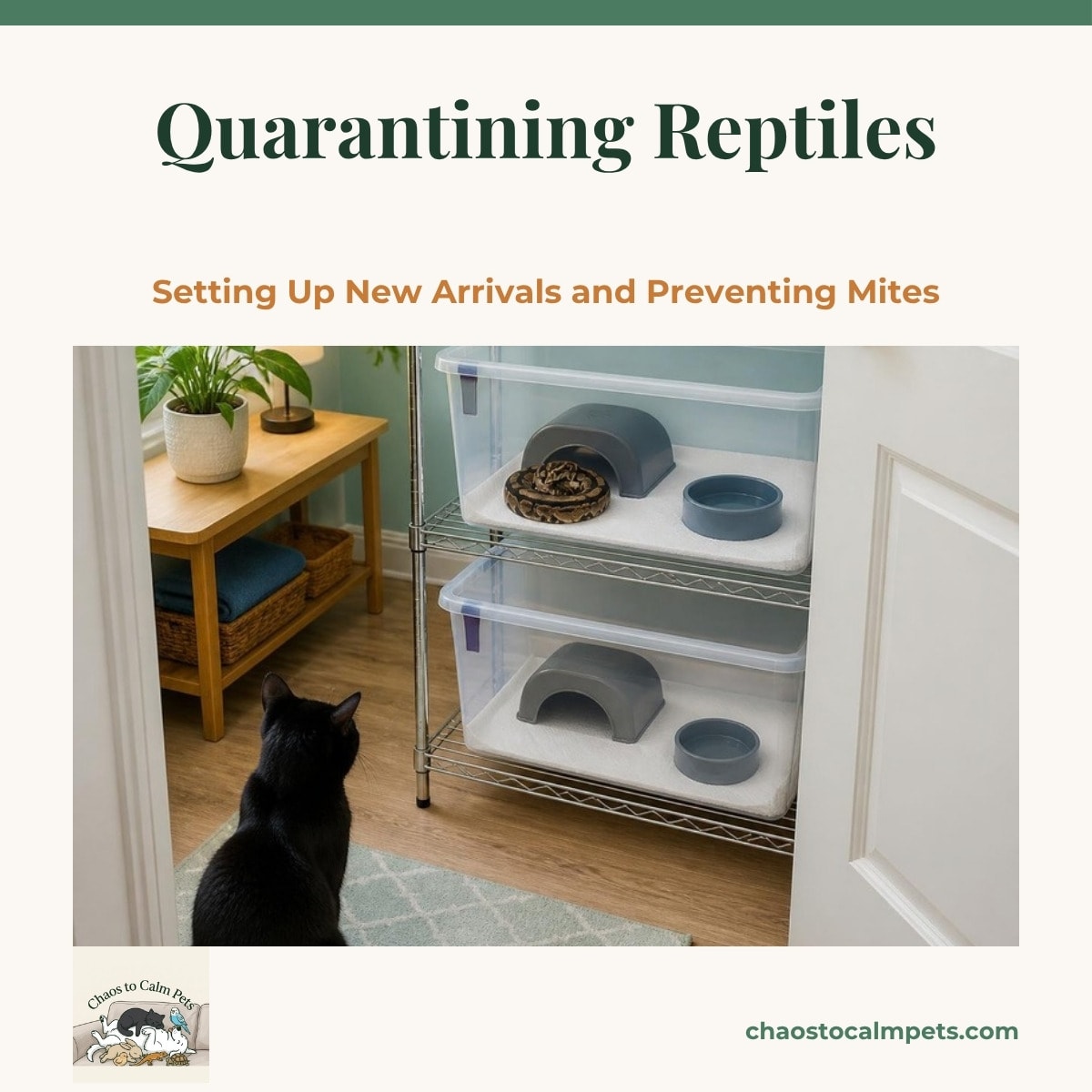
Every new animal is infected until the lab says otherwise. 20 modules on the ninety-day rule, a separate room serviced last, paper-towel tubs with one hide and one dish, why bioactive soil can't be sanitized, heat and UVB in quarantine, the day-one exam and baseline weight, fecal samples to the vet, pinworms, coccidia, and flagellates, finding mites around the eyes and in the water dish, treating the animal and the enclosure, respiratory infections and IBD, PCR swabs, rehydration before first meals, dedicated tools and gloves, the second fecal test before release, moving into the collection, post-integration stress, the vet partnership, and patient charts.
About this course
The healthiest-looking new arrival can carry mites, worms, protozoa, and viruses that will run through every tank you own. This course is the wall between the new animal and the rest. You'll learn why ninety days is the standard and not a week, why quarantine means a separate room serviced last, how a plastic tub with paper towels, one hide, and one dish lets you see mites and droppings instantly and sanitize in minutes, why soil and porous decor are banned in quarantine, how to give proper heat and UVB anyway, what the day-one head-to-tail exam and baseline weight look like, how to collect a fecal sample within 24 hours and get it to the vet for flotation, what pinworms, coccidia, and flagellates are and how the vet treats them, where mites hide and why dead specks in the water dish are the giveaway, how to treat the animal with a soapy soak and the empty enclosure with a residual spray, what bubbling nares and clicking mean, why boas and pythons get extended quarantine for Inclusion Body Disease and how PCR swabs screen for viruses, why hydration comes before the first meal, how dedicated tools, gloves, and even a lab coat stop you being the vector, why a second fecal test in month two and a final one at week ten decide release, how to move a cleared animal into the collection and watch it for two weeks, why stress can unmask an infection after integration, how to work with the vet, and how to keep a chart for every animal.
What you'll learn
- Why every arrival is treated as infected, and the ninety-day rule
- A separate room serviced last; paper-towel tubs with one hide and one dish
- Quarantine heat and UVB, the day-one exam, and baseline logging
- Fecal flotation, worms and protozoa, and finding and eradicating mites
- Respiratory infections, IBD, PCR screening, rehydration, and first meals
- Tools, gloves, re-testing, integration, post-integration stress, the vet, and charts
Who this is for
Anyone adding a second reptile, breeders and rescuers taking in unknown animals, and keepers who have fought a mite outbreak once and never want to again.
Course outline (20 modules)
Quiz & Certificate
Knowledge quiz
After completing all lessons, take a short quiz to test your understanding.
Go to quiz →Completion certificate
Pass the quiz and earn a shareable certificate of completion.
View certificate →Frequently asked questions
Ready to get started?
$9.99 · Lifetime access · 20 lessons