
New to Your Home · Birds
Preventing Maladaptive Imprinting
Balancing Human Trust and Bird Identity
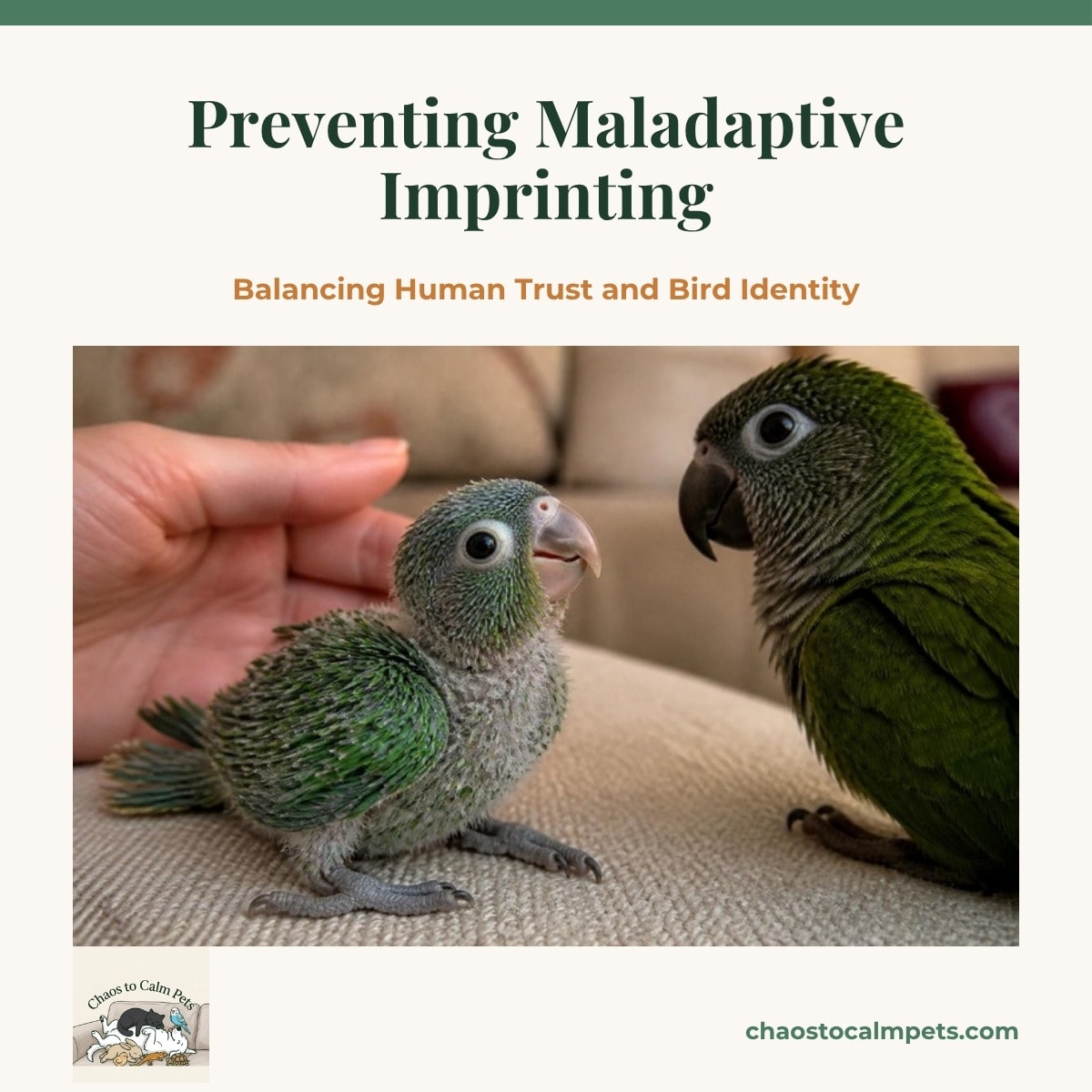
The tamest baby parrot can grow into the most troubled adult if it never learns it's a bird. 10 lessons on how parrot socialization differs from duckling imprinting, what isolation rearing does to a singleton, the human-mate trap and petting only the head and neck, recorded flock calls and video as stand-in company, why mirrors backfire, safe multi-species play, teaching a chick to be alone without screaming, heading off hormonal aggression with dark sleep and no nest caves, who does what between breeder and owner, and the balance of tame and wild.
About this course
A hand-fed baby that trusts you is the goal; a baby that thinks you are its mate or its only flock is the problem. This course is about the difference. Lesson 1 explains why parrots don't imprint in a fixed window like ducklings but learn who they are over weeks of nestling and fledgling life, and why that gives you room to get it right. Lesson 2 is what happens to a chick raised with no peers: hyper-imprinting, fear of its own kind, plucking. Lesson 3 is the human-mate trap and the simple rule of petting only the head and neck. When you can't brood in pairs, Lessons 4 and 5 give you recorded flock calls and video as stand-ins, and explain why a mirror is not a friend. Lesson 6 covers mixing species safely on a neutral stand, and Lesson 7 teaches a chick to play alone in its cage without screaming for you. Lesson 8 heads off hormonal aggression early with dark sleep, no nest caves and no rich cooked meals. The course ends with the handoff from breeder to owner and a picture of the bird you're aiming for: steps up, travels, and still forages, plays alone and knows it's a parrot.
What you'll learn
- Why parrots learn their identity over weeks, not hours, and what balanced socialization means
- What isolation rearing does to a singleton, and the petting rules that prevent human-mate bonding
- Recorded flock calls and same-species video as stand-ins, and why nursery mirrors backfire
- Safe multi-species play with size and temperament parity on a neutral stand
- Daily alone time in an enriched cage, and never rewarding screaming with attention
- Dark sleep and no nest caves against hormones, breeder and owner roles, and the tame-and-wild balance
Who this is for
Breeders hand-feeding a single surviving chick with no clutch-mates; new owners of a hand-fed baby who want a cuddly bird without a hormonal mess later; and anyone whose sweet young parrot already lunges at the family when they sit next to its favorite person.
Course outline (10 modules)
Quiz & Certificate
Knowledge quiz
After completing all lessons, take a short quiz to test your understanding.
Go to quiz →Completion certificate
Pass the quiz and earn a shareable certificate of completion.
View certificate →Frequently asked questions
Ready to get started?
$9.99 · Lifetime access · 10 lessons