
Health & Care · Cold-Blooded Crew
Poison Dart Frog Care
Setting Up Vivarium Colonies and Micro-Insects
Living jewels that eat flies you grow in a jar. 20 modules on why captive dart frogs aren't poisonous, group versus pair species and sex ratios, tall escape-proof tanks, drainage and ABG soil, bromeliads as nurseries, high-pressure misting, ventilation, LED and low-range UVB with cool temperatures, springtails and dwarf white isopods, rolling fruit fly cultures, bean and rice flour beetles, the Vitamin A rule, conditioned water and nitrile gloves, courtship, egg harvesting, tadpole cups and water changes, morphing froglets, and weekly audits that catch short-tongue syndrome.
About this course
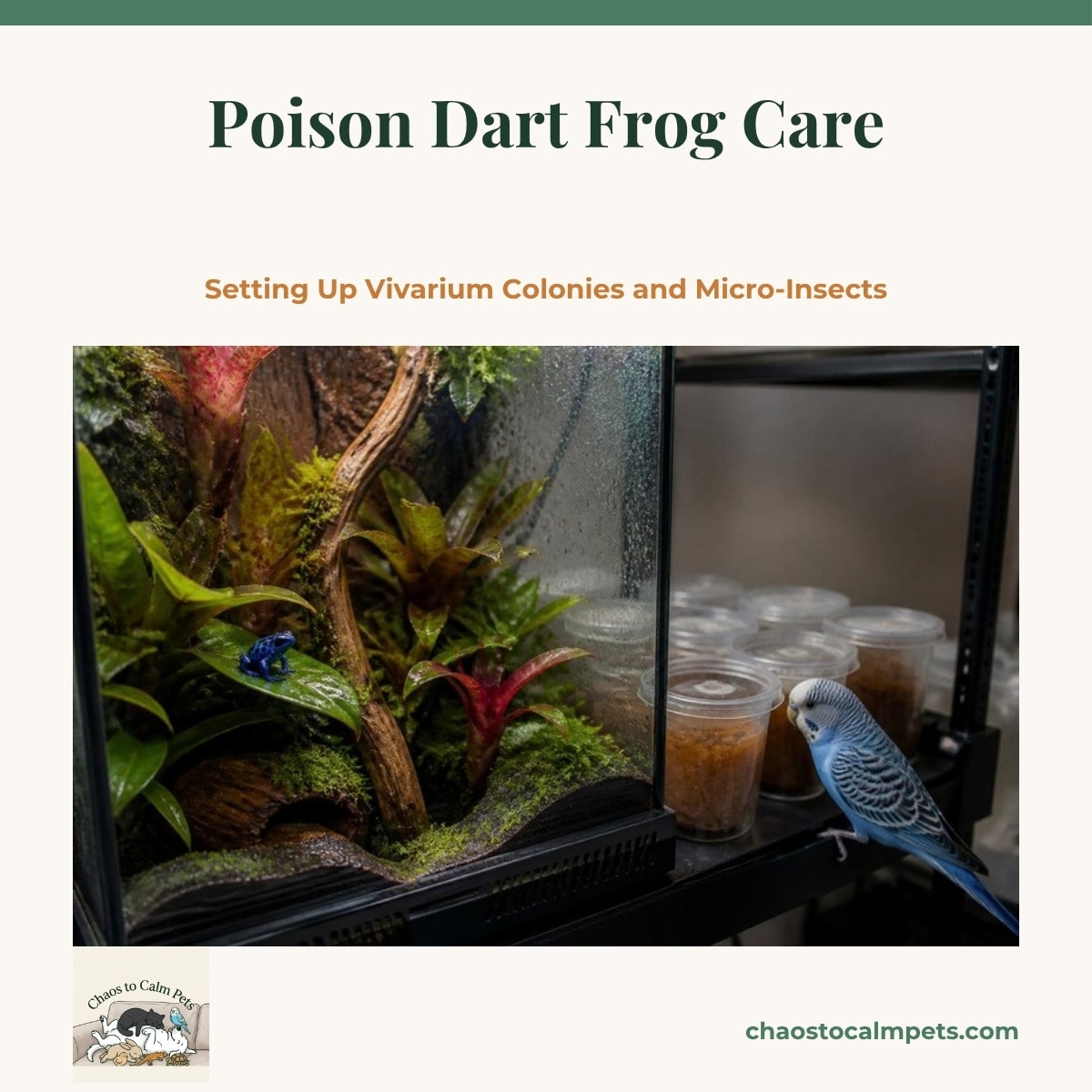
Dart frogs are the only pet that is simultaneously a living jewel, a display animal active in daylight, and a creature you can kill with tap water. This course covers all three facts. You'll learn where the wild toxin comes from and why a captive frog on fruit flies has none, which species live in groups and which must be pairs, why a tall 18 to 24 inch tank matters and how a frog the size of a thumbnail escapes through a cable port, how to build the hydroball basement, mesh barrier, and tropical soil bed, why bromeliads are both furniture and nursery, how a high-pressure mister on a timer makes rain, how to vent without drying out, why cool temperatures and low-range UVB are the rule, how springtails and dwarf white isopods run the clean-up, how to keep two or three fruit fly cultures rolling every week and raise bean beetles and rice flour beetles for variety, why weekly Vitamin A prevents short-tongue syndrome and how the shake-and-bake dusting works, why only conditioned RO or distilled water touches a frog and why your hands wear wet nitrile gloves, how to recognize courtship and offer film canisters and bromeliad cups for eggs, when to harvest a clutch, how to raise tadpoles in deli cups with strict water changes, how to lower the water when front legs appear, and what a weekly scan looks for.
What you'll learn
- Why captive dart frogs are non-toxic, and which species live in groups or pairs
- Tall escape-proof vivariums, drainage, ABG soil, bromeliads, misting, and ventilation
- LED and low-range UVB lighting, cool temperatures, and the clean-up crew
- Fruit fly cultures on a rolling rotation, plus bean and rice flour beetles
- The Vitamin A rule, dusting, conditioned water, and wet nitrile gloves
- Courtship, egg harvesting, tadpole rearing, morphing, and weekly health audits
Who this is for
First-time dart frog keepers, planted-vivarium builders ready for inhabitants, and keepers whose frogs are missing strikes and don't know why.
Course outline (20 modules)
Quiz & Certificate
Knowledge quiz
After completing all lessons, take a short quiz to test your understanding.
Go to quiz →Completion certificate
Pass the quiz and earn a shareable certificate of completion.
View certificate →Frequently asked questions
Ready to get started?
$9.99 · Lifetime access · 20 lessons