
Health & Care · Cold-Blooded Crew
Pet Tortoise Care
Care, Enclosures, Diets, and Shell Health
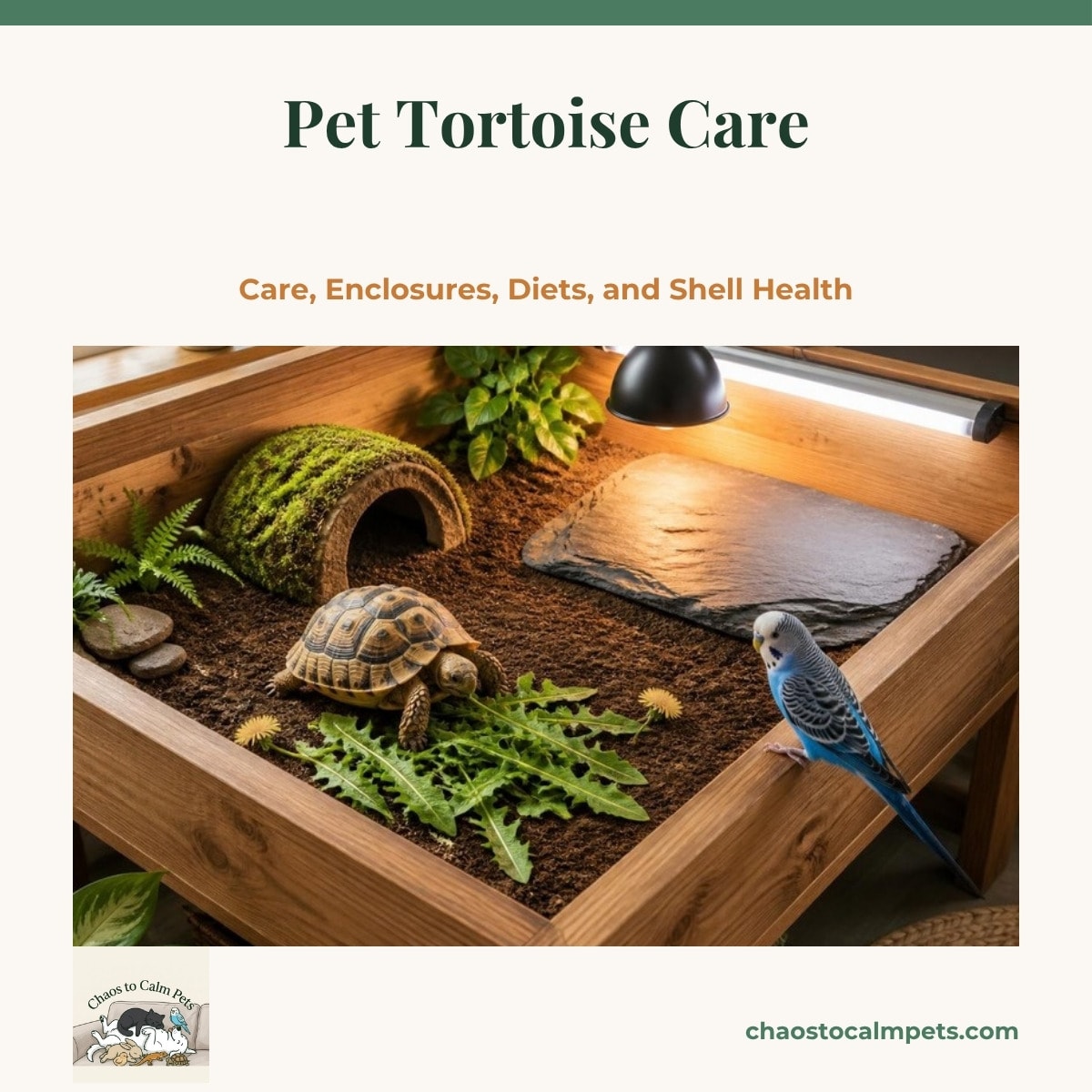
A tortoise outlives most mortgages, so get the first year right. 20 modules on the shell as living skeleton, the tortoise table instead of a glass tank, thermal gradients and ceramic night heat, T5 UVB beside the basking lamp, topsoil-and-sand floors, the humid hide that prevents pyramiding, the fiber diet and the calcium-to-phosphorus ratio, the forbidden salad, soaking and cloacal drinking, shell audits and weight tracking, calcium and cuttlebone, scatter foraging, predator-proof outdoor pens, seasonal light and the brumation debate, slate for nails and beaks, why you don't carry a tortoise, enrichment, weekly health scans, and the herp vet.
About this course
A tortoise's shell is its spine and ribs on the outside, and everything you do in the first years shows up on it for life. This course is built around that. You'll learn why a glass aquarium causes pacing and respiratory illness and how to build a tortoise table instead, how to lay out a hot basking zone, a warm middle, and a cool hide, why night heat comes from a ceramic emitter on a thermostat, why a T5 UVB tube sits right beside the basking lamp so heat and UV arrive together, how to mix a topsoil-and-sand floor that's dry on top and moist below, why pyramiding is a dehydration problem and how a damp moss hide prevents it, what a high-fiber, low-protein, low-sugar menu of weeds and greens looks like and why the calcium-to-phosphorus ratio matters, why fruit is off the menu for temperate and arid species and spinach and iceberg are out, how tortoises drink through both ends and how to run a soaking routine, how to read a shell and a plastron and track weight monthly, how calcium dusting and a cuttlebone prevent metabolic bone disease, why scattered greens beat a bowl, how to build an outdoor pen that stops hawks above and tunneling below, how seasonal light timers work and why indoor brumation is a vet-supervised decision, how slate wears nails and beaks so you never clip them, why a tortoise is a ground animal you don't carry around, how to keep it curious, what a weekly four-point scan catches, and how to find a reptile vet with X-ray and blood work.
What you'll learn
- The shell as living skeleton, ectothermy, and the multi-decade commitment
- Tortoise tables, thermal gradients, ceramic night heat, and T5 UVB beside the basking lamp
- Topsoil-and-sand floors, humid hides, and preventing pyramiding
- The fiber diet, the calcium-to-phosphorus ratio, the forbidden salad, and soaking
- Shell audits, weight tracking, calcium and cuttlebone, foraging, and outdoor pens
- Seasons and the brumation debate, nails and beaks, handling, enrichment, health scans, and the vet
Who this is for
New and would-be tortoise keepers (Russian, Hermann's, Greek, sulcata, leopard, red-foot), and owners whose tortoise has a bumpy shell and want to know why.
Course outline (20 modules)
Quiz & Certificate
Knowledge quiz
After completing all lessons, take a short quiz to test your understanding.
Go to quiz →Completion certificate
Pass the quiz and earn a shareable certificate of completion.
View certificate →Frequently asked questions
Ready to get started?
$9.99 · Lifetime access · 20 lessons