
Training & Behavior · Birds
Parrot Hormones and Aggression
Stopping Springtime Bites and Nests
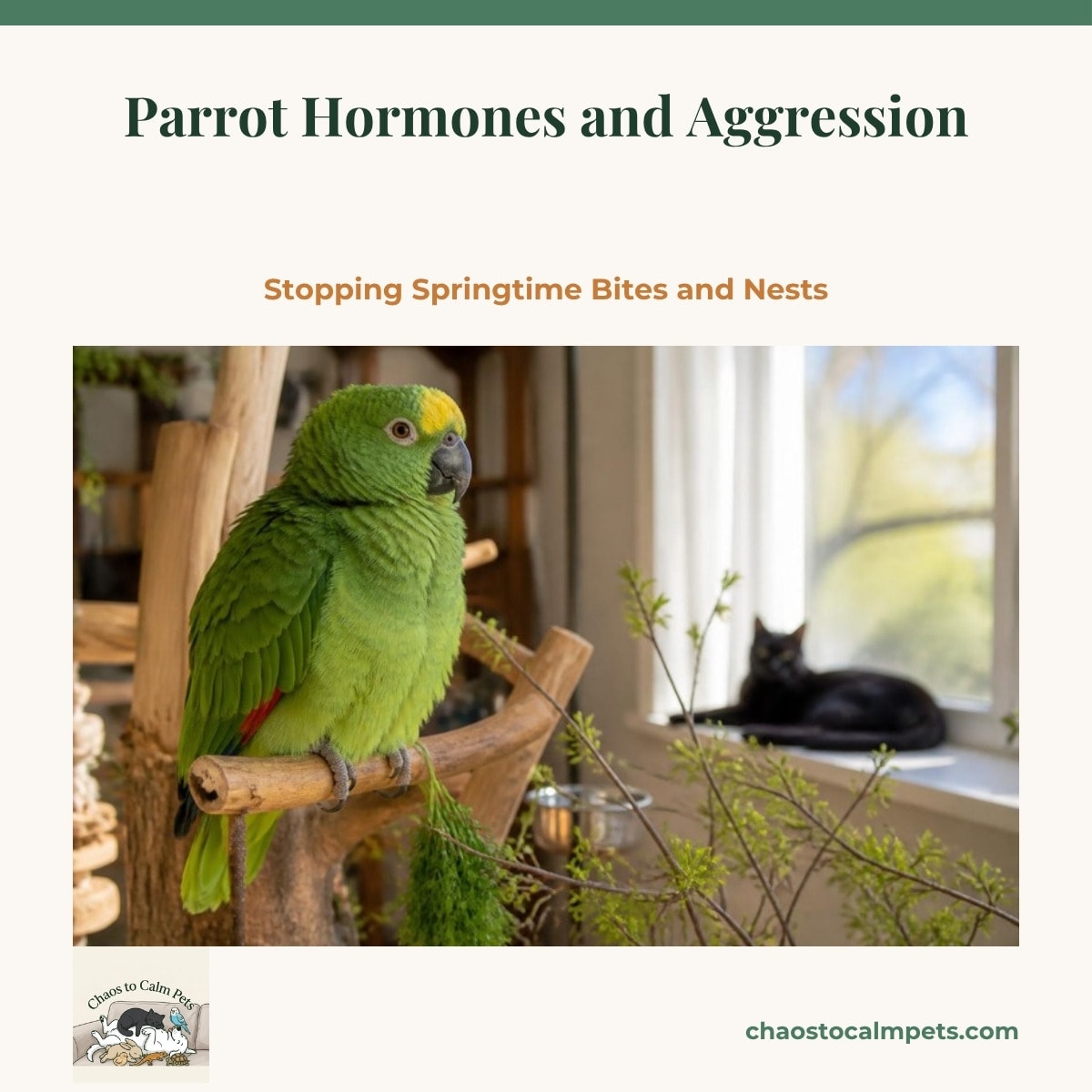
The sweet bird who turns on you every March is not broken, she is hormonal. 10 lessons on how light, food and touch switch on the avian hormone system, the petting zones that turn you into a mate, nest-seeking and the dark corners to block, 12 to 14 hours of real darkness, cooling the spring diet, handling regurgitation and masturbation without drama, halting chronic egg-laying, dummy eggs, when to ask your avian vet about hormone blockers, and rearranging the cage to break territorial habits.
About this course
Every spring I hear from someone whose gentle bird has started lunging, and the answer is almost always hormones. Lesson 1 explains the three switches, long daylight, rich food and the wrong kind of touch, that tell a parrot's brain it is breeding season. Lesson 2 maps the petting zones: head, cheeks and neck are flock-friendly, while the back, wings and belly tell the bird you are its mate. Lesson 3 covers nest-seeking, the floor pacing, cabinet exploring and paper shredding, and the huts, tents and boxes that have to go. Lesson 4 is the most powerful tool you have, a dedicated sleep cage and 12 to 14 hours of true darkness. Lesson 5 cools the diet by dropping nuts and warm mashes for crisp vegetables. Lesson 6 handles regurgitation and masturbation with a neutral interruption instead of laughter or scolding. Lesson 7 explains why you leave that first egg in place, Lesson 8 uses dummy eggs to let a sitting hen finish her cycle, and Lesson 9 lays out the hormone options an avian vet may offer when nothing else works. Lesson 10 keeps a bird from settling into a fortress by rearranging the cage every few weeks.
What you'll learn
- The three hormone switches, light, diet and touch, and why you pet only the head
- Spotting nest-seeking and removing huts, tents, boxes and dark floor corners
- A sleep cage for 12 to 14 hours of darkness, and cooling the spring diet
- Interrupting regurgitation and masturbation calmly without drama or scolding
- Stopping chronic egg-laying, leaving the first egg, and using dummy eggs through incubation
- When to ask an avian vet about hormone blockers, and rearranging the cage every few weeks
Who this is for
Owners whose cuddly conure or cockatiel has started biting everyone but one person; keepers of a hen who lays clutch after clutch; and anyone who has been stroking their bird's back for years and just learned what that means to the bird.
Course outline (10 modules)
Quiz & Certificate
Knowledge quiz
After completing all lessons, take a short quiz to test your understanding.
Go to quiz →Completion certificate
Pass the quiz and earn a shareable certificate of completion.
View certificate →Frequently asked questions
Ready to get started?
$9.99 · Lifetime access · 10 lessons