
Health & Care · Birds
Parrot Chop Recipes
Mixing Veggies, Grains, and Beans
Fresh chop is the best thing you can put in a parrot's bowl, if you mix it right. 10 lessons on the 50-30-20 ratio of vegetables, grains and legumes, the orange and dark green vegetables that supply vitamin A, which whole grains to cook and how to rinse them, soaking and boiling beans so they are safe, the foods that must never go in (onion, avocado, fruit pits), matching texture to bird size in the food processor, sprouting seeds at home, batch cooking and freezing a month of portions, the seed-sprinkle trick for a bird that refuses greens, and the two-to-four-hour spoilage rule.
About this course
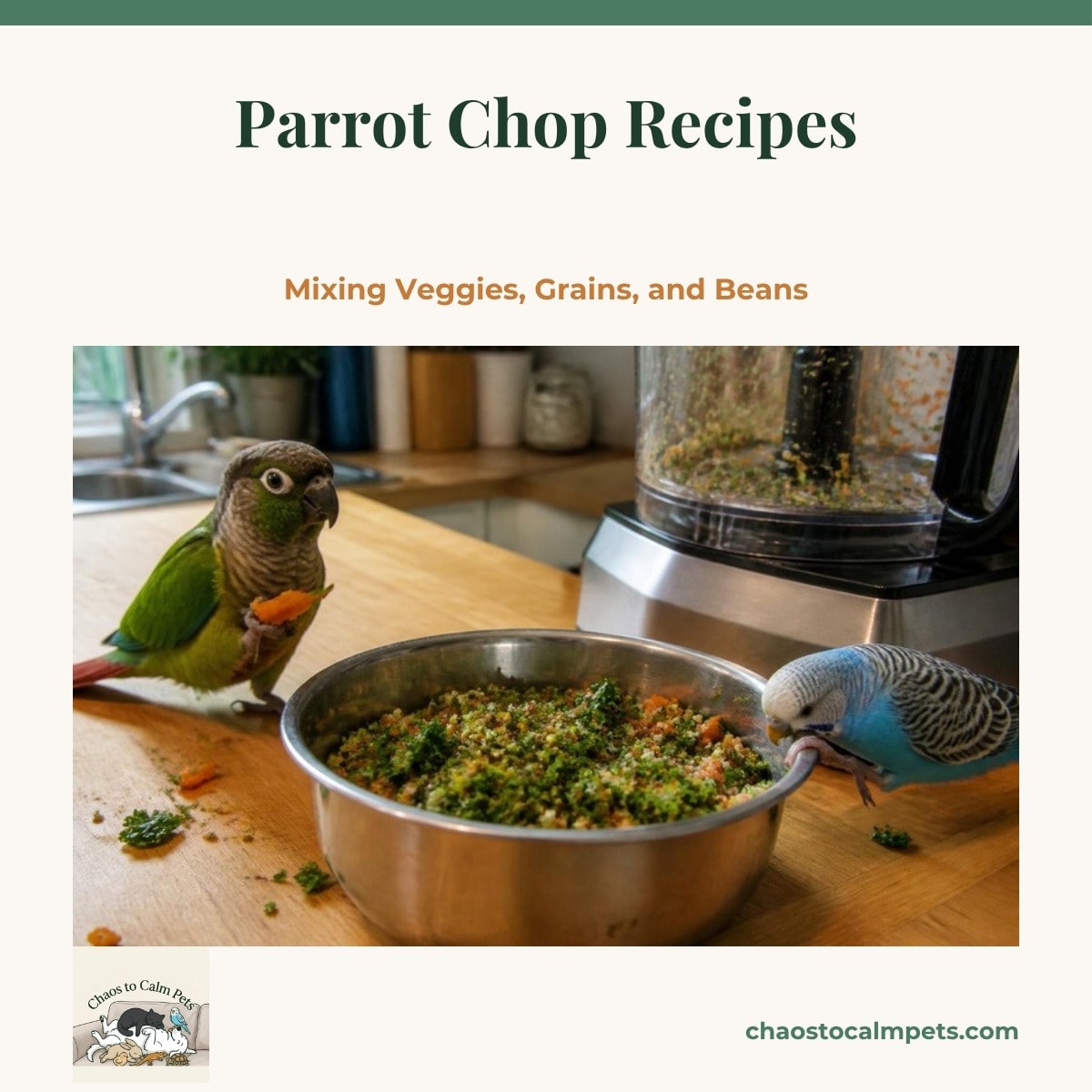
If your bird eats pellets and a few seeds and nothing green, this course is where to start. It walks you through chop the way I make it in my own kitchen: half vegetables, a third cooked grains, the rest cooked or sprouted legumes, and why eyeballing leftovers into a bowl does not get you there. You'll learn which vegetables carry the vitamin A most captive parrots are short on, which grains are worth cooking and how to rinse them so the batch is not gummy, and the soak-and-boil rule that makes beans safe. Lesson 5 is the list of what never goes in, from onion and garlic to avocado and apple seeds. Then it gets practical: setting your food processor for a budgie versus a macaw, sprouting mung beans and lentils on the counter, cooking a month of chop in one afternoon and freezing it in daily blocks, and the seed-sprinkle trick that gets a stubborn bird to taste the greens underneath. The last lesson is about spoilage, because wet chop left in a warm cage for a day does more harm than good.
What you'll learn
- The 50-30-20 ratio of vegetables, grains and legumes, and the vitamin A vegetables every batch needs
- Which whole grains to cook and rinse, and the soak-and-boil rule for safe beans
- The avian danger list: onion family, avocado, apple seeds, fruit pits, chocolate, salt and sugar
- Setting food processor texture for small, medium and large parrots without turning chop to mush
- Sprouting seeds at home safely, and batch cooking and freezing a month of daily portions
- The seed-sprinkle trick for picky eaters, and the two-to-four-hour spoilage and bowl hygiene rule
Who this is for
Owners whose parrot eats pellets and seed but turns its back on anything green; keepers of a budgie, conure or grey who want one afternoon of cooking to cover a month of meals; and anyone who has been tossing kitchen scraps into the cage and hoping it counts.
Course outline (10 modules)
Quiz & Certificate
Knowledge quiz
After completing all lessons, take a short quiz to test your understanding.
Go to quiz →Completion certificate
Pass the quiz and earn a shareable certificate of completion.
View certificate →Frequently asked questions
Ready to get started?
$9.99 · Lifetime access · 10 lessons