
Health & Care · Cold-Blooded Crew
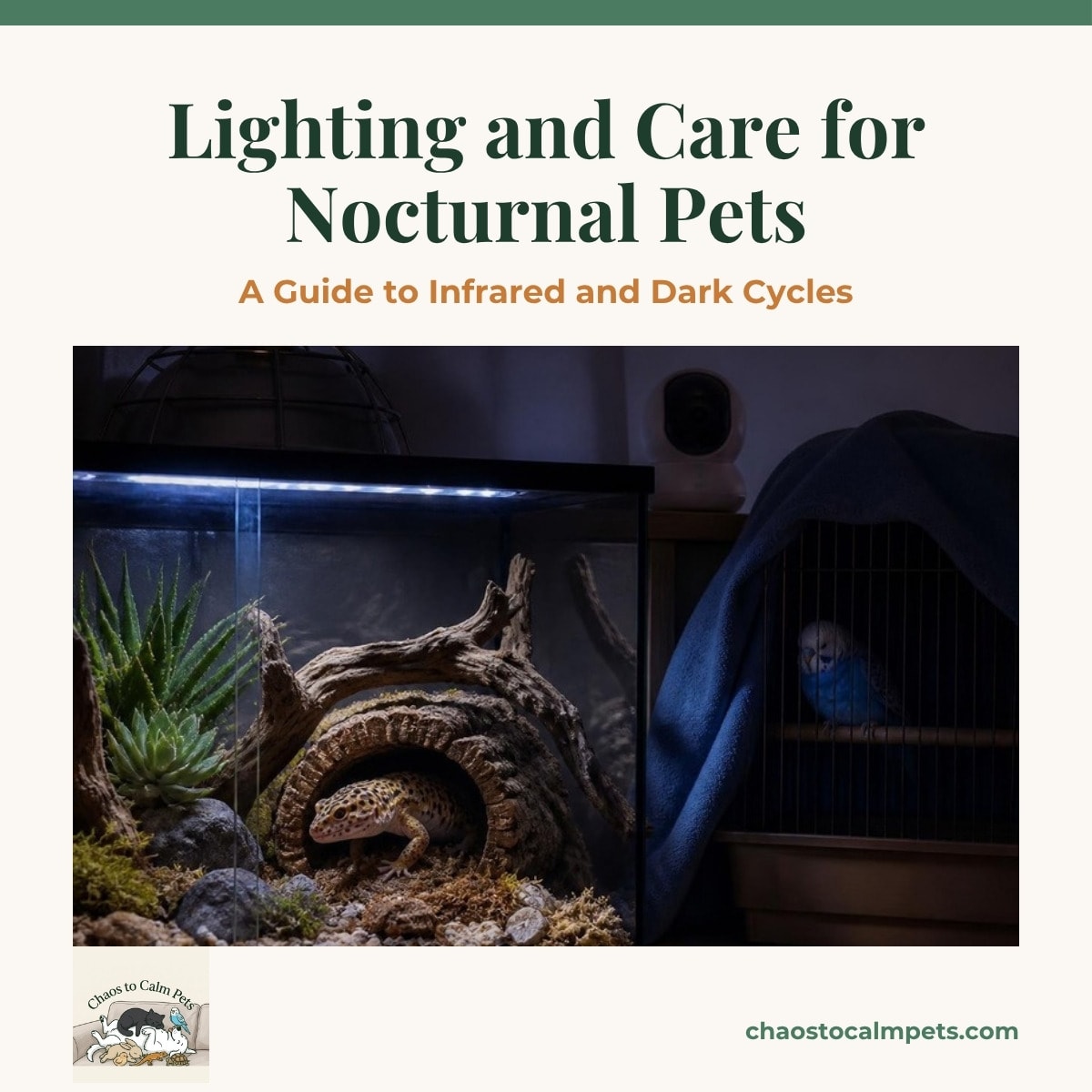
Lighting and Care for Nocturnal Pets
A Guide to Infrared and Dark Cycles
The red night bulb was wrong all along. 20 modules on nocturnal and crepuscular biology, rod-heavy retinas, why reptiles do see red light and what it does to their melatonin, 10 to 12 hours of true darkness, lunar LEDs, lightless infrared heat from ceramic emitters and radiant panels on thermostats, infrared cameras to watch without waking, 30-minute dusk ramps and golden-hour feeding, safe night temperatures, shade plants, the nocturnal menu, daytime pacing as a stress sign, the sleep sanctuary rule, blackout hides, night health checks, waking cues, light pollution curfews, circadian burnout, and the vet.
About this course
Leopard geckos, crested geckos, ball pythons, tree frogs, and most tarantulas are built for the dark, and most of them live under a glowing red bulb that never goes off. This course fixes the night. You'll learn the difference between nocturnal and crepuscular, why a rod-dominated retina is wrecked by bright light, why the pet-store claim that reptiles can't see red is false and what red bulbs do to the pineal gland, how to give 10 to 12 hours of real darkness and, if you want, a faint lunar LED, how infrared heat works without light, how to run ceramic emitters and radiant panels on a thermostat around the clock, how to watch your animal hunt with an infrared camera instead of a flashlight, how a 30-minute dimming ramp and a golden-hour meal match the animal's clock, how low the night can safely go, which shade plants live under low-lumen LEDs, why a nocturnal animal pacing the glass at noon is a stress signal, why you never pull a sleeping animal out during the day, how to build hides that are truly black inside, how to do health checks after dark, how to read awakening cues and give a 30-minute grace period before handling, how to shield the enclosure from the TV and the late kitchen light, what circadian burnout looks like, and when it's time for the vet.
What you'll learn
- Nocturnal versus crepuscular, rod-dominated retinas, and the red-light myth
- 10 to 12 hours of true darkness, lunar LEDs, and lightless infrared heat on thermostats
- Infrared cameras, dusk and dawn dimming ramps, and golden-hour feeding
- Safe night temperatures, shade plants, and the nocturnal menu
- Daytime pacing as a stress sign, the sleep sanctuary rule, and blackout hides
- Night health audits, waking cues and handling, light pollution curfews, burnout, and the vet
Who this is for
Keepers of leopard and crested geckos, ball pythons and other nocturnal snakes, tree frogs, tarantulas, and anyone whose 'night bulb' has been on since the day they set up the tank.
Course outline (20 modules)
Quiz & Certificate
Knowledge quiz
After completing all lessons, take a short quiz to test your understanding.
Go to quiz →Completion certificate
Pass the quiz and earn a shareable certificate of completion.
View certificate →Frequently asked questions
Ready to get started?
$9.99 · Lifetime access · 20 lessons