
Health & Care · Birds
Lorikeets and Nectar Eaters
Specialized Liquid Diets, Mess Management, and High-Energy Play
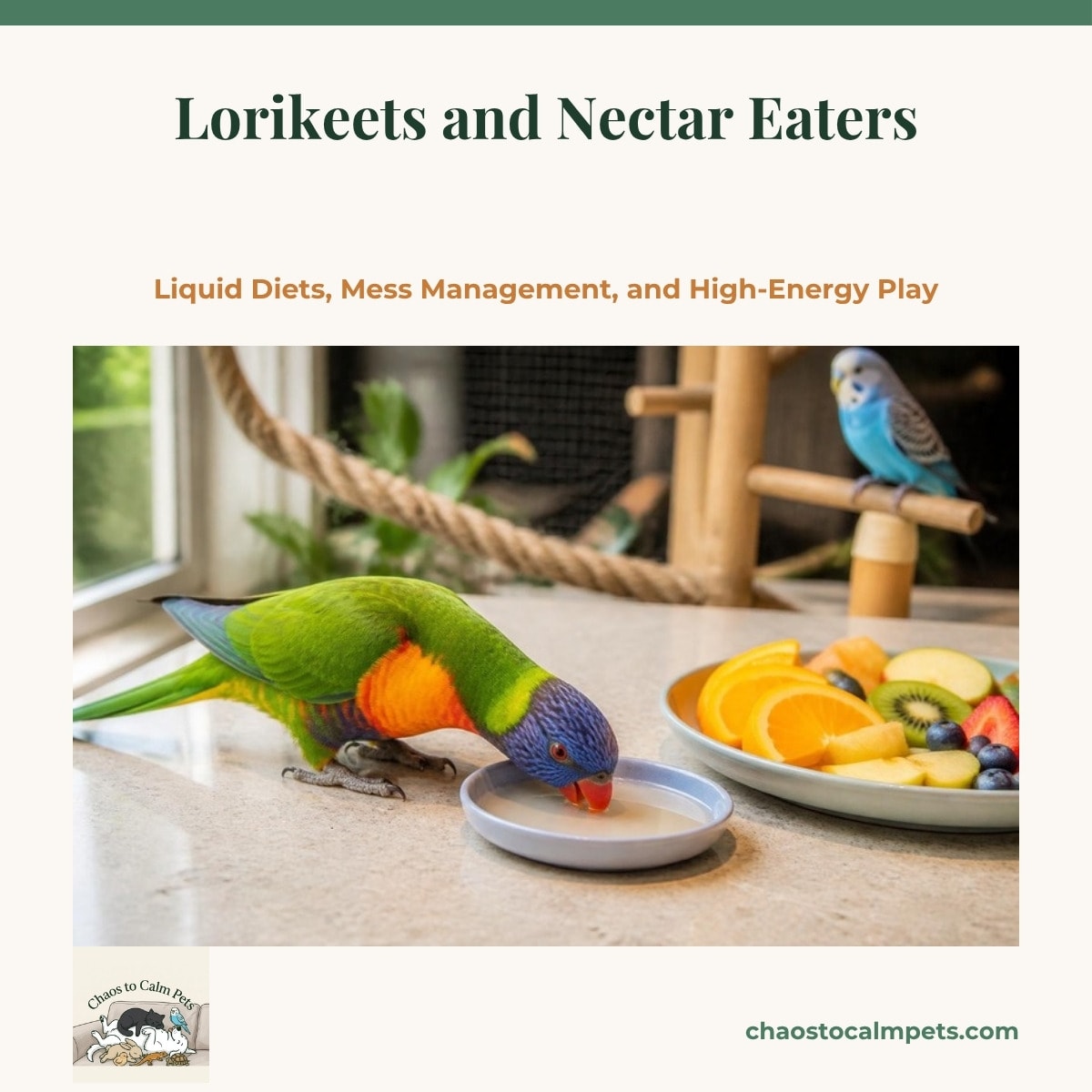
A lorikeet is not a parrot you feed from a seed bowl. 10 lessons on the brush tongue and the fast, simple gut behind it, mixing commercial nectar and the four-hour spoilage rule, managing projectile droppings with splash guards and washable floors, play bites versus territorial aggression, safe flowers and low-iron fruits, why dry pellets and seeds cause crop impaction and kidney damage, wrestling and acrobatic play, spotting yeast and bacterial crop infections, keeping a lorikeet flighted with indoor recall, and feeding the molt and keeping feathers clean.
About this course
A lorikeet eats like no other parrot, and this course begins with the tongue. Lesson 1 shows you the brush tip that sweeps up nectar and pollen, the short simple gut that follows it, and why food passes through in an hour or two and comes out wet. Lesson 2 is the diet itself: commercial lory powder mixed to a light-cream consistency, never sugar water, and replaced every three to four hours because it spoils fast. Lesson 3 faces the mess with acrylic splash guards, deep trays, washable flooring and a daily wipe. Lesson 4 sorts play nips from territorial strikes and gives you a thirty-second time-out that works. Lesson 5 adds hibiscus, bottlebrush and eucalyptus for foraging and explains which fruits to skip because of iron. Lesson 6 is the one that saves lives: dry pellets and seeds swell in the crop and overload the kidneys, so everything a lorikeet eats must be soft. Lesson 7 is wrestling and acrobatics done safely, Lesson 8 teaches you the sour-breath signs of a crop infection and the stainless bowl rule that prevents it, Lesson 9 builds indoor flight recall in a room-proofed space, and Lesson 10 feeds the molt and keeps sticky feathers clean with daily baths.
What you'll learn
- How the brush tongue and short gut work, and mixing and swapping nectar every few hours
- Containing projectile droppings with splash guards, deep trays, washable floors and a daily wipe
- Play bites versus territorial strikes, thirty-second time-outs, and redirecting the beak to toys
- Safe blossoms and branches, low-iron fruits, and why dry pellets and seeds endanger crop and kidneys
- Safe wrestling with a fleece buffer, climbing nets, and the signs and prevention of crop infections
- Keeping a lorikeet flighted with indoor recall and room-proofing, plus molt nutrition and daily baths
Who this is for
Anyone bringing home a first lorikeet and wondering why the pet store sold them seed; owners whose walls are already painted with purple droppings; and keepers whose bird nips hard, smells sour after eating, or refuses to bathe.
Course outline (10 modules)
Quiz & Certificate
Knowledge quiz
After completing all lessons, take a short quiz to test your understanding.
Go to quiz →Completion certificate
Pass the quiz and earn a shareable certificate of completion.
View certificate →Frequently asked questions
Ready to get started?
$9.99 · Lifetime access · 10 lessons