
Health & Care · Cold-Blooded Crew
Juvenile Reptile Winter Rest
When and When Not to Cool Young Exotics
Winter does not mean the same thing for every young reptile. 20 modules on why first-year babies are kept warm and growing, how true brumation differs from dangerous stagnation, which species must never be cooled, when seasonal cycling is appropriate, the health audit, the tapering schedule, the empty-gut rule, safe temperatures, weekly monitoring, emergency wake-ups, and a careful spring restart.
About this course
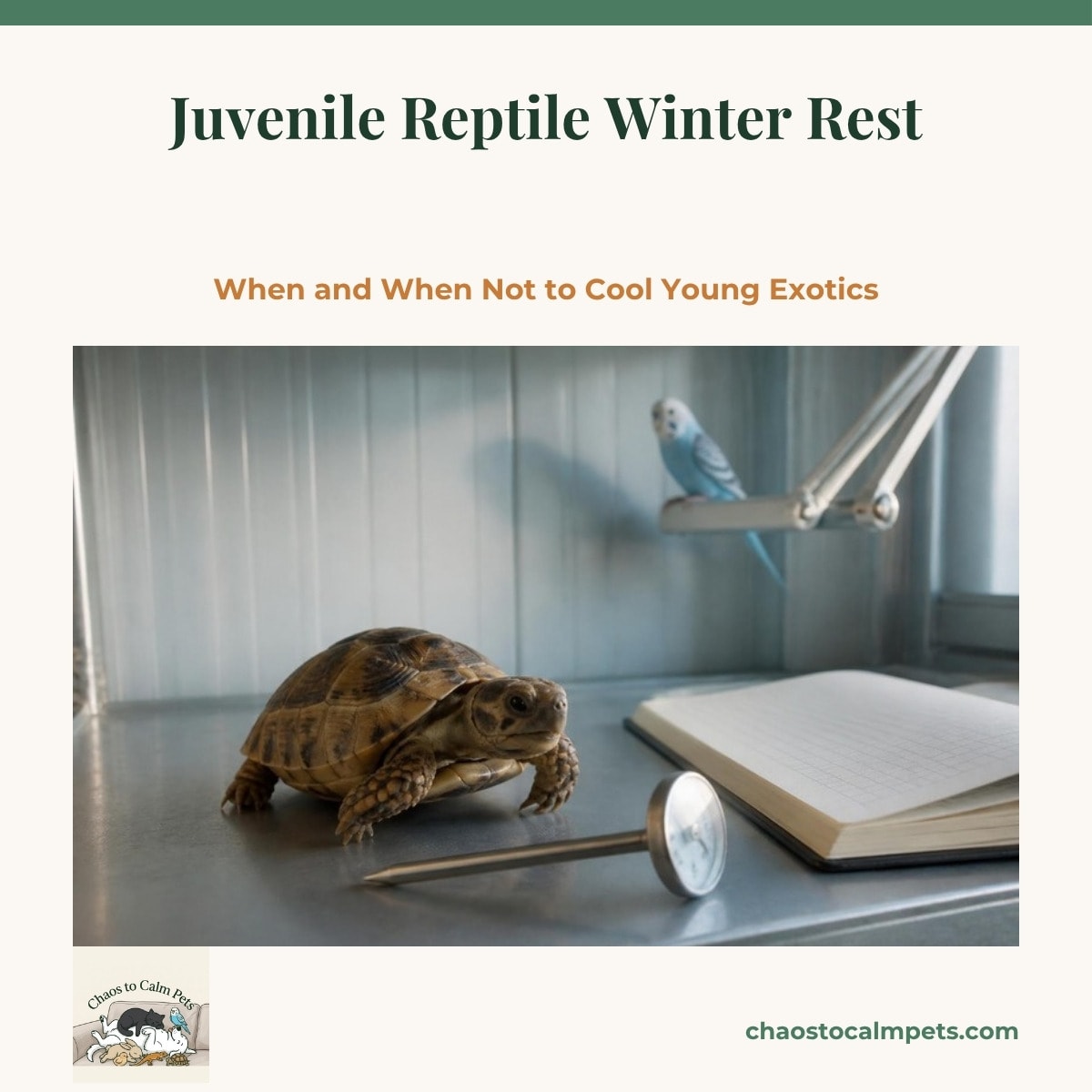
Every autumn, keepers wonder whether to let their reptile cool down for winter. For a first-year baby, the safest answer is usually no. Young animals have little fat reserve and an immune system that is still growing, and a cold, still juvenile can be starving rather than resting. This course explains the difference between true brumation and dangerous stagnation, which young animals must never be cooled, and when older animals may safely take a seasonal rest. You will learn the health audit that comes first, the four-week step-down schedule, the empty-gut rule that keeps food from rotting in a cold stomach, safe winter temperatures, weekly check-ins, and how to wake an animal gently if something goes wrong. Then you will bring it carefully back to spring.
What you'll learn
- Why first-year babies keep full heat, light, and feeding through winter
- How to tell true brumation from dangerous stagnation
- Which young animals, such as agamids and baby turtles and tortoises, must never be cooled
- The pre-brumation health audit, the four-week taper, and the empty-gut rule
- Safe winter temperatures, weekly monitoring, and emergency wake-ups
- A careful spring arousal and a safe return to full care
Who this is for
Keepers of young reptiles who are unsure whether to cool them for winter, and keepers of older animals who want to do a seasonal rest safely.
Course outline (20 modules)
Quiz & Certificate
Knowledge quiz
After completing all lessons, take a short quiz to test your understanding.
Go to quiz →Completion certificate
Pass the quiz and earn a shareable certificate of completion.
View certificate →Frequently asked questions
Ready to get started?
$9.99 · Lifetime access · 20 lessons