
Health & Care · Cold-Blooded Crew
The Invertebrate Keeper's Handbook
Tarantulas, Scorpions, and Mantises
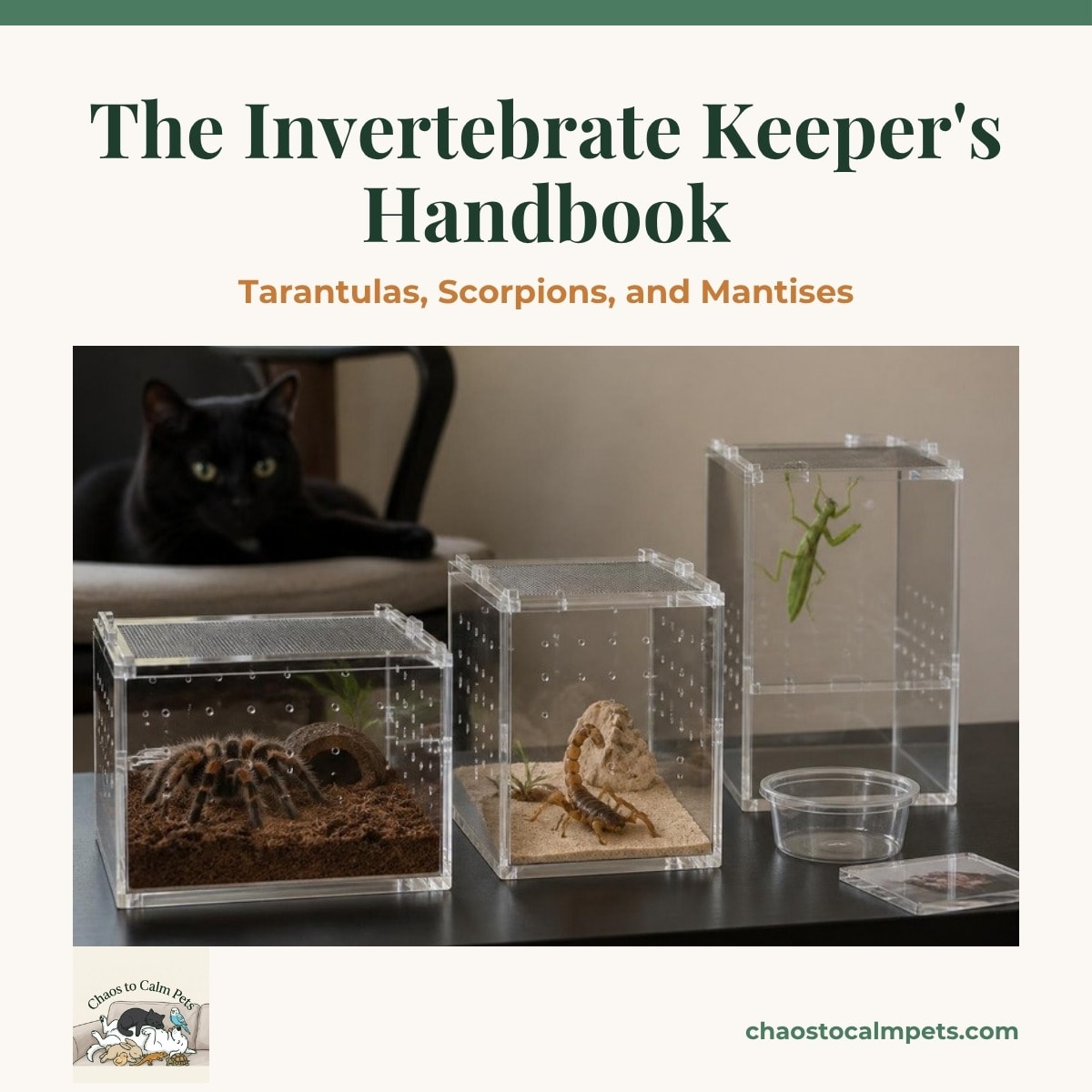
Living sculptures with their skeletons on the outside. 20 modules on exoskeletons and molting, matching enclosure shape to lifestyle and why height kills a terrestrial tarantula, safe substrates, cross-ventilation and the moisten-and-dry cycle, why heat lamps are banned, New World versus Old World, desert versus rainforest scorpions, tall mesh-ceiling mantis homes, premolt signs and the no-live-food rule, stuck molts, feeder sizing and pre-killing, no sponges in the water dish, urticating hairs and venom, the catch-cup method, cork bark, the death curl, cornstarch for a cracked abdomen, and home hospice when there's no vet.
About this course
A tarantula can live thirty years and die from a four-inch fall; a mantis can die on a smooth glass ceiling; a scorpion can die in a tank set up for the wrong desert. This course is the handbook that prevents all three. You'll learn why an exoskeleton makes molting the most dangerous week of an arthropod's year, why a heavy ground tarantula gets a low wide box and a tree spider gets a tall one, what substrates are safe and which shavings are poison, how opposing vents and corner-watering keep air moving and deep soil damp, why a heat lamp over an invertebrate is a death sentence and what a side pad on a thermostat does instead, why beginners start with calm New World tarantulas and how Old World species defend themselves, how a desert scorpion's setup differs from a rainforest scorpion's, why a mantis needs a tall enclosure with a mesh ceiling to hang from while it molts, how to read premolt (food refusal, shiny stretched abdomen, silk mat) and why a loose cricket can kill a freshly molted spider, how to soften a stuck molt with warm swabs, how to size feeders and when to crush a head, why sponges in water dishes are banned, what urticating hairs do to your eyes, how to move any of them with a clear cup and a card, what cork bark is for, what the death curl means, how cornstarch stops a cracked abdomen from bleeding out, and how to run home hospice for a species no vet near you treats.
What you'll learn
- Exoskeletons, molting, and matching the enclosure to a terrestrial, arboreal, or burrowing lifestyle
- Safe substrates, cross-ventilation, the moisten-and-dry cycle, and heat without lamps
- New World versus Old World tarantulas, desert versus rainforest scorpions, and mantis housing
- Premolt signs, the no-live-food rule, stuck molts, feeder sizing, pre-killing, and water dishes
- Urticating hairs, venom, the catch-cup method, and hands-off appreciation
- Weekly audits, the death curl, first aid for falls, and vet and hospice realities
Who this is for
New and curious invertebrate keepers, parents whose kid wants a tarantula, and anyone who has lost a spider during a molt and wants to know why.
Course outline (20 modules)
Quiz & Certificate
Knowledge quiz
After completing all lessons, take a short quiz to test your understanding.
Go to quiz →Completion certificate
Pass the quiz and earn a shareable certificate of completion.
View certificate →Frequently asked questions
Ready to get started?
$9.99 · Lifetime access · 20 lessons