
Health & Care · Cold-Blooded Crew
Hermit Crab Habitat Care
Deep Substrate, Saltwater Pools, and Shells
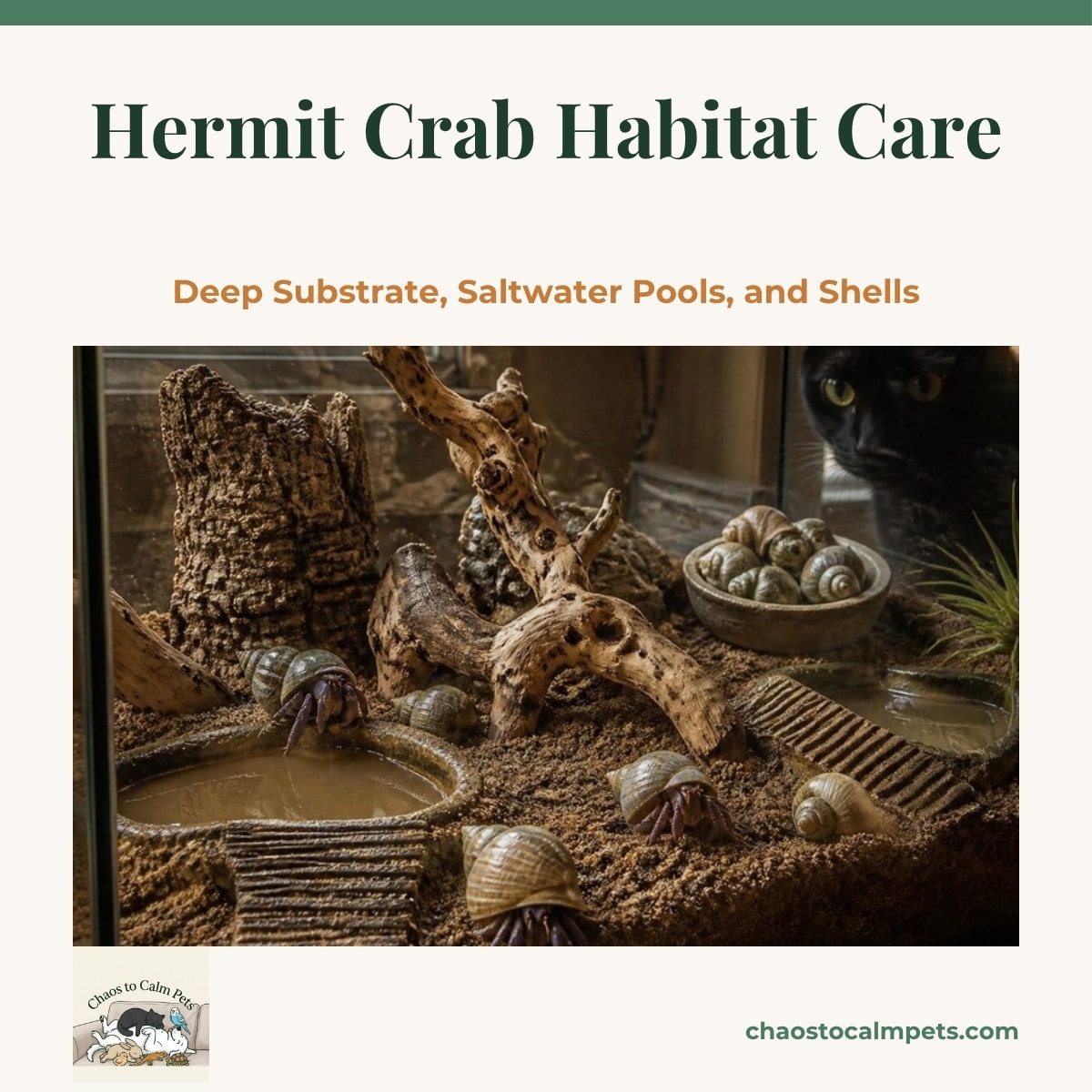
The wire cage and painted shell from the boardwalk are a slow death; this is the 30-year version. 20 modules on gills that need humid air, sealed glass over wire, six inches of sand-and-coir to burrow in, 70 to 80 percent humidity, dual fresh and marine pools with ramps, real aquarium salt, side-mounted heat (never under the tank), the shell shop, underground molting and the rule never to dig, surface-molt triage, the scavenger menu, calcium, climbing, colonies of three or more, copper and other poisons, weekly audits, hygiene, shell cracks and lost limbs, and the reality of crab vets.
About this course
Land hermit crabs are sold as a beach-trip novelty and can live thirty to forty years; almost none do, because almost nobody is told how. This course is the how. You'll learn why their modified gills need wet air and what a wire cage does to them, how to seal a glass terrarium and partially cover the screen, how to mix play sand and coconut fiber five to one and pile it three times deeper than your biggest crab, how to hold 70 to 80 percent humidity without flooding the floor into mold, why they need a freshwater pool and a true saltwater pool with ramps in both, how to mix marine aquarium salt to a specific gravity of 1.020 to 1.026 in dechlorinated water, why a heat pad goes on the side wall and never under a tank full of molting crabs, which natural shells they want and why painted souvenir shells are poison, what pre-molt looks like and why you never dig up a buried crab, how to protect a crab molting on the surface with a colander and damp towels, what a real scavenger diet looks like and why commercial pellets are out, where calcium comes from, how to anchor climbing wood, why a colony needs three or more crabs and a surplus of shells, which metals and woods kill, how to run a weekly four-point scan, how to handle mites, naked crabs, shell cracks, and lost limbs, and what to do when the nearest crustacean vet is three states away.
What you'll learn
- Gills, abdomens, and social ecology: why the standard setup fails
- Sealed glass, deep sand-and-coir substrate, and 70 to 80 percent humidity
- Dual pools, true marine saltwater, ramps, and side-mounted heat with a thermostat
- Natural shells, the molting rules, and surface-molt triage
- The scavenger menu, calcium, climbing, colonies, and the poisons list
- Weekly audits, sanitation, first aid, and vet realities over a 30-year life
Who this is for
Anyone who came home with hermit crabs in a plastic cage and a painted shell, and keepers who want to do the full crabitat properly.
Course outline (20 modules)
Quiz & Certificate
Knowledge quiz
After completing all lessons, take a short quiz to test your understanding.
Go to quiz →Completion certificate
Pass the quiz and earn a shareable certificate of completion.
View certificate →Frequently asked questions
Ready to get started?
$9.99 · Lifetime access · 20 lessons