
Health & Care · Cold-Blooded Crew
Hatchling Birth Defects
Triage, Hospice Care, and Ethical Decisions
The hardest chapter of breeding, handled with a system instead of guilt. 20 modules on why defects happen (incubator spikes and hidden recessives), the four-point hatchling inspection, spinal and tail kinks, jaw deformities, neurological signs, hernias, toe and limb anomalies, the three-pillar quality-of-life matrix, micro X-rays, building a hospice box, where terminal suffering begins, why home euthanasia is banned and what a vet does instead, tracing and retiring carrier pairs, biosecurity, daily comfort scans, ledgers, grief, contributing data, and stopping the next clutch's defects at the thermostat.
About this course
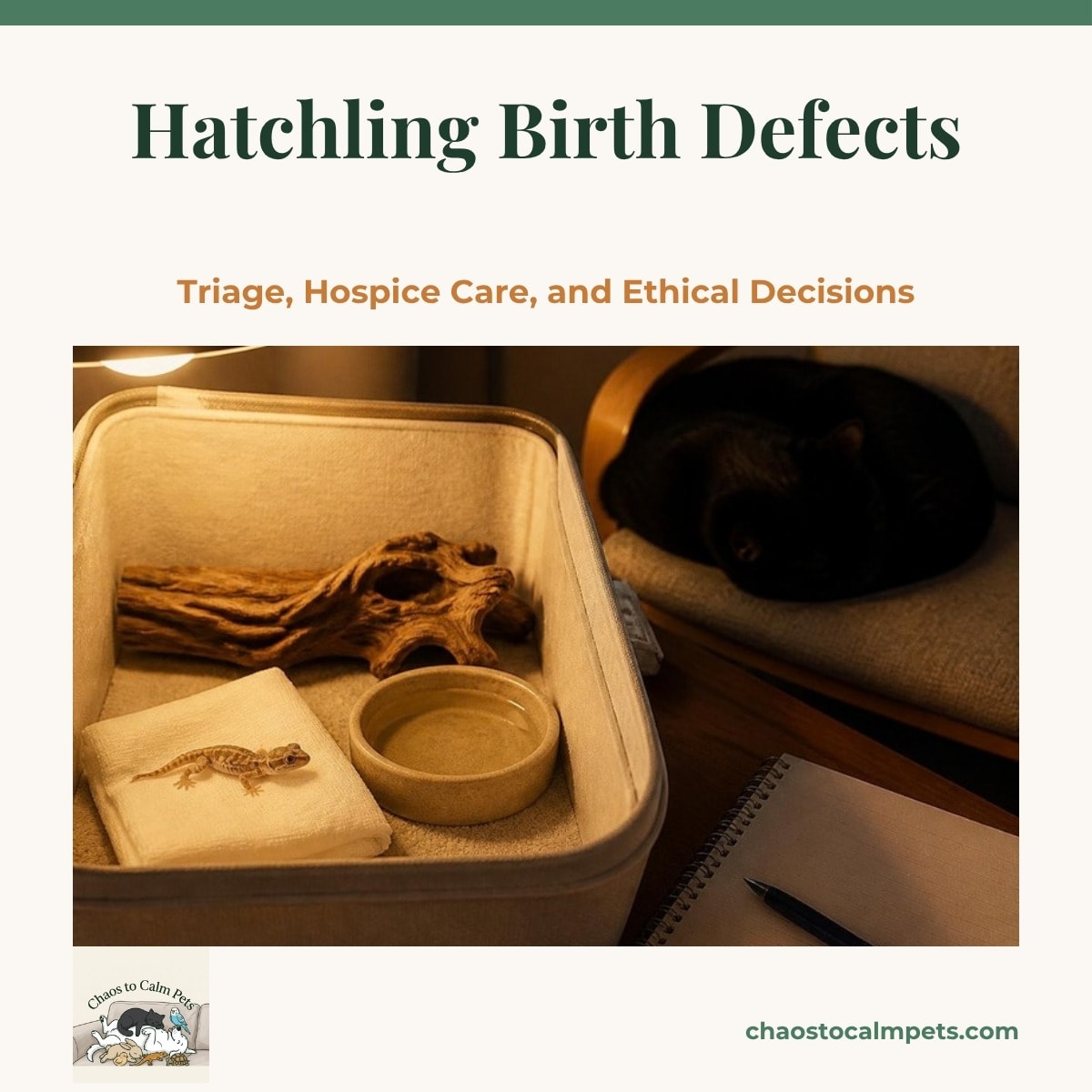
Every breeder who hatches enough clutches will one day open the incubator and find a baby that isn't right. This course is for that morning. You'll learn why it happened, usually an incubator spike above 92°F or a recessive gene two healthy parents both carried, how to run a four-point inspection of spine, jaw, reflexes, and belly on the day of hatching, what a sideways kink or a raised hump means for movement, why a parrot-mouth or wry-mouth baby cannot eat and what that means, how star-gazing, head tilt, and corkscrew spinning differ from infection, when a closed hernia may stabilize and when exposed organs cannot, which toe and limb anomalies allow a normal life on a flat floor, how to score pain, eating, and movement on a three-pillar matrix so the decision isn't driven by your attachment, what a micro X-ray and a specialist can tell you, how to build a hospice box that is soft, shallow-watered, and quiet, where compassionate assisted care ends and terminal suffering begins, why no home euthanasia method is acceptable and what a vet actually does, how to trace the sire and dam and retire a carrier pair, how to protect an immune-compromised baby with gloves and a separate ward, how a daily comfort scan keeps hospice honest, how to keep a triage ledger, how to handle the grief, how your records help researchers, and how to make sure the next clutch's thermostat never spikes.
What you'll learn
- Why defects happen: incubation heat spikes and hidden recessive genes
- The four-point hatchling inspection and what each anomaly means for life
- The three-pillar quality-of-life matrix: pain, eating, movement
- Micro X-rays, specialist consults, and a hospice box done right
- Where terminal suffering begins, and why euthanasia is a vet's job only
- Tracing and retiring carriers, biosecurity, comfort scans, ledgers, and grief
Who this is for
Breeders of geckos, snakes, dragons, chameleons, frogs, and tortoises who want to meet a bad hatch day with a protocol instead of panic, and keepers who have ever had to make this call alone.
Course outline (20 modules)
Quiz & Certificate
Knowledge quiz
After completing all lessons, take a short quiz to test your understanding.
Go to quiz →Completion certificate
Pass the quiz and earn a shareable certificate of completion.
View certificate →Frequently asked questions
Ready to get started?
$9.99 · Lifetime access · 20 lessons