
New to Your Home · Birds
Hand-Feeding Tool Mechanics
Syringes, Spoons, and Safe Crop Tubing
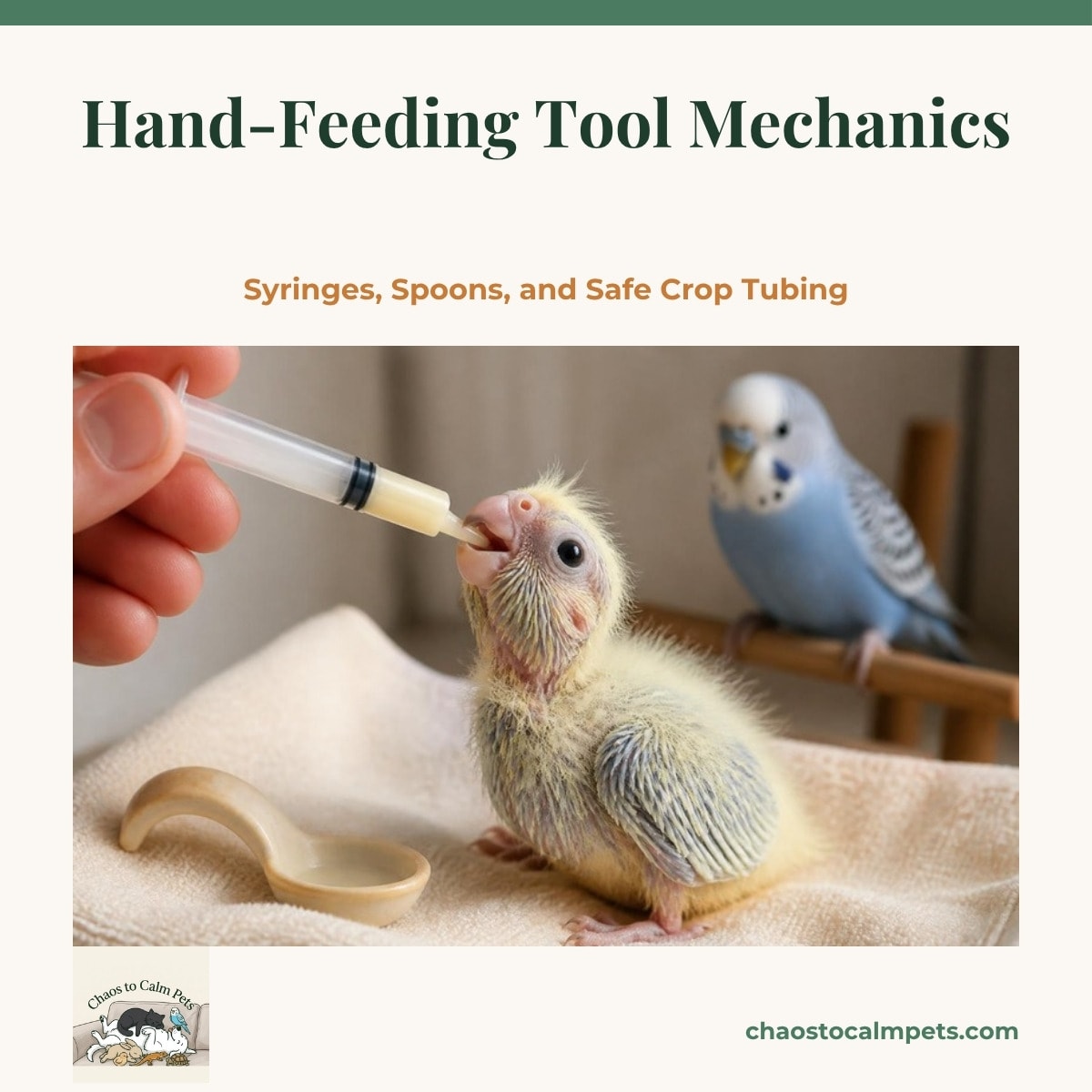
The syringe is not the dangerous part; where you point it is. 10 lessons on the bird's airway and why the glottis sits right in the feeding path, spoon feeding for weaning chicks, matching syringe size to body weight, keeping plungers from sticking and jerking, the left-to-right entry angle that misses the glottis, timing each push to the head-bob, pausing every milliliter or two, when a crop needle is called for, how crop tubing is done safely with hands-on help from your vet, and cleaning the beak and nostrils after every feed.
About this course
Every hand-feeder learns the same anatomy lesson the hard way or the easy way. This course is the easy way. It opens inside the bird's mouth, where the airway and the food path share one space and the glottis sits on the floor of the throat waiting to be flooded. Once you can picture that, every rule that follows makes sense. You'll look at spoon feeding, the old method that lets a weaning chick set its own pace, then at syringes: why a tiny chick gets a 1 to 3 milliliter syringe and a macaw gets 20 to 35, how to keep a plunger from gumming up and lurching forward, and the left-to-right angle that lands formula in the esophagus instead of the windpipe. Two lessons are about rhythm, delivering only on the upward stroke of the head-bob and pausing every milliliter or two to let the chick breathe and the crop fill slowly. Lessons 8 and 9 cover crop needles: when a chick that refuses the syringe or needs medication may need one, and the restraint and insertion steps that make tubing safe, which you learn hands-on from your avian vet or an experienced breeder, never from a page alone. The last lesson is cleanup, because dried formula over the nostrils is its own emergency.
What you'll learn
- Where the glottis sits in a bird's mouth, and why spoon feeding suits older weaning chicks
- Matching syringe size to body weight, and keeping plungers rinsed, lubricated and smooth
- The left-to-right entry angle that reaches the esophagus and clears the glottis
- Delivering only on the upward head-bob, and stopping when the chick signals refusal
- Pacing the plunger in small increments, pausing every milliliter or two, watching the crop
- When a crop needle is indicated, tubing safety learned with your vet, and post-feed cleanup
Who this is for
New hand-feeders who have a syringe and no idea where the airway is; breeders who want to move from spoon to syringe, or to crop tubing with proper supervision; and anyone whose chick clicks or gurgles during feeds and wants to fix the mechanics before it becomes pneumonia.
Course outline (10 modules)
Quiz & Certificate
Knowledge quiz
After completing all lessons, take a short quiz to test your understanding.
Go to quiz →Completion certificate
Pass the quiz and earn a shareable certificate of completion.
View certificate →Frequently asked questions
Ready to get started?
$9.99 · Lifetime access · 10 lessons