
New to Your Home · Birds
Finch and Canary Nestling Care
Banding, Fostering, and Feeding
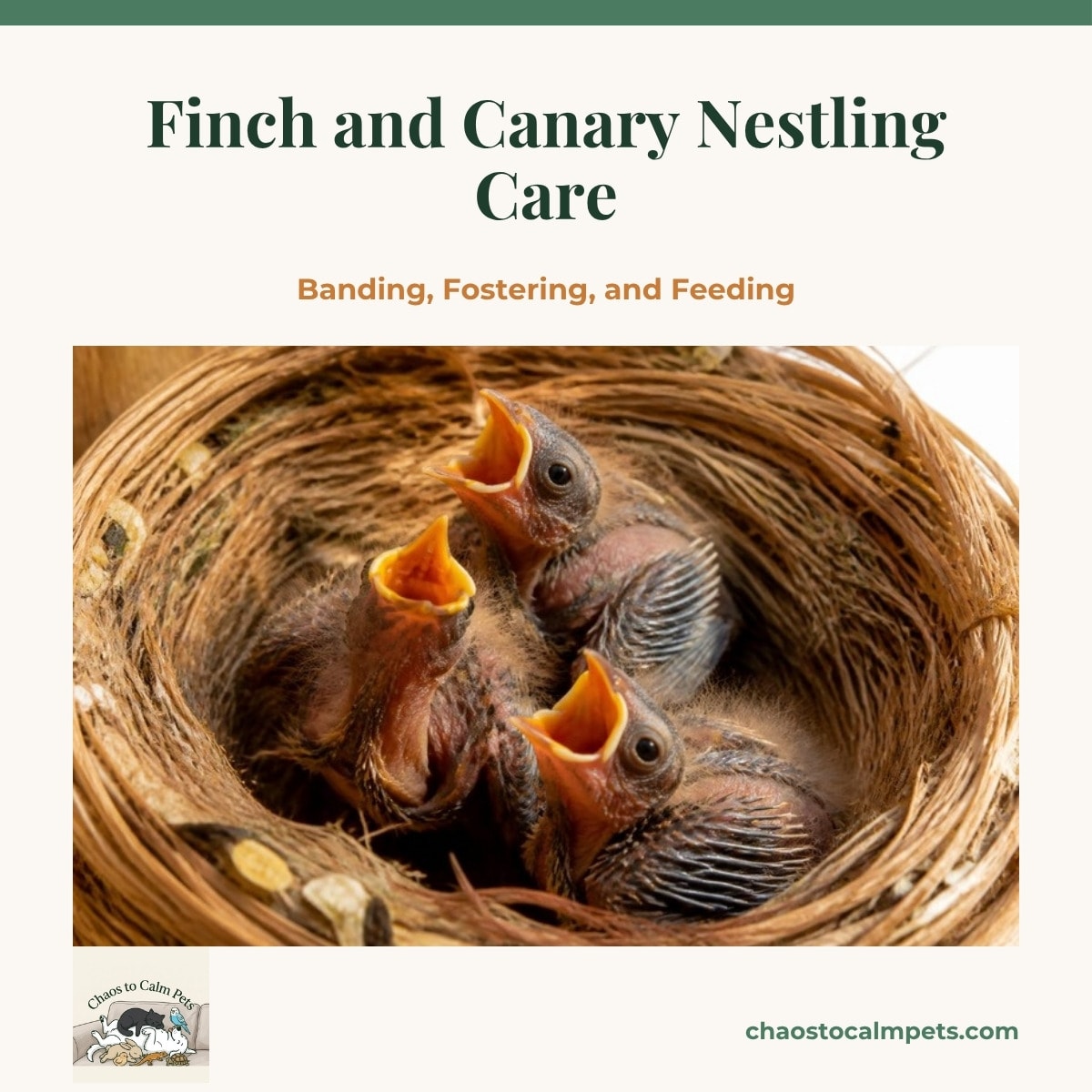
Finch and canary parents do the raising; your job is to set the stage, watch from a distance, and step in only when something goes wrong. 10 lessons on open-cup nests and safe fibers, reading parental feeding without opening the nest, reviving a tossed and chilled chick, micro-feeding a 1 gram baby by toothpick, closed banding in the day 5 to 7 window, Society finch fostering, separating weaned young before the hen plucks them, egg-food recipes, the juvenile molt and color feeding, and hearing a young male canary's first sub-song.
About this course
Finches and canaries are not hand-raising birds. They build open cup nests, feed their own young, and abandon a clutch if you keep opening the nest to look. This course teaches you to help without interfering. Lesson 1 sets up wicker cups, short safe fibers and a private upper corner. Lesson 2 shows how to confirm feeding from outside the cage, by gaping chicks, a visible yellow crop curd through the skin and parents going back and forth, and why a silent nest is the emergency sign. Lessons 3 and 4 are for when it goes wrong: warming a tossed, cold chick slowly in your hands before anything else, and feeding a 1 gram baby pinhead drops from a toothpick every 30 to 60 minutes. Lesson 5 is closed banding in the day 5 to 7 window, with ring sizes and the toe-by-toe method. Then you'll meet the Society finch, the foster parent that will raise almost anything if the timing matches, and learn when to pull weaned young before a hen plucks them for her next nest. The course finishes with egg-food, the juvenile molt and color feeding, and the quiet bubbling sub-song that tells you a young canary is a male.
What you'll learn
- Open-cup nests, safe short fibers, and private placement that keeps parents on the eggs
- Reading parental feeding from outside the cage, and reviving a tossed, chilled chick slowly
- Micro-feeding a 1 to 3 gram nestling by toothpick or pipette every 30 to 60 minutes
- Closed banding at day 5 to 7 with the right ring, and Society finch foster swaps
- Pulling weaned young at day 28 to 35, and mixing crumbly egg-food that won't foul nests
- The 6 to 10 week juvenile molt, timed color feeding, and sexing canaries by sub-song
Who this is for
First-time canary or finch breeders waiting on their first clutch; keepers of Gouldians and other delicate finches considering Society fosters; and anyone who found a cold chick on the cage floor this morning and doesn't know whether it can be saved.
Course outline (10 modules)
Quiz & Certificate
Knowledge quiz
After completing all lessons, take a short quiz to test your understanding.
Go to quiz →Completion certificate
Pass the quiz and earn a shareable certificate of completion.
View certificate →Frequently asked questions
Ready to get started?
$9.99 · Lifetime access · 10 lessons