
New to Your Home · Birds
Feeding Hygiene and Yeast Defense
Sterilizing Syringes to Prevent Thrush
Yeast does not need an invitation; a dirty syringe and a slow crop are enough. 10 lessons on what Candida is and how it turns into thrush, boiling syringes versus disinfectant soaks, single-use stirrers and a dedicated dry scoop, why a syringe never goes back into the master batch, keeping crop bras clean in a warm brooder, spotting the white plaques of thrush in the mouth, the regurgitation and aspiration risk of a gassy crop, giving a vet-prescribed antifungal the way it was prescribed, rebuilding gut flora with probiotics afterward, and wiping dried formula out of a chick's down.
About this course
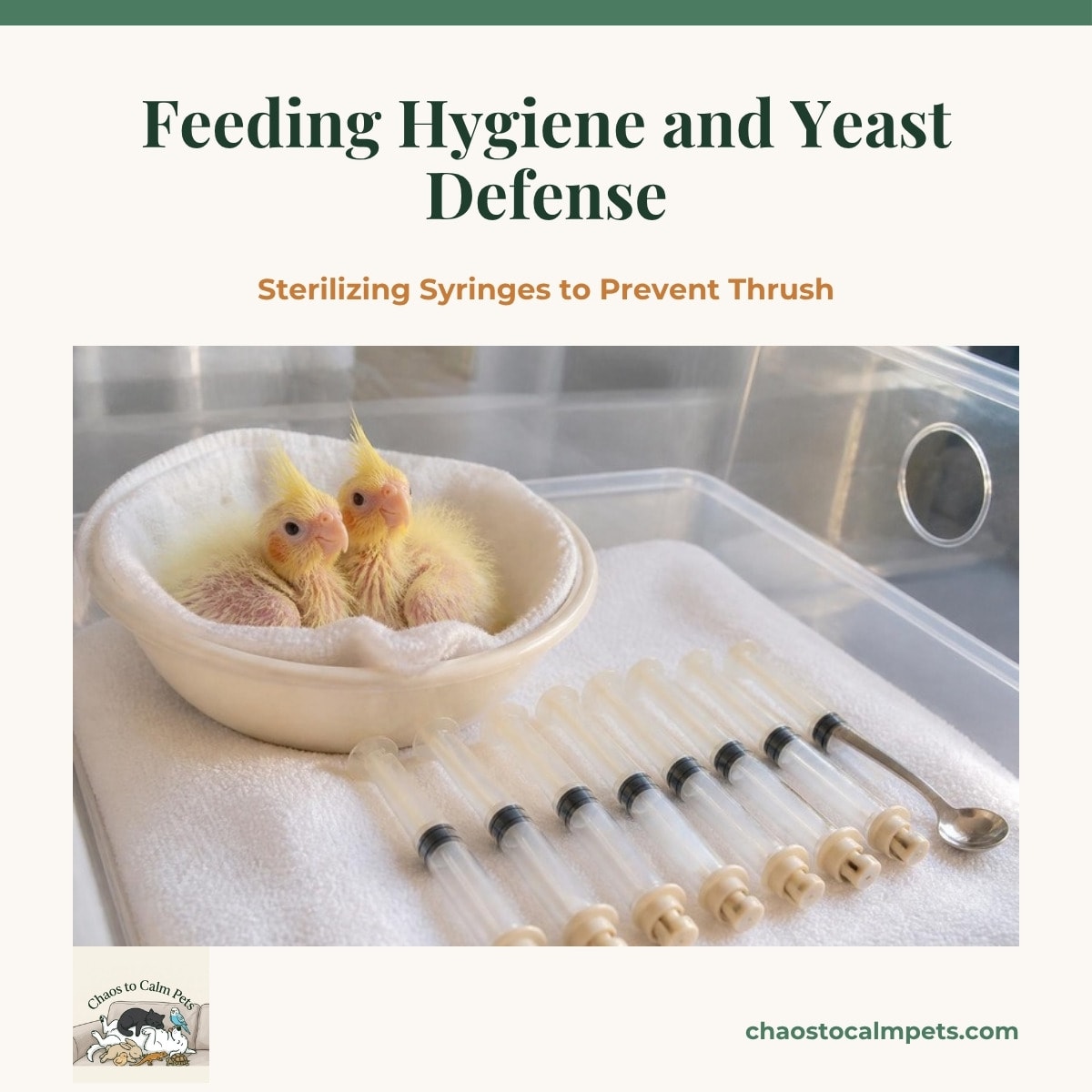
Thrush is the infection hand-feeders fight most often, and almost all of it starts on the equipment. This course begins with the organism: what Candida is, why it lives quietly in a healthy gut, and what makes it explode into white plaques that block swallowing. Then the practical defense, lesson by lesson. You'll learn why dish soap is not enough and how long syringes and spoons need to boil, or sit in a chlorhexidine or hydrogen peroxide soak, between rounds. You'll switch to single-use stirring sticks and a scoop that only ever touches dry powder, and you'll stop the one habit that contaminates a whole batch: dipping a used syringe back into the master bowl. If you are managing a chick in a crop bra, there is a lesson on keeping that wrap from becoming a damp greenhouse against the skin. Then you'll look in the mouth and learn what thrush plaques look like next to normal fat pads, and why a gassy, fermenting crop can push fluid into the airway while the chick rests. Lesson 8 covers giving a vet-prescribed antifungal exactly as prescribed, Lesson 9 covers probiotics afterward, and the course ends with cleaning dried formula out of down before it chills the chick.
What you'll learn
- What Candida albicans is, how thrush forms, and how long to boil or soak feeding tools
- Single-use stirrers, a dedicated dry scoop, and why a syringe never goes back in the bowl
- Keeping crop bras clean and dry in a warm brooder, with spare sets in rotation
- What thrush plaques look like in the mouth, and how to tell them from normal anatomy
- Why a fermenting crop causes regurgitation and aspiration, and what to do first
- Giving a prescribed antifungal with your vet, probiotics afterward, and cleaning formula from down
Who this is for
Hand-feeders who keep losing the yeast battle and suspect the syringes; breeders running several chicks off one mixing bowl; and anyone whose avian vet just said the word thrush and handed over a prescription with instructions they want to follow exactly.
Course outline (10 modules)
Quiz & Certificate
Knowledge quiz
After completing all lessons, take a short quiz to test your understanding.
Go to quiz →Completion certificate
Pass the quiz and earn a shareable certificate of completion.
View certificate →Frequently asked questions
Ready to get started?
$9.99 · Lifetime access · 10 lessons