
Health & Care · Cold-Blooded Crew
Preparing Exotic Pets for Winter
Managing Light, Heat, and Safe Winter Rest
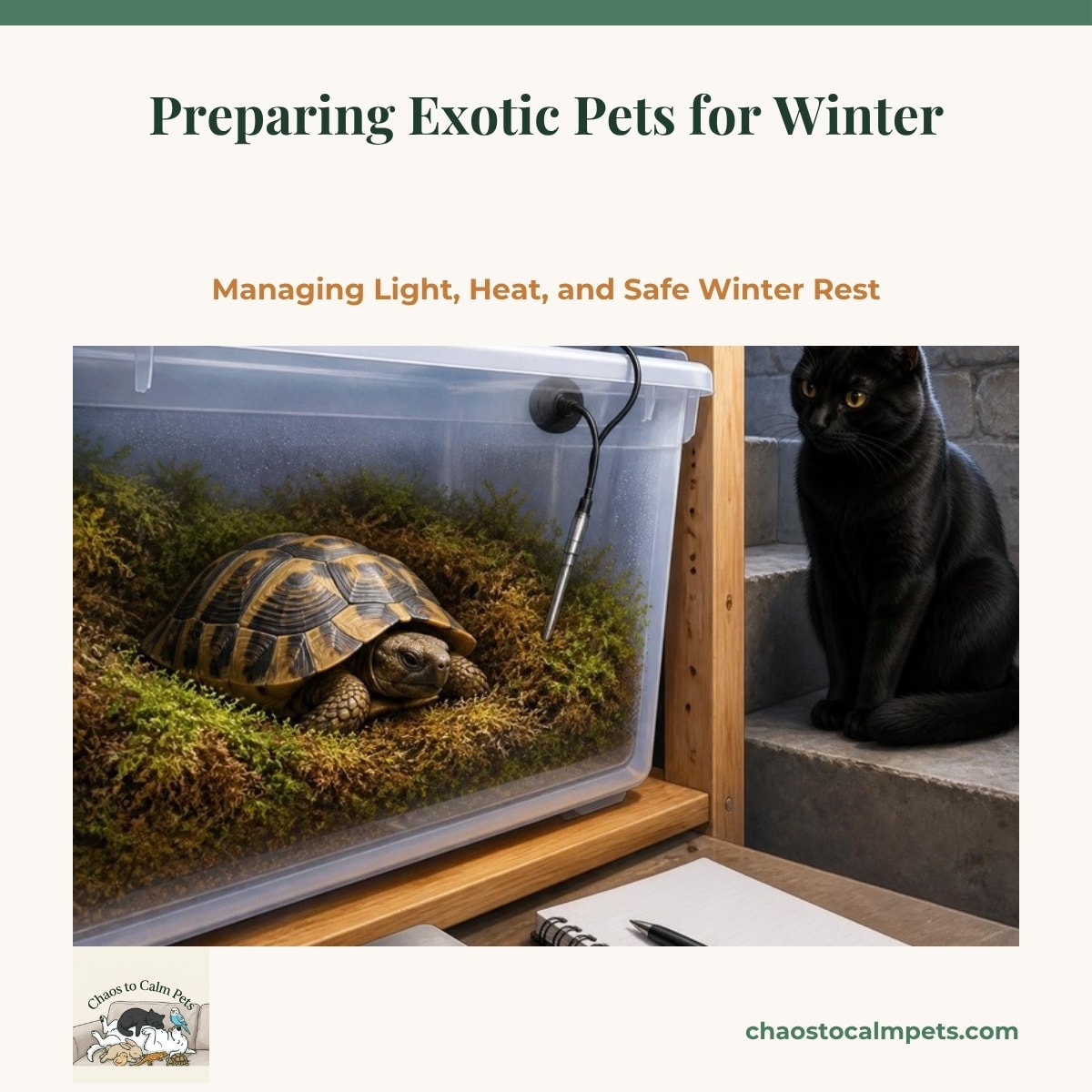
Endless summer wears a reptile out. 20 modules on the yearly clock, winter rest versus hibernation, which pets need a cool-down and which must never have one, the pre-winter vet check and fecal test, the empty-stomach rule, shortening days on timers, cooling over four to six weeks to 45 to 55°F, the rest box, daily temperature checks, mid-winter weigh-ins and soaks, the warning signs that end the rest early, the two-week wake-up, the first drink and the first meal, spring hormones, keeping tropical pets warm through drafts, cleaning the gear, the post-winter health check, and the vet.
About this course
Wild reptiles have a calendar; captive ones usually get a permanent July. This course gives the right animals their winter back and keeps the wrong ones out of it. You'll learn the difference between a mammal's hibernation and a reptile's winter rest, which species need a cool-down and which tropical pets would die from one, why a vet exam and fecal test four weeks before matters (a resting immune system can't fight parasites), why food stops three to four weeks before the cold and how warm soaks clear the gut, how timers shorten the day over weeks, how to lower temperatures over four to six weeks toward 45 to 55°F, how to build a rest box from a tub, moss, and tiny air holes, what the daily thermometer check and weekly mist look like, how a weigh-in every few weeks and a lukewarm soak keep the animal safe, which signs (stiffness, mucus bubbles, more than ten percent weight loss) end the rest immediately and how to warm a rescued animal over 24 hours, how the two-week wake-up avoids shock, why the first spring drink comes before the first meal and what that meal is, what the spring hormone surge means, how to keep tropical pets warm through a drafty winter, how to clean the gear, and what the post-winter health check and the vet are looking for.
What you'll learn
- The yearly clock, winter rest versus hibernation, and who needs it versus who must never cool
- The pre-winter vet check, the empty-stomach rule, and shortening days on timers
- Cooling over four to six weeks, the rest box, and daily temperature and moisture checks
- Mid-winter weigh-ins and soaks, the warning signs, and the emergency warm-up
- The two-week wake-up, the first drink, the first meal, and spring hormones
- Winter care for tropical pets, cleaning the gear, the post-winter check, and the vet
Who this is for
Keepers of temperate species (box turtles, Russian and Hermann's tortoises, corn snakes, kings, leopard geckos) wondering whether to brumate, and keepers of tropical species who need to know their pet must never be cooled.
Course outline (20 modules)
Quiz & Certificate
Knowledge quiz
After completing all lessons, take a short quiz to test your understanding.
Go to quiz →Completion certificate
Pass the quiz and earn a shareable certificate of completion.
View certificate →Frequently asked questions
Ready to get started?
$9.99 · Lifetime access · 20 lessons