
Health & Care · Cold-Blooded Crew
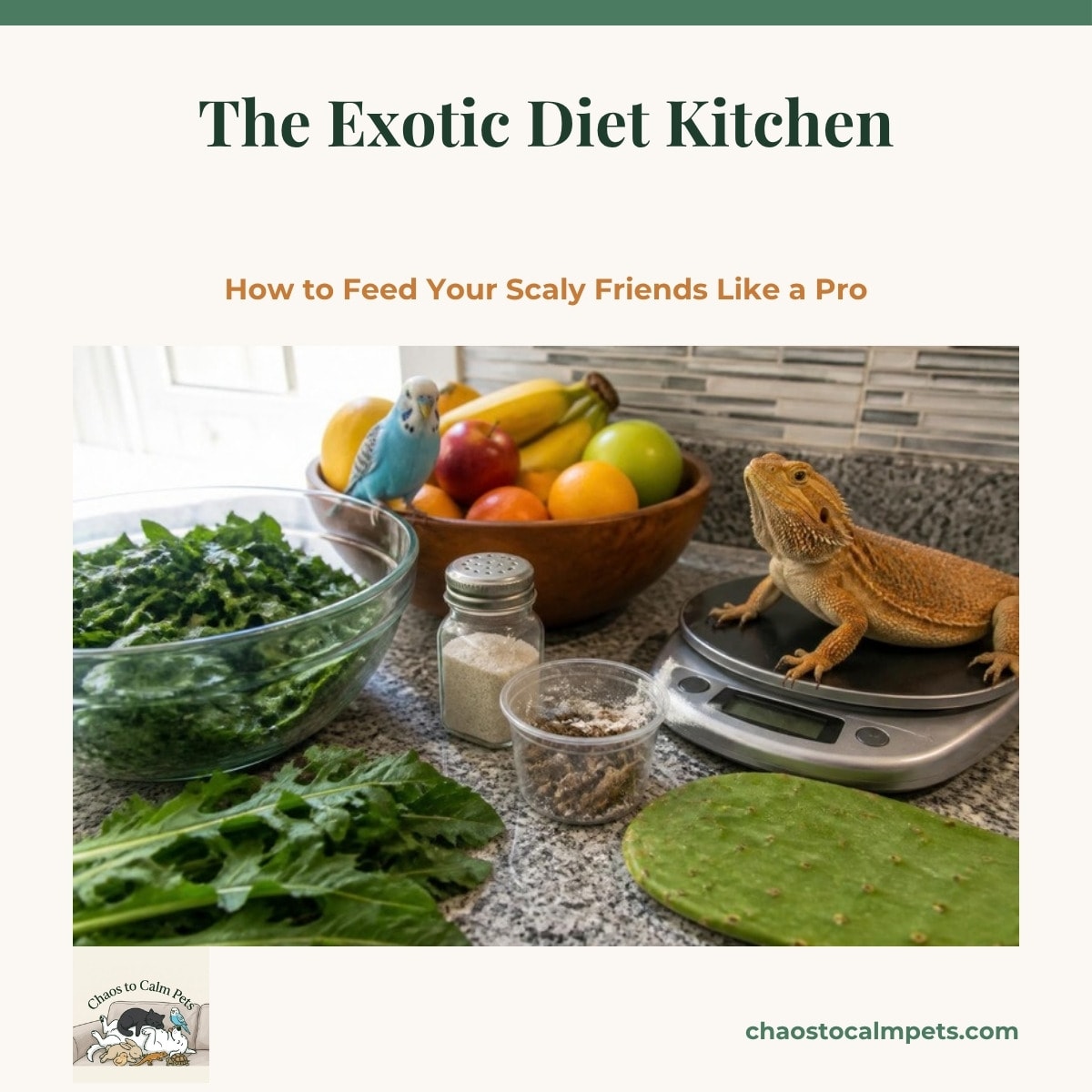
The Exotic Diet Kitchen
How to Feed Your Scaly Friends Like a Pro
Your kitchen is the pharmacy. 20 modules on herbivores, carnivores, insectivores, and omnivores, the 24-hour gut-load, a home Dubia colony, fruit flies and bean beetles for tiny mouths, the calcium triad and when D3 is poison, the 2-to-1 calcium-to-phosphorus target, preformed vitamin A versus beta-carotene, the staple greens and the banned ones, foraging dandelions and plantain safely, flipping an omnivore from 70 percent bugs to 80 percent greens, edible flowers, cactus pads and misted salads for water, oxalates, goitrogens, and toxic houseplants, whole prey versus muscle meat, retiring the bowl, washing produce and thawing prey, the monthly weigh-in, catching bone disease and vitamin A deficiency early, and what a vet's recovery smoothie does.
About this course
Most of the sick reptiles Paola has taken in were sick because of the bowl, and the fix was in the kitchen. This course makes you the chef. You'll learn why a tortoise, a snake, a gecko, and a bearded dragon need four different menus and what happens when they're swapped, why a pet-store cricket is an empty shell until you've fed it for 24 hours, how to run a Dubia colony and a fruit-fly culture so you never run out, what pure calcium, calcium with D3, and a good UVB tube each do and why doubling up can poison, why phosphorus steals calcium and how to hit a 2-to-1 ratio, when preformed vitamin A is required and when beta-carotene is safer, which greens are staples and why iceberg and spinach are banned, how to forage dandelions and plantain from a clean yard and wash them, how a juvenile omnivore eats 70 percent bugs and an adult flips to 80 percent greens, which flowers are food, how cactus pads and misted salads hydrate a bowl-refuser, what oxalates and goitrogens do, why whole prey beats a chunk of chicken, how to turn feeding into a hunt, how to wash produce and thaw prey safely, why a monthly weigh-in catches trouble before you can see it, what early metabolic bone disease and vitamin A deficiency look like, and what the vet does with a recovery slurry when an animal has stopped eating.
What you'll learn
- Herbivore, carnivore, insectivore, and omnivore menus, the 24-hour gut-load, and home bug colonies
- Fruit flies and bean beetles, the calcium triad, D3, UVB, and the 2-to-1 calcium-to-phosphorus target
- Vitamin A and E, multivitamin schedules, staple and banned greens, and safe backyard foraging
- Omnivore ratios by age, edible flowers, hydrating foods, oxalates, goitrogens, and toxic plants
- Whole prey versus muscle meat, foraging-style feeding, produce washing, and prey thawing
- The monthly weigh-in, body condition, early bone disease and vitamin A deficiency, and vet recovery diets
Who this is for
Keepers of bearded dragons, leopard geckos, tortoises, snakes, chameleons, and frogs who want to stop guessing at the supplement jar, and anyone whose vet just said the words metabolic bone disease.
Course outline (20 modules)
Quiz & Certificate
Knowledge quiz
After completing all lessons, take a short quiz to test your understanding.
Go to quiz →Completion certificate
Pass the quiz and earn a shareable certificate of completion.
View certificate →Frequently asked questions
Ready to get started?
$9.99 · Lifetime access · 20 lessons