
New to Your Home · Birds
Egg Candling Guide
Tracking Growth, Air Cells, and Infertile Eggs
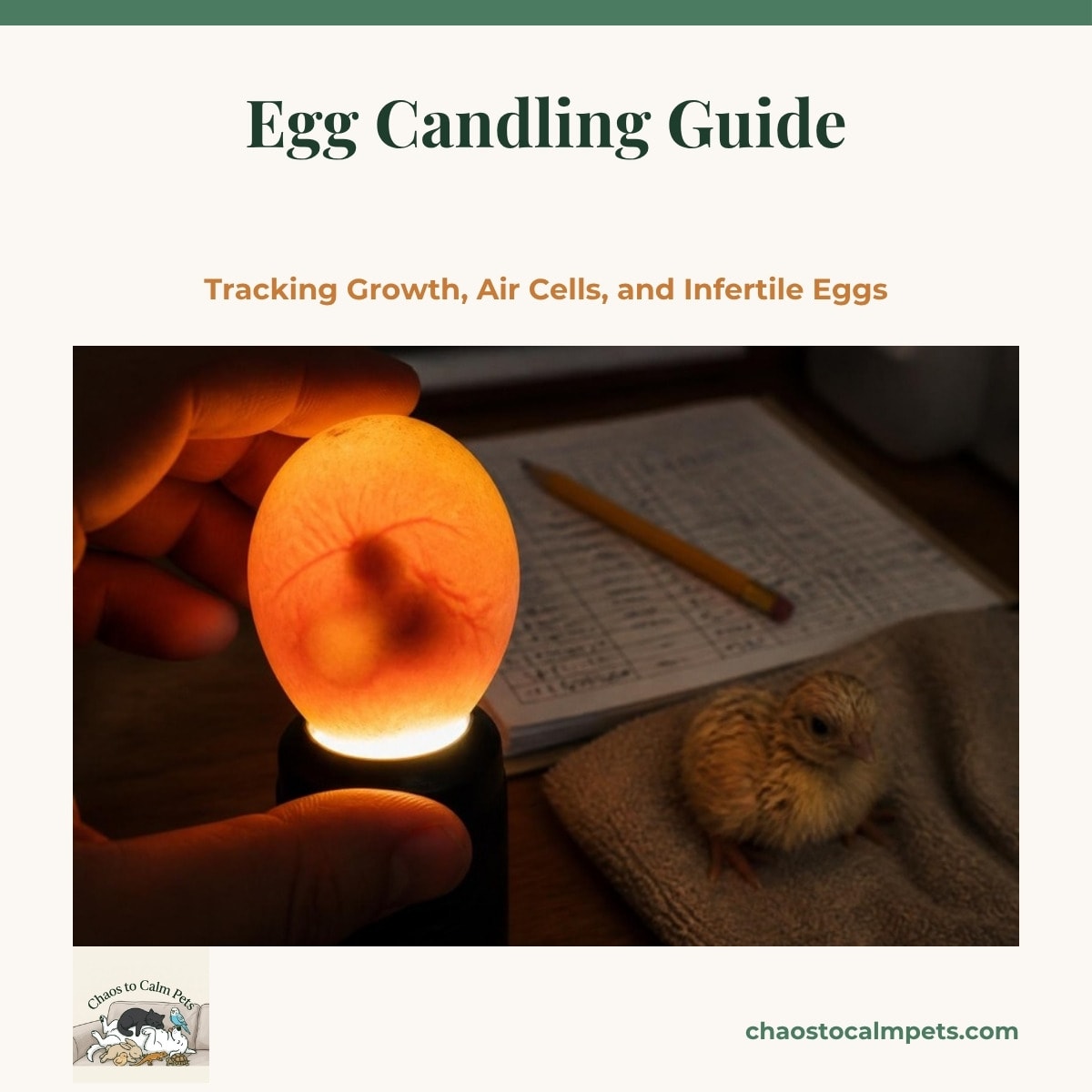
A bright light and a dark room will tell you more about an egg than any chart. 10 lessons on choosing a cool LED candler and keeping sessions short, spotting the spider web of blood vessels and the heartbeat at days 5 to 7, pulling infertile clears before they turn into bacterial bombs, recognizing the blood ring of an embryo that died early, mid-stage eye spots and movement, tracing the air cell in pencil, adjusting humidity from what the air cell tells you, the dark egg of late incubation, hatching malpositions, and clean hands every time you touch a shell.
About this course
Candling is how you find out what is happening inside an egg without cracking it, and this course teaches you to do it safely and to understand what you see. You'll start with the hardware: a cool LED candler instead of a hot bulb, sessions under 3 to 5 minutes, a towel under the egg and a dark room. At days 5 to 7 you'll look for the spider web of blood vessels around a dark embryo, and often a tiny pulsing heartbeat. You'll learn what a clear looks like, why an infertile egg left in a warm incubator can rupture and contaminate its neighbors, and how to recognize the blood ring that means an embryo died in its first week. Mid-incubation brings the eye spot and the first kicks. Then you'll start tracing the air cell in soft pencil at each check, dating each line, and using that growth curve to decide whether humidity needs to come down or go up. The late lessons cover the dark egg, when the chick fills the shell and you stop candling for lock-down, the normal hatching position with the bill under the right wing, the malpositions that explain a stalled hatch, and the clean-hands rule that protects every egg you touch.
What you'll learn
- A cool LED candler, sessions under 3 to 5 minutes, and a padded surface against drops
- The spider web and heartbeat at days 5 to 7, and removing infertile clears on time
- Telling a live vascular web from the blood ring, and reviewing your logs after a loss
- Mid-stage eye spots and movement, and tracing the air cell in soft pencil every week
- Reading air cell growth to lower or raise humidity, backed by gram scale weigh-ins
- The dark egg of late incubation, when to stop candling, malpositions, and clean hands and gloves
Who this is for
Breeders who have a candler and still can't tell a clear from a quitter, keepers tracking their first budgie, cockatiel or finch clutch who want objective proof the humidity is right, and anyone who has found a dead-in-shell chick and wants to understand why.
Course outline (10 modules)
Quiz & Certificate
Knowledge quiz
After completing all lessons, take a short quiz to test your understanding.
Go to quiz →Completion certificate
Pass the quiz and earn a shareable certificate of completion.
View certificate →Frequently asked questions
Ready to get started?
$9.99 · Lifetime access · 10 lessons