
Household & Multi-Pet · Aquatic
Community Fish Tanks
Schooling Tetras, Rasboras, and Danios
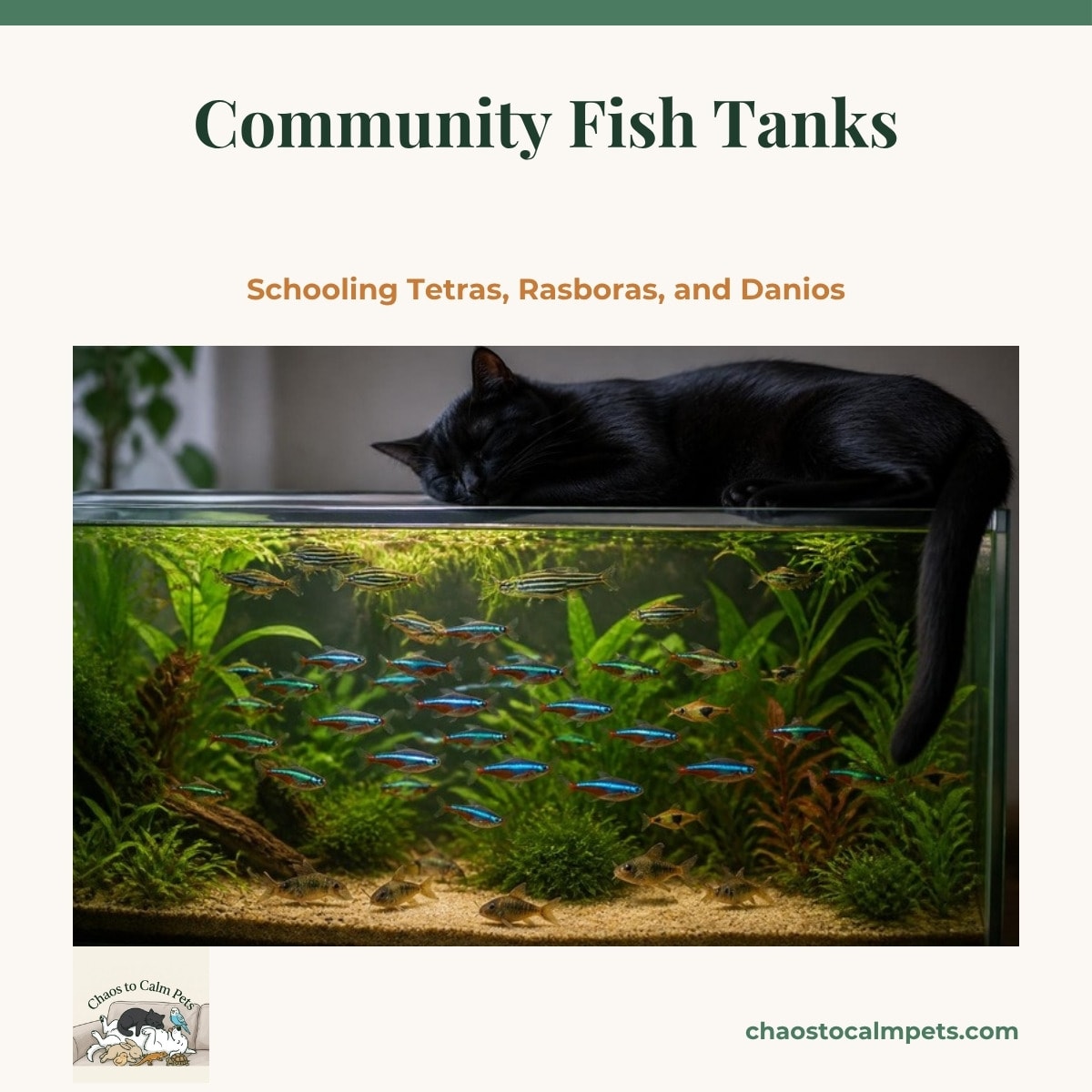
A school of small fish only looks its best when the group size, the tankmates and the food are right. 10 lessons on why schooling fish need numbers, telling neon from cardinal tetras, stocking the top, middle and bottom of the tank, keeping fin-nippers away from long fins, peaceful rasboras, hardy zebra danios, feeding so shy fish eat, sizing food for tiny mouths, dither fish for shy species, and the difference between shoaling and schooling.
About this course
Small schooling fish are what most people picture when they think of a community tank, and they are also the fish most often kept in groups that are too small. This course starts with numbers. Lesson 1 explains why a lone tetra lives stressed, and why groups of six to eight, ideally ten or more, change how they behave. Lesson 2 shows you how to tell neon tetras from cardinals and why they need different temperatures. Lesson 3 helps you stock the top, middle and bottom of the tank, and reminds you that bottom-dwellers need their own food. Lesson 4 covers fin-nipping tetras and the tankmates they should never share with. Then you'll meet peaceful rasboras and hardy zebra danios, including the rules on GloFish and on never releasing fish into the wild. Lessons 7 and 8 cover feeding so shy fish get enough, and sizing food for tiny mouths. Lesson 9 shows how dither fish bring shy species out of hiding, and Lesson 10 explains shoaling versus schooling so you can plan open water and resting spots.
What you'll learn
- Why schooling fish need groups of six to eight or more to feel safe
- Telling neon tetras from cardinals, and stocking the top, middle and bottom zones
- Keeping fin-nipping tetras away from slow, long-finned fish like bettas and angelfish
- Peaceful rasboras, hardy zebra danios, and the rules on GloFish and release
- Feeding so shy bottom fish eat, and sizing food for tiny mouths
- Using dither fish to bring shy species out, and shoaling versus schooling
Who this is for
Beginners planning their first community tank who want fish that get along; keepers whose tetras hide, fade or nip; and anyone with a shy centerpiece fish or bottom-dweller that never seems to get enough food.
Course outline (10 modules)
Quiz & Certificate
Knowledge quiz
After completing all lessons, take a short quiz to test your understanding.
Go to quiz →Completion certificate
Pass the quiz and earn a shareable certificate of completion.
View certificate →Frequently asked questions
Ready to get started?
$9.99 · Lifetime access · 10 lessons