
Training & Behavior · Birds
Canary Song and Solo Care
Fostering Melodies and Managing Molting Seasons
A singer that wants his own room. 10 lessons on the three canary types (color, type and song), what triggers a male to sing and how he learns his phrases, why mirrors and cage-mates silence him, the small-seed diet with greens and egg food, the summer molt and the silent season, preventing night frights, the fragile canary respiratory system, pox and scaly mites, replacing plastic dowels to prevent bumblefoot, and caring for a senior canary with cataracts and stiff joints.
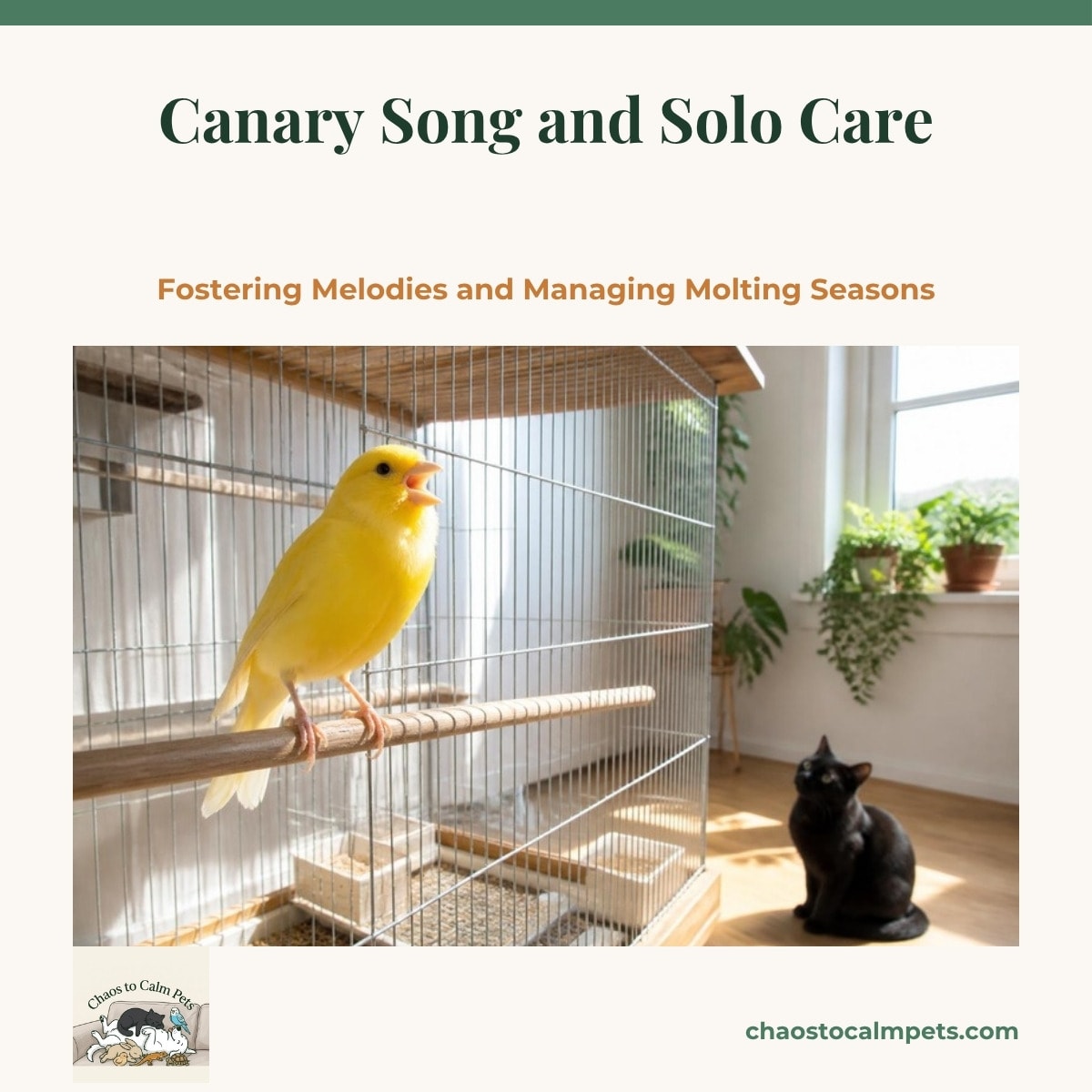
About this course
A canary is a small bird with a big voice and a few firm opinions about how he wants to live. This course starts with who you have: a colorbred, a type canary like a Gloster, or a song canary like a Harz Roller or American Singer. Lesson 2 explains what gets a male singing, lengthening daylight and a good tutor, and what fuels it. Lesson 3 is the one most new owners need, because the mirror you bought him and the second male you were thinking about will both shut him up. Lesson 4 builds the diet from canary grass seed, rape, niger and flax with daily greens and egg food, and covers color feeding for Red-Factor birds. Lesson 5 walks you through the summer molt, the silent season when he stops singing to grow feathers. Lesson 6 prevents night frights with a night-light and smart cage placement, and Lesson 7 covers the lung hazards, from non-stick pans to cold drafts. Lesson 8 covers canary pox and scaly mites, Lesson 9 swaps plastic dowels for natural branches to prevent bumblefoot, and Lesson 10 helps an older canary with cataracts and stiff joints stay comfortable.
What you'll learn
- The three canary types, and how daylight, tutors and good food bring out the song
- Why mirrors and a second male silence a singer, and housing males with visual dividers
- The small-seed blend, daily greens and egg food, and color feeding Red-Factor birds during the molt
- Supporting the summer silent season, and preventing night frights with a night-light
- Protecting a canary's lungs from fumes and drafts, and spotting pox and scaly mites
- Natural branch perches that prevent bumblefoot, and senior care for cataracts and arthritis
Who this is for
Anyone who bought a canary for the song and is wondering why he stopped; owners who want to keep more than one male in the same room without a fight; and keepers of an older canary who is bumping into perches or sitting more than he used to.
Course outline (10 modules)
Quiz & Certificate
Knowledge quiz
After completing all lessons, take a short quiz to test your understanding.
Go to quiz →Completion certificate
Pass the quiz and earn a shareable certificate of completion.
View certificate →Frequently asked questions
Ready to get started?
$9.99 · Lifetime access · 10 lessons