
New to Your Home · Birds
Broad-Tail Parrot Care
Flight, Diet, and Aviary Setup for Rosellas and Galahs
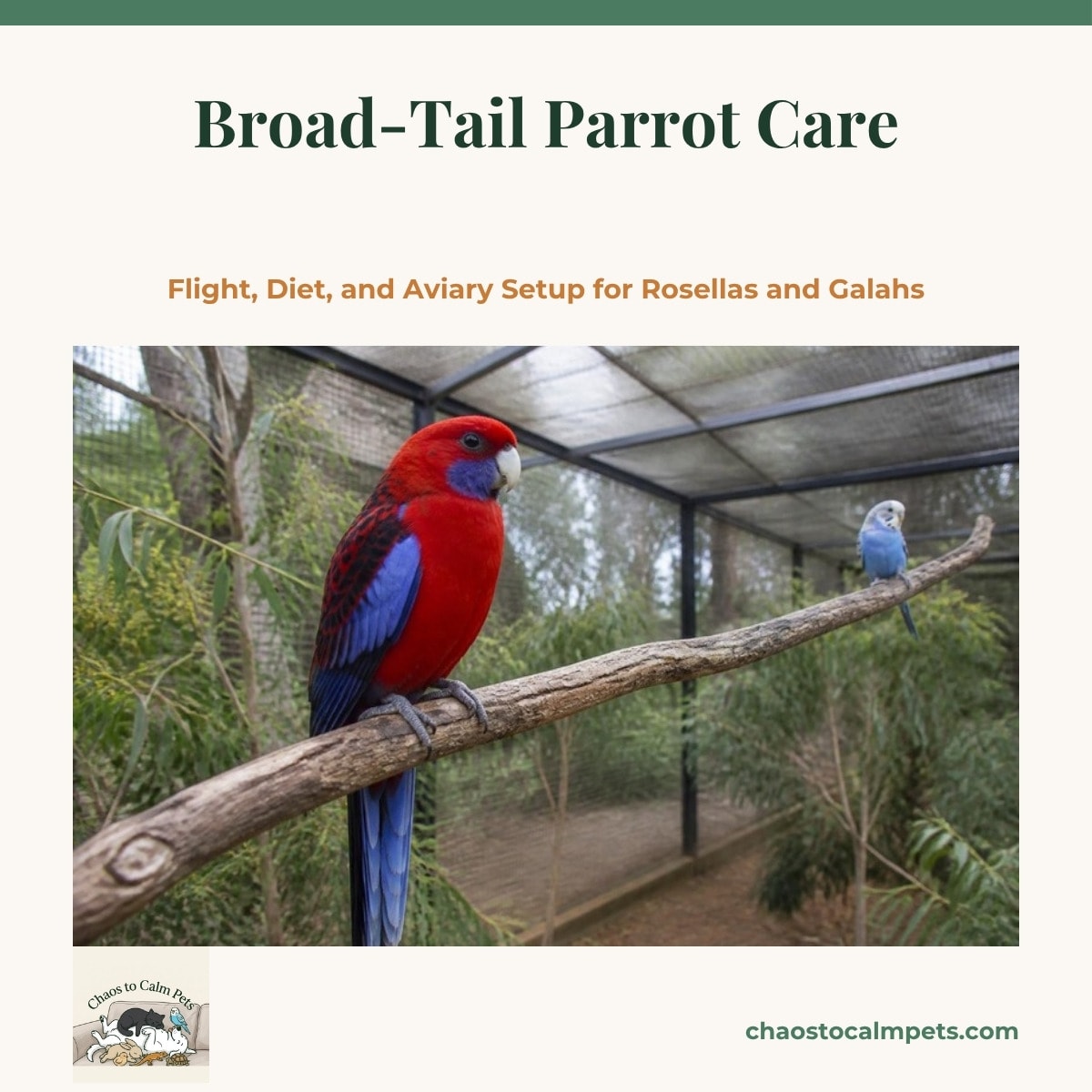
Rosellas are not lap birds, and that is the whole point. 10 lessons on what makes the broad-tail family different (rosellas, princess parrots and the one social exception, the galah), why they need a long flight corridor instead of a tall cage, how to bond with a bird that does not want to be held, the outback seed-and-blossom diet with grit, keeping a galah from getting fat, landscaping an aviary with safe living plants, teaching a rosella to whistle a tune, managing springtime territorial fights, setting up a tip-proof bath, and weatherproofing an outdoor aviary for frost and heat.
About this course
Broad-tails are built for speed, not cuddles, and this course starts there. Lesson 1 introduces the family: the wide tail, the fast horizontal flight, the fiery independent rosella, the pastel princess parrot, and the galah, the one social bird in the group. Lesson 2 explains why a tall cage fails these birds and how to lay out a 6-to-10-foot flight corridor with perches at the ends and a clean, walkable floor. Lesson 3 is about respect: rosellas and princess parrots want to be watched, not held, and target training through the wire is how you earn their trust. Lesson 4 builds the diet around grass-parakeet seed, sprouts, native greens and blossoms, with grit for digestion, and Lesson 5 tackles the galah's tendency to gain weight. Then you landscape the aviary with living bottlebrush and eucalyptus (Lesson 6), teach a rosella a four-note whistle (Lesson 7), and get ahead of the springtime territorial chases that can turn a mixed aviary dangerous (Lesson 8). The last two lessons cover tip-proof bathing basins and weatherproofing an outdoor aviary against frost and summer heat.
What you'll learn
- What sets rosellas, princess parrots and galahs apart, and why a tall cage fails them
- Hands-off bonding for independent birds, and why the galah needs much more of you
- The outback diet: grass-parakeet seed, sprouts, native greens, blossoms and free-choice grit
- Keeping a galah lean with pellets, vegetable chop, limited fatty seeds and daily flight
- Safe living plants for the aviary, and teaching a rosella to whistle a tune
- Spring territorial aggression, tip-proof bathing basins, and winter and summer weatherproofing
Who this is for
Keepers moving from a cage to a walk-in aviary; anyone who bought a rosella expecting a shoulder bird and got a bird that wants space; and galah owners whose bird is getting round and sulky on a seed bowl.
Course outline (10 modules)
Quiz & Certificate
Knowledge quiz
After completing all lessons, take a short quiz to test your understanding.
Go to quiz →Completion certificate
Pass the quiz and earn a shareable certificate of completion.
View certificate →Frequently asked questions
Ready to get started?
$9.99 · Lifetime access · 10 lessons