
Health & Care · Cold-Blooded Crew
Breeding Reptiles and Amphibians
How to Hatch and Raise Healthy Babies
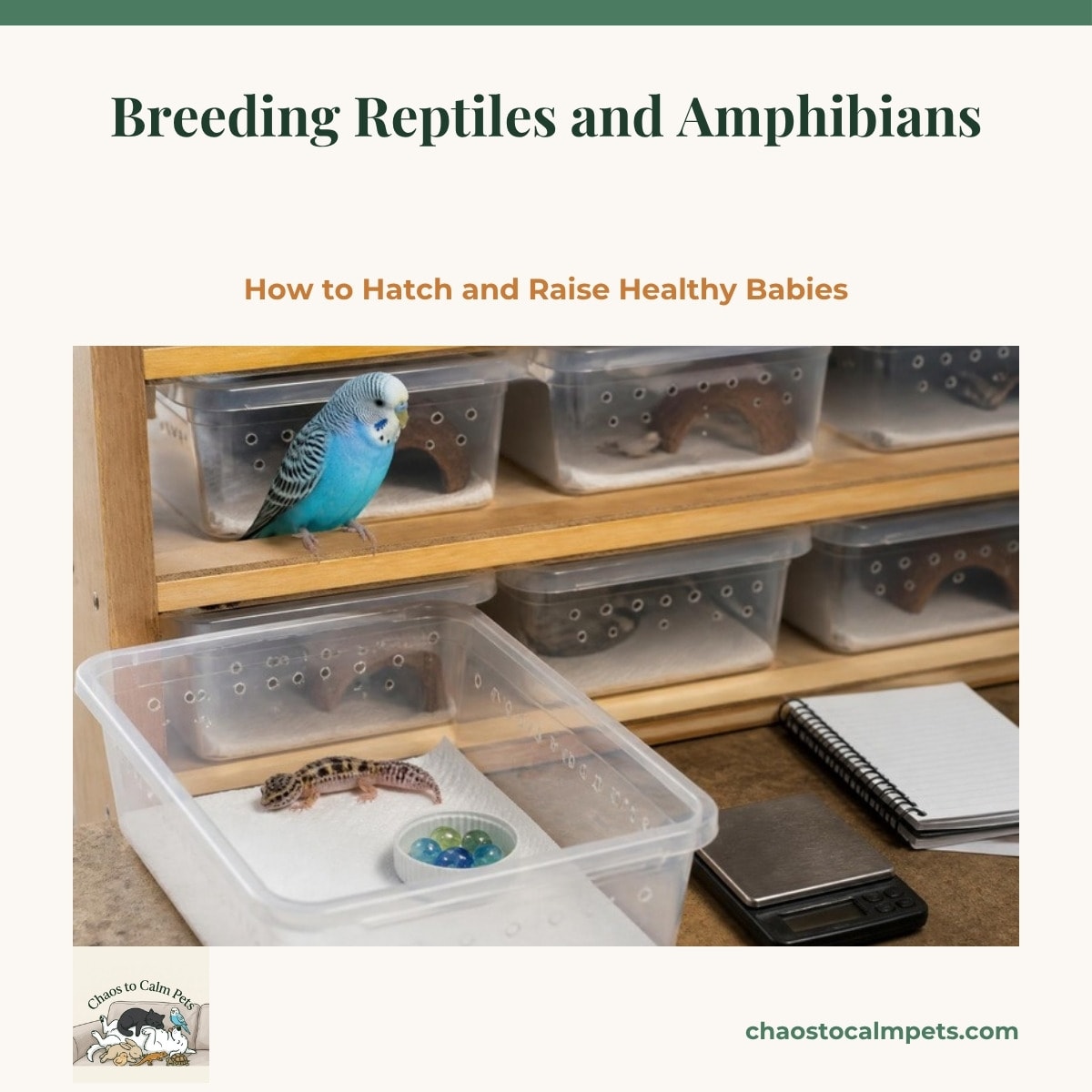
Eggs are the easy part; the next ninety days are the course. 20 modules on the incubator and its backup thermostat, egg bedding moisture, letting babies absorb their own yolk, shoebox nursery racks, gentle temperature gradients, marble-cap water bowls that can't drown anyone, getting stubborn hatchlings to eat, calcium and UVB for soft bones, geckos, turtles, frogs, tarantulas and mantises, housing babies alone, weekly weighing, the four-point newborn check, nursery hygiene, lighting that protects baby eyes, ten-second handling, skipping the first winter, and sending babies to adopters with records.
About this course
Hatching an egg feels like the finish line and is actually the starting gun. This course covers the whole cycle, from the incubator you set up months early to the care sheet you hand an adopter. You'll learn why the incubator needs a second thermostat behind the first, how wet the egg bedding should be, why you never pull a baby out of its egg, how a shoebox rack concentrates heat and food into a space a two-gram animal can manage, how to make a water dish that can't drown a hatchling, what to do when a baby snake refuses food for four weeks, how calcium and a T5 UVB tube prevent soft bones, what geckos, turtles, frogs, tarantulas, and mantises each need differently, why siblings get separate boxes from day one, how a weekly gram-scale weight catches failure to thrive, the four-point check for birth defects and when hospice or the vet is the kind answer, how to keep a nursery disease-free, which lights hurt baby eyes, how to handle a terrified hatchling for ten seconds and stop, why first-year animals skip winter rest, and how to graduate a baby to an adult tank and a new home with its records.
What you'll learn
- Incubator setup with a backup thermostat, and egg bedding moisture that neither drowns nor dries
- Hatching and yolk absorption without interference; when a baby is ready for the nursery
- Shoebox nursery racks, gradients, thermostats, safe water, and feeding stubborn hatchlings
- Calcium, UVB, and species-specific care for geckos, turtles, frogs, tarantulas, and mantises
- Separate housing, weekly weighing, the four-point newborn check, hygiene, and lighting
- Handling, skipping the first winter, graduating to adult tanks, and adopter records
Who this is for
Keepers whose pair just produced eggs, hobbyists planning a first clutch, and anyone who has lost hatchlings and wants a system instead of luck.
Course outline (20 modules)
Quiz & Certificate
Knowledge quiz
After completing all lessons, take a short quiz to test your understanding.
Go to quiz →Completion certificate
Pass the quiz and earn a shareable certificate of completion.
View certificate →Frequently asked questions
Ready to get started?
$9.99 · Lifetime access · 20 lessons