
New to Your Home · Birds
Bird Lighting and Sleep
Safe UVB, Night Cages, and Stopping Hormones
Light and darkness run a bird's hormones, calcium and mood, and most living rooms get both wrong. 10 lessons on how birds see ultraviolet light, how they make vitamin D3 through preen oil, choosing a linear avian bulb and replacing it yearly, mounting it 12 to 18 inches away over half the cage, why twelve hours of darkness matters, setting up a quiet sleep cage, breathable cage covers, managing screens and lamps in a shared room, banning flickering bulbs, and dimming slowly to prevent night frights.
About this course
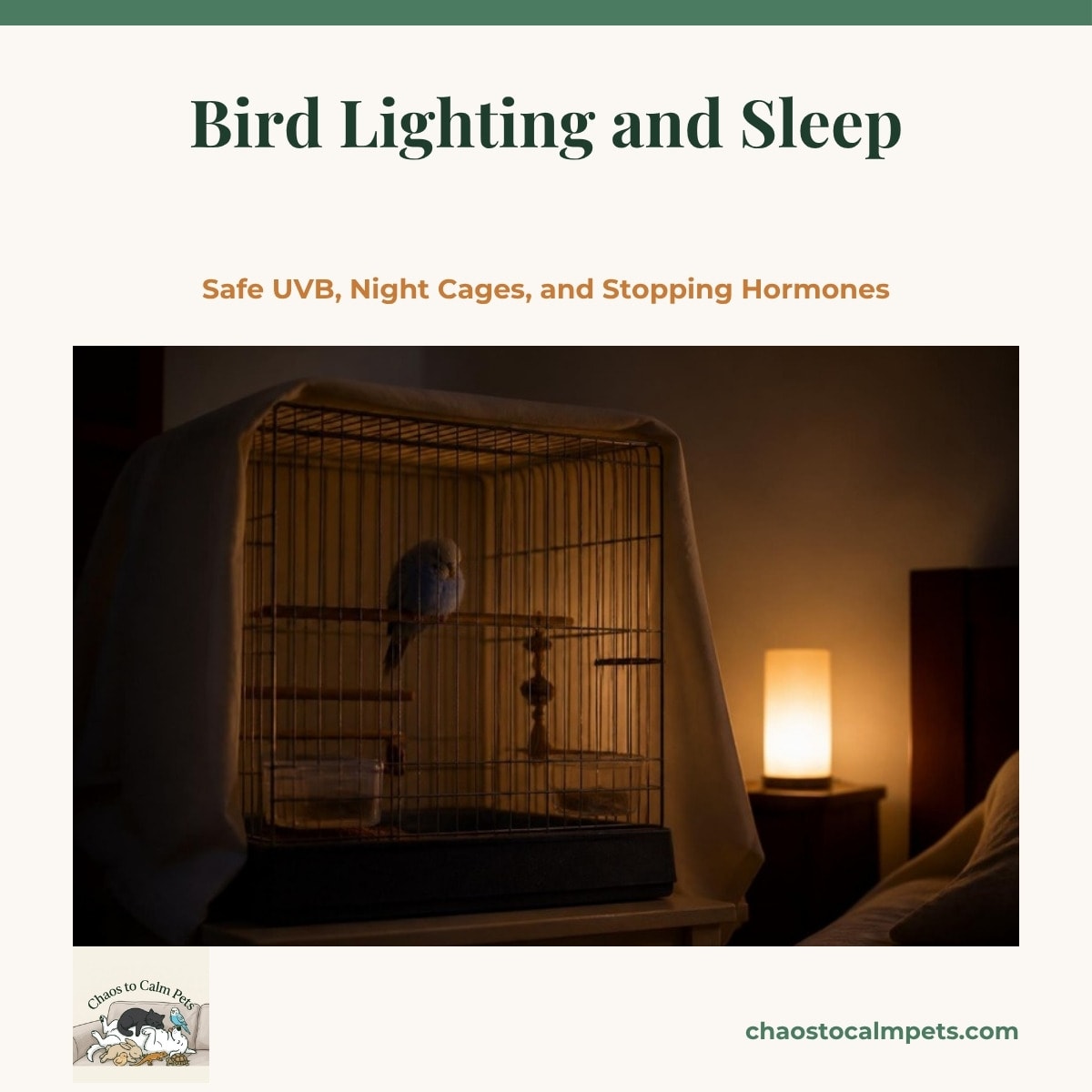
A bird in a living room sees a washed-out world behind glass all day and then gets lights, television and voices until midnight. This course fixes both halves. The first four lessons are about light: how a bird's four-color vision sees ultraviolet and why window glass blocks all of it, how a bird makes vitamin D3 by preening light-activated oil off its feathers and what happens to calcium when it cannot, why compact coil bulbs can burn eyes while a linear avian tube spreads gentle light, and how to mount that tube 12 to 18 inches above the perch over half the cage on a timer, replacing it every ten to twelve months. The next six are about darkness: why wild birds get twelve hours of it and what six hours of broken sleep does to immunity, hormones and plucking, setting up a small sleep cage in a quiet bedroom, choosing a cover the bird can breathe through, managing screens and lamps when the bird has to stay in a shared room, why cheap flickering bulbs feel like a strobe to a bird, and dimming over thirty minutes so you never trigger a night fright.
What you'll learn
- How birds see ultraviolet light, and why indoor glass leaves their world flat
- Vitamin D3 from preen oil, calcium deficiency, and choosing a linear avian bulb over a coil
- Mounting the light 12 to 18 inches over half the cage, on a daily timer
- Why twelve hours of darkness protects immunity and hormones, and setting up a sleep cage
- Breathable cage covers, and managing screens and lamps in a shared living room
- Flicker-free bulbs, and simulating dusk and dawn to prevent night frights
Who this is for
Owners whose bird lives in the family room and never seems to sleep; keepers of a hen that lays too often or a bird that plucks every spring; and anyone who bought a UVB bulb for the cage and is not sure where to put it.
Course outline (10 modules)
Quiz & Certificate
Knowledge quiz
After completing all lessons, take a short quiz to test your understanding.
Go to quiz →Completion certificate
Pass the quiz and earn a shareable certificate of completion.
View certificate →Frequently asked questions
Ready to get started?
$9.99 · Lifetime access · 10 lessons