
New to Your Home · Birds
Bird Hatching Guide
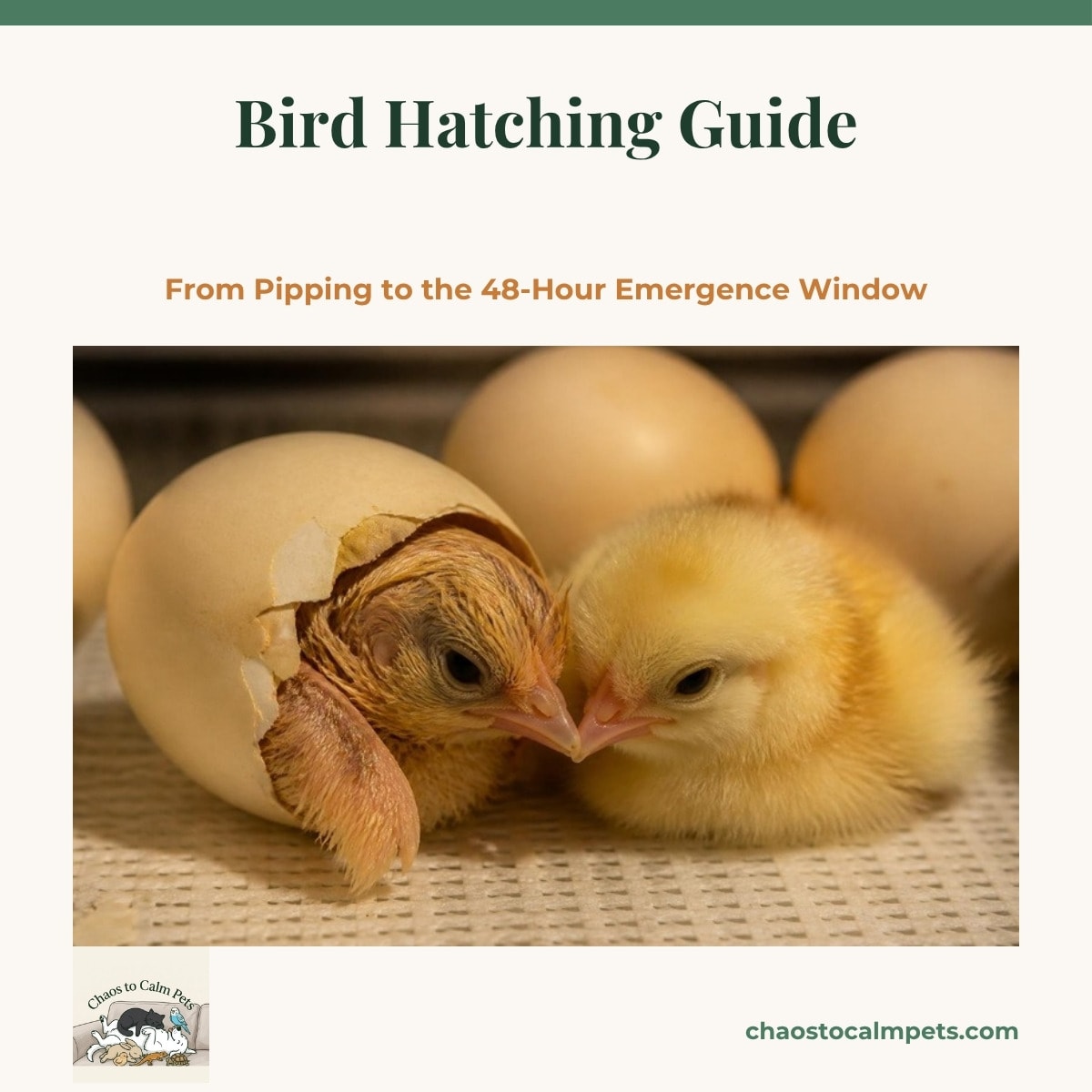
From Pipping to the 48-Hour Emergence Window
The last two days in the egg are the ones that test your patience. 10 lessons on the draw-down that shows a chick is in position, internal pipping and the first breath into the air cell, the clicking and peeping you hear through the shell, the external pip and the 24 to 48 hour clock it starts, the long resting window when nothing seems to happen, how a chick unzips its shell, keeping humidity at 65 to 75 percent so the membranes don't shrink-wrap, the final push out, the yolk sac and navel, and leaving a wet chick to dry in the incubator before it moves to a brooder.
About this course
Most hatching losses happen in the final two days, and most of them happen because someone opened the lid. This course walks you through what is going on inside the shell so you can leave it alone with confidence. You'll learn to spot the draw-down, the moment the air cell boundary drops because the chick has pushed its head up into position, and what internal pipping means for a chick that has just taken its first breath of air. You'll hear the clicking and peeping that follow, and understand why those sounds help a whole clutch hatch together. When the external pip appears, you'll write down the time, because that is when the 24 to 48 hour clock starts. Then comes the hard part: the resting window, when a pipped chick lies still for hours and you do nothing. You'll learn how the chick unzips its shell in a counter-clockwise arc, why humidity has to stay at 65 to 75 percent the whole time, and what the final kick out of the shell looks like. The last lessons cover the yolk sac and navel, which you never touch, and the 12 to 24 hours a wet chick spends drying in the incubator before it is ready for a brooder.
What you'll learn
- Reading the draw-down of the air cell, and what internal pipping means for the first breath
- The clicking and peeping that follow internal pipping, and how they synchronize a clutch
- Recognizing the external star-crack, logging the time, and the 24 to 48 hour countdown it starts
- The 24-hour resting window after the pip, and why opening the lid is the danger
- How a chick unzips its shell, and holding 65 to 75 percent humidity against shrink-wrap
- The emergence push, the navel you leave alone, and 12 to 24 hours of drying
Who this is for
Breeders sitting in front of an incubator at 2 a.m. wondering whether the stillness is normal, keepers whose hen stopped sitting on a nearly finished clutch, and anyone who has lost a chick to shrink-wrapped membranes and wants to know what happened.
Course outline (10 modules)
Quiz & Certificate
Knowledge quiz
After completing all lessons, take a short quiz to test your understanding.
Go to quiz →Completion certificate
Pass the quiz and earn a shareable certificate of completion.
View certificate →Frequently asked questions
Ready to get started?
$9.99 · Lifetime access · 10 lessons