
New to Your Home · Birds
Bird Flight vs. Clipping
Psychology, Mechanics, and Safety
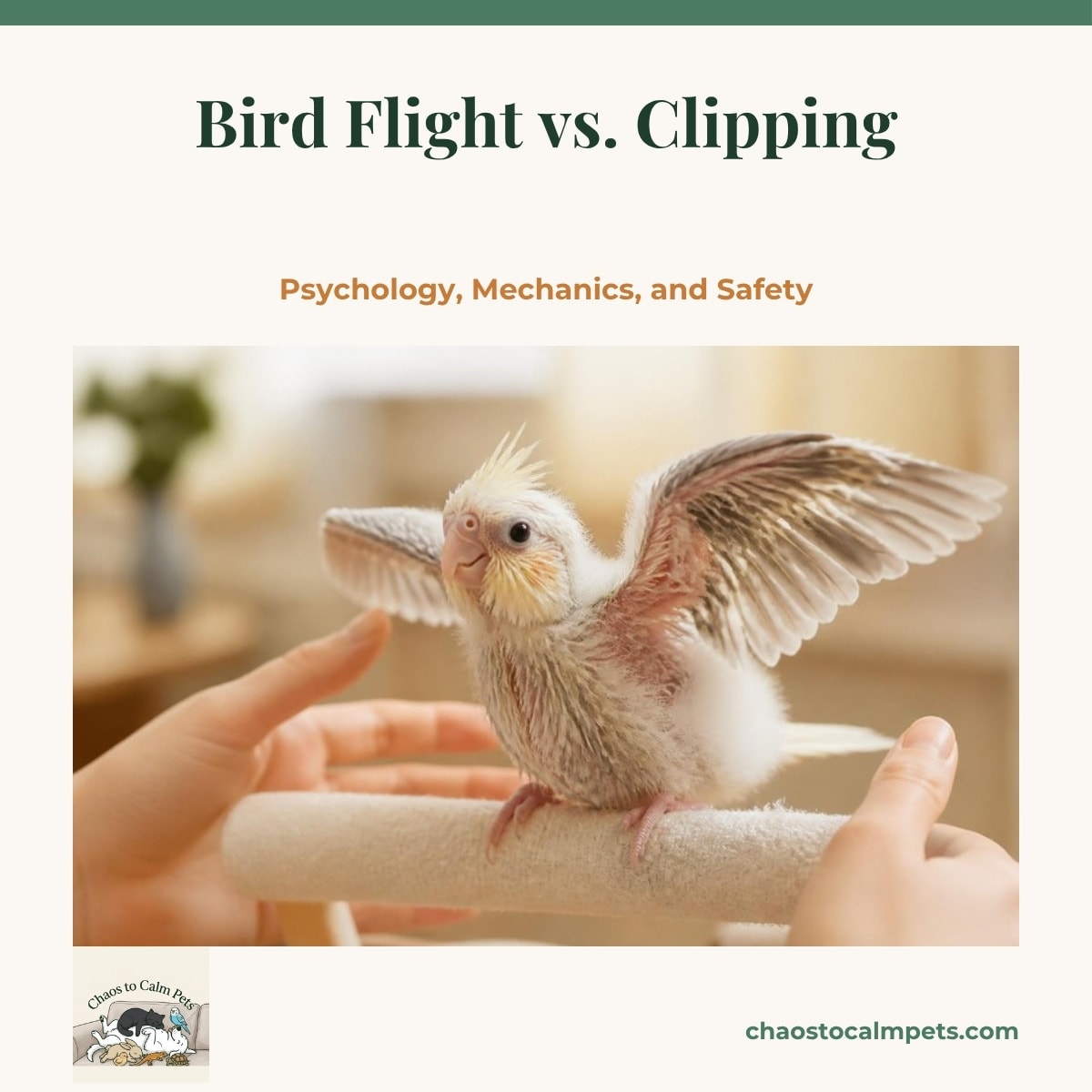
Whether to clip a young bird's wings is a decision that shapes its body and its mind for life. 10 lessons on how primary feathers make lift, what first flights do for a juvenile's brain and confidence, the muscle and keel damage of clipping before fledging, flight as agency and why clipped birds bite, airlocks and kitchen rules for a flighted house, the medical cases where a temporary clip is right, how a safe symmetrical trim is done, the molt that quietly restores flight, aviaries and recall training as alternatives, and harnesses, garden aviaries and the risks of free flight outdoors.
About this course
Clipping used to be the default, and many people still do it without knowing what it costs a young bird. This course gives you the facts first and leaves the decision with you. It starts with the wing itself, how primary feathers make thrust and lift and why trimming them changes everything, then what fledging does to a juvenile's brain: the judgment, confidence and resilience that come from learning to fly and land. Lesson 3 is blunt about clipping before a bird has flown: the chest muscles never develop and the keel can crack when the bird drops like a stone. Lesson 4 explains agency: a bird that can leave a situation does not need to bite its way out of it. Then the practical side of a flighted house: airlocks at the doors, ceiling fans off, mirrors covered, no kitchen. There are medical reasons for a temporary clip, and if one is needed there is a right way to do it, outer primaries only, both wings, no blood feathers. You'll learn to watch the molt so a bird you think is clipped does not fly out a door, and the course closes with the alternatives, indoor aviaries, screens, recall and target training, and the honest risks of outdoor free flight versus a harness or garden aviary.
What you'll learn
- How primary and secondary feathers make lift, and what first flights build in a young brain
- Why clipping before fledging causes muscle atrophy and keel injuries, and the flight-first rule
- Flight as agency, and why clipped birds often become clingy or bite
- Airlocks, screens, fan and mirror lockdown, and kitchen rules for a flighted home
- The medical cases for a temporary clip, and a safe symmetrical trim of the outer primaries
- Watching the molt for silent regrowth, aviaries and recall training, and outdoor options
Who this is for
New parrot owners whose breeder or pet store offered a clip at pickup; keepers of a flighted juvenile who want the house made safe before the first escape; and anyone whose vet has advised a temporary clip and wants it done right and reversed on time.
Course outline (10 modules)
Quiz & Certificate
Knowledge quiz
After completing all lessons, take a short quiz to test your understanding.
Go to quiz →Completion certificate
Pass the quiz and earn a shareable certificate of completion.
View certificate →Frequently asked questions
Ready to get started?
$9.99 · Lifetime access · 10 lessons