
Health & Care · Birds
Bird Feather Plucking
Medical Causes and Stopping the Habit
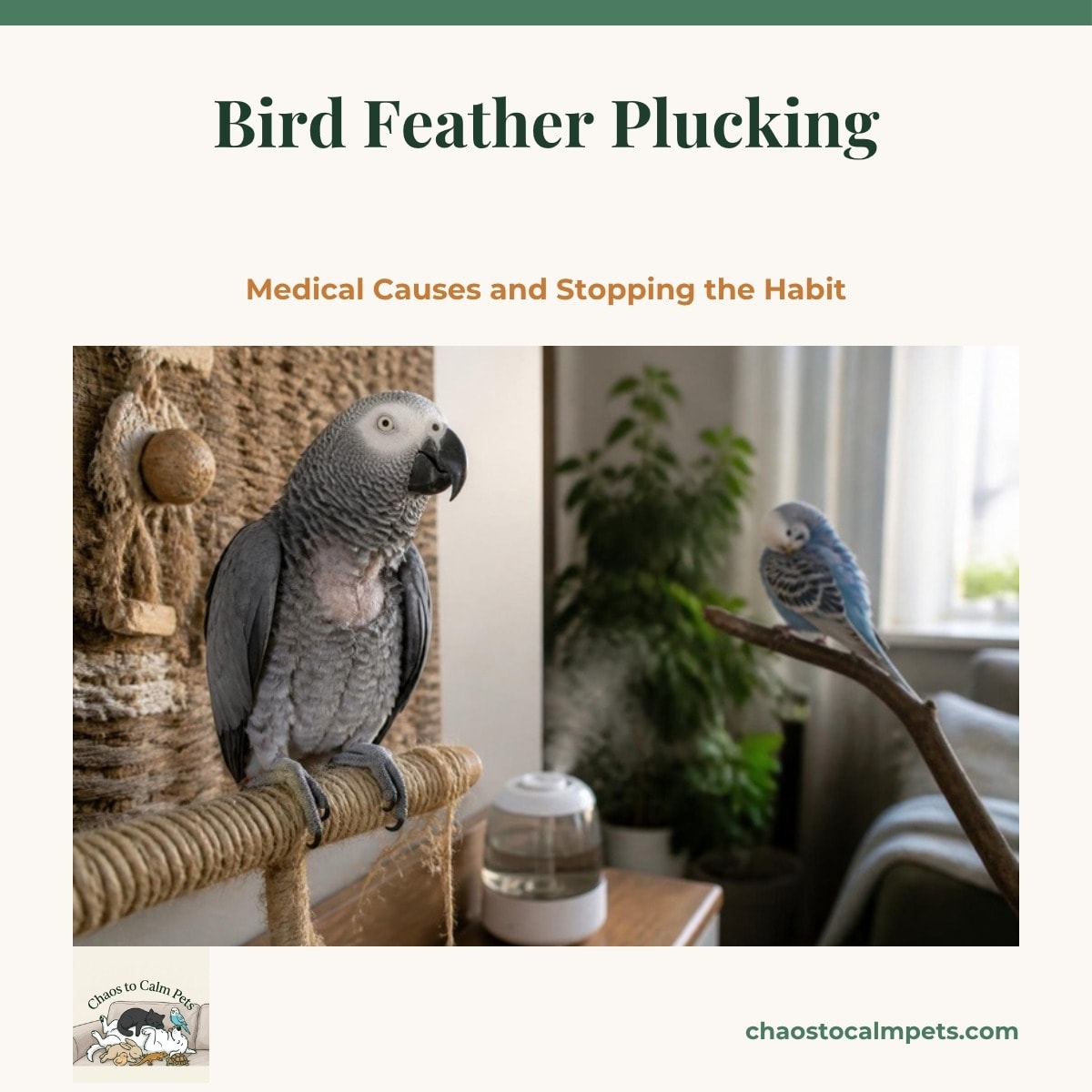
A plucking bird is sending a message, and the first job is to decode it before you try to fix it. 10 lessons on plucking versus barbering versus self-mutilation, why a full medical workup with your avian vet comes first, diet and food allergies, dry indoor air and bathing, stress and the plucking addiction loop, when a collar is warranted and when it is cruel, chest-height preening toys, the attention trap that rewards plucking, springtime hormones and dark sleep, and compassionate care for a bird whose feathers will never grow back.
About this course
When a bird starts pulling its own feathers, everyone wants a quick fix, and that is usually the first mistake. This course teaches you to work the problem in order. Lesson 1 shows you what you are looking at: true plucking from the root, chewing that leaves a ragged crewcut, or skin damage that is an emergency. Lesson 2 is the rule I will not bend: up to half of these birds are sick, so a full workup with your avian vet for heavy metals, parasites, viruses and organ function comes before any behavior plan. From there you'll check the diet for the fatty acid and vitamin A gaps and food sensitivities that make skin itch, and the dry indoor air that a 45 to 55 percent humidifier and regular bathing can fix. The second half is behavior: how stress turns preening into a self-rewarding habit, when a soft collar is justified and when a cone only adds panic, where to hang preening toys so they intercept the beak, and why gasping and rushing over teaches the bird that plucking summons you. Lesson 9 handles spring hormones with 12 to 14 hours of dark sleep, and Lesson 10 is about loving a bird whose feathers may never return.
What you'll learn
- Telling true plucking from feather chewing and from self-mutilation that needs a vet now
- The medical workup rule: heavy metals, parasites, viruses and organ values before any behavior plan
- Diet gaps and food sensitivities that make skin itch, and humidity and bathing that soothe it
- How stress turns preening into a self-rewarding habit, and when a collar helps or harms
- Chest-height preening stations, and interrupting a pluck without rewarding it with attention
- Calming the springtime plucker with dark sleep, and caring for a permanently bald bird
Who this is for
Owners of a grey, cockatoo or conure who found the first bald patch this week; people who adopted a rescue that arrived already plucked and want to know what can still improve; and anyone who has been scolding a plucking bird and suspects it is making things worse.
Course outline (10 modules)
Quiz & Certificate
Knowledge quiz
After completing all lessons, take a short quiz to test your understanding.
Go to quiz →Completion certificate
Pass the quiz and earn a shareable certificate of completion.
View certificate →Frequently asked questions
Ready to get started?
$9.99 · Lifetime access · 10 lessons