
New to Your Home · Birds
Bird Egg Incubation Guide
Hardware, Temperature, and Hatching Setup
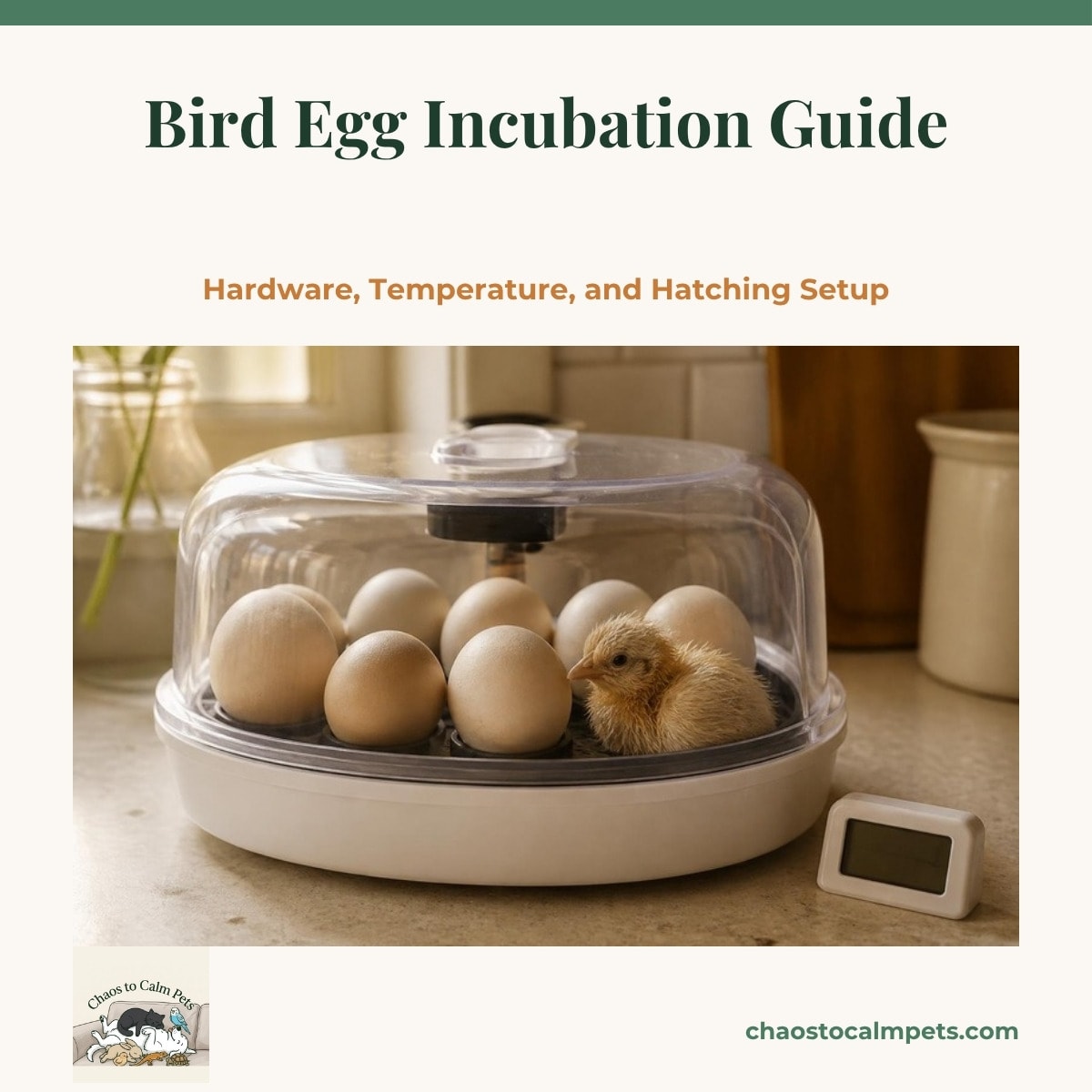
An incubator is only a warm box until you learn how to run it. 10 lessons on choosing between still-air and forced-air machines, scrubbing and dry-running the incubator before the first egg goes in, holding the temperature at 99.5 degrees and calibrating your thermometer, managing humidity and weighing eggs to track moisture loss, turning eggs three to five times a day, setting them blunt end up, opening the vents as the embryos grow, the three-day lock-down with its humidity spike and closed lid, what to do the minute the power goes out, and cleaning and storing the machine between clutches.
About this course
If you have fertile eggs and a machine you are not sure you trust, this course is where to start. You'll begin by learning what kind of incubator you own and why that changes where the thermometer goes: still-air boxes have a warm top and a cool bottom, forced-air boxes use a fan to keep every corner the same. Then you'll scrub and sanitize it, run it empty for a day, and learn why fertile eggs are never washed in cold water. The middle of the course is the three numbers that decide a hatch: 99.5 degrees in a forced-air machine, 45 to 55 percent humidity, and 13 to 15 percent egg weight loss by hatch day, tracked with a gram scale. You'll turn eggs three to five times a day through a 90-degree arc, set every egg blunt end up so the chick can find its air cell, and open the vents wider as the embryos grow. The last lessons cover the three-day lock-down, when turning stops, humidity goes up and the lid stays shut, what to do when the power fails, and how to clean and store the incubator so it is ready for the next clutch.
What you'll learn
- Still-air versus forced-air incubators, and how to sanitize and dry-run the machine before setting eggs
- The 99.5 degree forced-air target, thermometer calibration, and what overheating and chilling do to embryos
- Holding 45 to 55 percent humidity, with weekly weigh-ins tracking 13 to 15 percent weight loss
- Turning eggs 3 to 5 times daily through 90 degrees, and setting them blunt end up
- Opening vents progressively, then entering lock-down: no turning, eggs flat, humidity up, lid shut
- Power outage backups you test ahead of time, and cleaning and storing the incubator between clutches
Who this is for
First-time breeders whose budgie or cockatiel pair has laid a clutch they can't brood, keepers who bought a tabletop incubator and are staring at the dials, and anyone who lost a clutch last season and wants to know what went wrong.
Course outline (10 modules)
Quiz & Certificate
Knowledge quiz
After completing all lessons, take a short quiz to test your understanding.
Go to quiz →Completion certificate
Pass the quiz and earn a shareable certificate of completion.
View certificate →Frequently asked questions
Ready to get started?
$9.99 · Lifetime access · 10 lessons